
Chhath Prasad and Fasting Food Notes
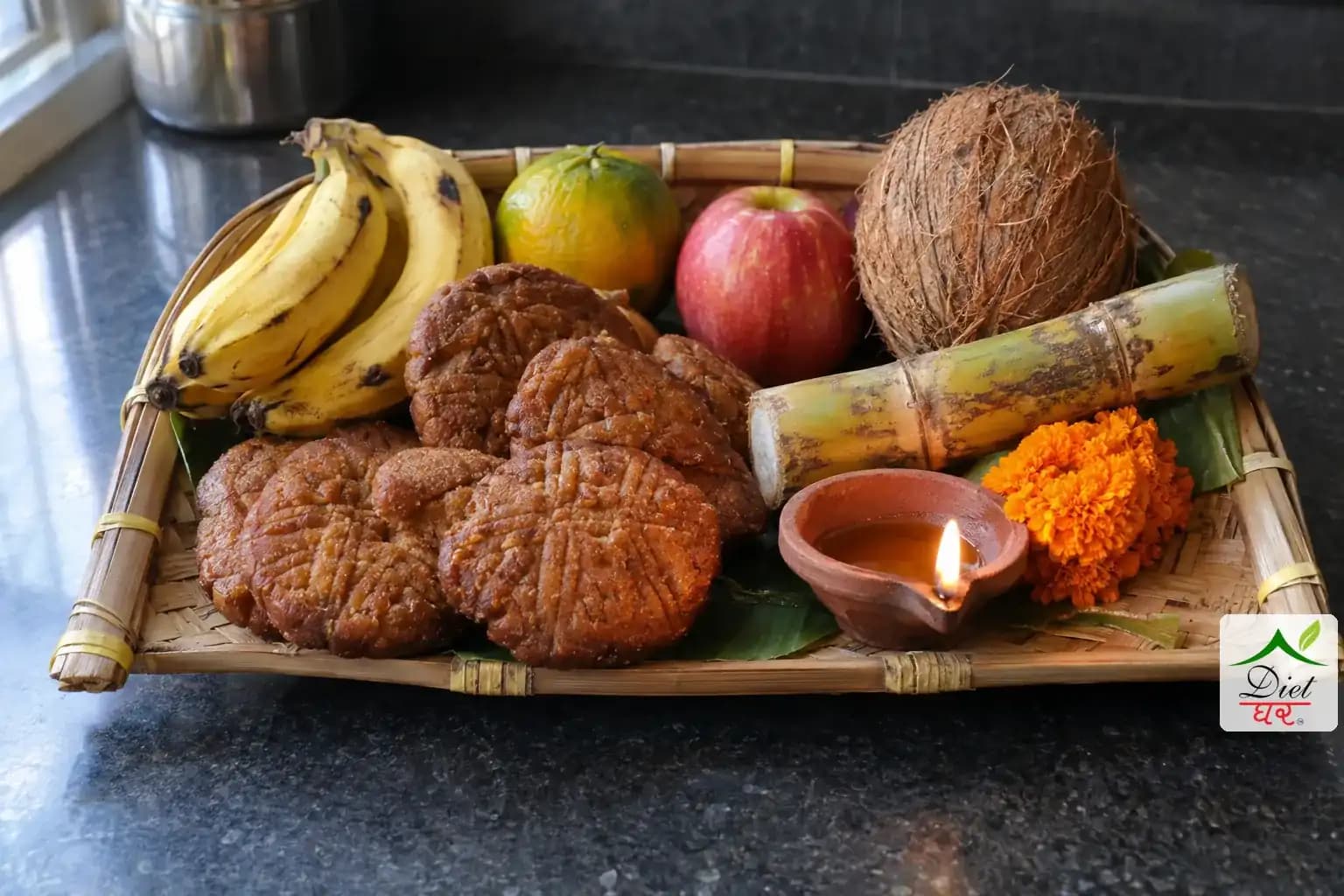
Illustrative image generated with AI
Chhath comes a few days after Diwali, in the middle of November, and it is one of the most demanding fasts in the Indian calendar. Many observers go without food and water for about 36 hours. The food that surrounds the fast is simple, specific and carries a lot of meaning.
This is general education about the foods, not a guide to the ritual. How you observe Chhath is for your family and your elders to decide. What we can add is some plain information on what the foods contain and how to look after yourself around a long fast.
The foods, in order
Nahay khay. The first day, after a bath, a simple meal is eaten. In many homes it is rice, chana dal and lauki (bottle gourd) cooked in ghee or a little oil, often with pumpkin. This is a good, gentle meal: easy to digest, with dal for protein, vegetables for water and a little fat. It prepares the body for the days ahead.
Kharna. On the second day, the observer fasts through the day and breaks it in the evening, usually with kheer made from rice, milk and jaggery (rasiya), and rotis or puri with ghee, plus fruit. A katori of rasiya is a mix of milk, rice and jaggery. Depending on the recipe, it may be roughly 180 to 250 kcal. After a day without food, this is a sensible mix of carbohydrate, protein and fat.
Prasad. For the evening and morning arghya, offerings include thekua (a fried wheat flour and jaggery sweet), seasonal fruits such as banana, sugarcane, coconut, pomegranate and citrus, and sometimes rice laddoos. A thekua of 30 g is roughly 130 to 160 kcal, worked out from wheat flour, jaggery, ghee and coconut (IFCT 2017, USDA). The fruit adds fibre, potassium and vitamin C.
Chhath foods are made without onion or garlic, with a lot of cleanliness and in small batches. That is part of why they are good: the cooking is simple.
Preparing for a long fast
If you or someone in your family is observing, a few steps make a real difference.
- Eat and drink well in the days before. Do not start the nirjala part tired and dehydrated. Drink water through the day, include fruit, dal and curd, and sleep.
- Do not diet before. This is the wrong week to cut calories. Eat enough.
- Have a good last meal. The nahay khay meal is that meal. Eat it slowly and fully.
- Rest. Plan the cooking and household work so that the person fasting is not doing everything.
- Do not fast alone if you are unwell. Someone should know, and someone should be able to help.
Breaking the fast
After a long fast without water, the body is dry and the stomach is empty. Eating a large heavy meal at once can cause nausea, acidity and a sluggish feeling. A better sequence:
- Start with a few sips of water, then a little more. Do not gulp.
- Then something light: milk, a piece of fruit, or a small portion of kheer.
- Wait a bit, then eat a simple meal such as dal, rice or roti, and a vegetable.
- Add salt and water through the next day, and avoid very oily food that evening.
If you feel dizzy, faint, very weak or confused, or develop chest pain, a very fast heartbeat or vomiting, stop fasting and get help. That is not a failure of devotion. It is a medical situation.
Who should be careful
Chhath is a personal and religious practice, and we do not tell anyone whether to observe it. But health matters, and this is a place where we would ask people to talk to their doctor first.
- Diabetes. A long fast without food or water, with or without medication, can cause dangerous low or high sugar. Do not change insulin or tablets without your doctor.
- High blood pressure, heart or kidney problems. Dehydration and shifts in salt balance can be risky.
- Pregnancy and breastfeeding. Doctors generally advise caution with long dry fasts, so ask yours.
- Older adults and very young people. Same caution.
- Anyone on regular medicine. Medicines that must be taken with water or food need a plan.
Many families find ways to keep the meaning of Chhath while changing how it is done, and that is a decision for the family, ideally with a doctor.
For the rest of the family
Not everyone in the house is fasting, and it is a good time to eat well together. The fruits of the season are at their best, the thekua is a once a year sweet, and the plain meals around the festival are ones worth keeping through the year. Enjoy the prasad. Then the next day, go back to your usual meals, with extra water and vegetables.
Common questions
Is thekua healthy?
It is a festival sweet, fried, with flour, jaggery and ghee. One piece of 30 g is about 130 to 160 kcal. It is fine as prasad in a small amount. It is not meant to be a daily snack.
What should I eat the day before Chhath?
Something light and nourishing, like dal, rice, lauki and curd, with plenty of water and fruit. Do not skip meals or eat very heavy fried food.
Can I drink water during Chhath?
That is a matter of tradition in your family and your own health. Some observers keep nirjala, some do not. If you have a health condition, speak to your doctor and your elders about what is safe.
How do I recover after the fast?
Sip water, eat a light meal first, then a normal one a few hours later. Rest, and give yourself a day or two to feel fully steady again.
Want a gentle plan for the week around the festival?
A nutritionist at DietGhar can plan the days before and after around your family's observance. Plans start at Rs 499 for 15 days. See our plans or message us on WhatsApp at +91 78382 49321.
Figures from IFCT 2017 (NIN, Hyderabad) and USDA FoodData Central, rounded, last checked 13 October 2026. This is general education, not medical advice. A doctor should guide anyone with a health condition.
Sources: Indian Food Composition Tables 2017 (ICMR-NIN); USDA FoodData Central; ICMR-NIN Dietary Guidelines for Indians. Calorie figures are rounded estimates.
FAQ
Is it safe to fast for 36 hours without water?
It depends on your health. Dry fasting carries a real risk of dehydration, especially for people with diabetes, blood pressure, heart or kidney problems, so speak to your doctor first. Stop and get help if you feel faint or confused.
What is the difference between nahay khay and kharna?
Nahay khay is the first day, with a simple meal of rice, chana dal and lauki after a bath. Kharna is the second day, when the fast is broken in the evening with rasiya kheer and rotis.
What should the rest of the family eat during Chhath?
Plain, home-cooked meals made without onion and garlic are the norm in many homes, and they suit everyone. Add seasonal fruit, dal and plenty of water.
How long should I rest after the fast?
Give yourself a day or two of light meals, fluids and sleep before you feel steady again. Return to your usual routine gradually.
Sources
- Dietary Guidelines for Indians 2024, ICMR National Institute of Nutrition (NIN), Hyderabad
- Indian Food Composition Tables (IFCT) 2017, ICMR National Institute of Nutrition (NIN), Hyderabad
- Healthy diet (fact sheet), World Health Organization
Get Your Personalized Diet Plan Today!
This article provides general information about intermittent fasting and meal planning. Download the DietGhar app for a customized Indian diet plan tailored to your body type, health goals, and food preferences: with daily tracking and expert support.
About the Author
Written by The DietGhar Team nutritionists, helping clients since 2016 with personalised Indian diet plans. How our nutritionists work
Popular guides
Diet plans
Articles
- PCOS and PCOD diet plan, 7-day Indian meal plan
- Insulin resistance diet for Indians
- PCOS acne and skin: diet changes
- Indian keto diet for beginners
- Stress eating and cortisol
- Gluten-free Indian food for celiac disease
- Nutrition for Indians over 60
- South Indian diet for weight loss
- North Indian diet makeover
- Breastfeeding diet chart
- Winter diet and immunity foods
- Best Indian foods for hair growth
- Why crash diets fail
Find a Dietitian Near You
Get personalized nutrition plans from qualified nutritionists in your city. Online consultations available across India.

