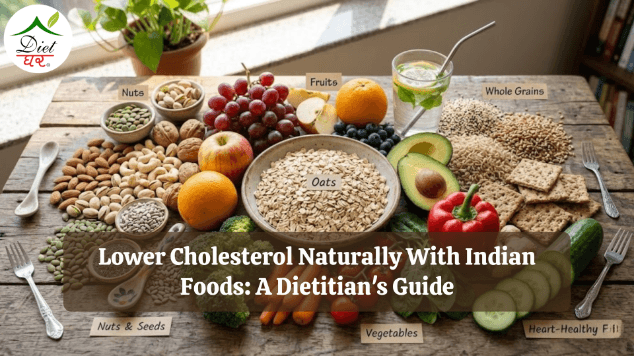
Lower Cholesterol Naturally With Indian Foods: A Dietitian's Guide
Your cholesterol report says LDL is 160 mg/dL, total cholesterol is 220 mg/dL. Your doctor mentions statins. You want to know what diet changes can make, before or alongside medication. That is a very reasonable and well-motivated question, and the answer is: quite a lot, depending on your starting level and consistency.
Diet can realistically lower LDL cholesterol by 15–30% in many patients, equivalent to a low-dose statin in effect. For borderline high cholesterol, diet alone is often sufficient. For significantly elevated levels or established cardiovascular disease, diet works powerfully alongside medication, not as a replacement. Understanding what works and why, in the context of Indian food specifically, is what this guide provides.
Understanding Your Cholesterol Report
Before diving into food, it helps to understand what the numbers actually mean:
- LDL (low-density lipoprotein): The primary target. Carries cholesterol to tissues; excess contributes to arterial plaque. Target varies by risk: below 100 mg/dL for low-risk; below 70 mg/dL if you have had a heart attack or have diabetes.
- HDL (high-density lipoprotein): Protective. Removes cholesterol from tissues back to the liver. Higher is better. Target: above 50 mg/dL for women, above 40 mg/dL for men. Above 60 mg/dL is cardioprotective.
- Triglycerides: Fats in the blood. Elevated triglycerides are as important as LDL for cardiovascular risk. Target below 150 mg/dL. High triglycerides are almost always diet-responsive, primarily by reducing refined carbohydrates, sugar, and alcohol.
- Total cholesterol: Sum of all fractions. Less clinically meaningful than the individual components. Below 200 mg/dL is desirable.
- Non-HDL cholesterol: Total cholesterol minus HDL. Includes LDL plus VLDL. Some cardiologists consider this the most useful single marker. Target: 30 mg/dL above your LDL target.
Dietary Fats: The Truth Beyond "Avoid Ghee"
The relationship between dietary fat and cholesterol is more nuanced than the "avoid all fat" advice that many older Indian doctors still give. Let us be specific.
Saturated fat raises LDL, this is well established. Saturated fat sources in the Indian diet: ghee, butter, coconut oil (though the saturated fats in coconut are a complex topic), full-fat dairy, fatty meat, palm oil (in commercial snacks), vanaspati/dalda.
However, saturated fat from dairy (particularly fermented dairy like curd) has a different metabolic effect than saturated fat from red meat. The food matrix matters. Replacing full-fat curd with processed low-fat alternatives is not necessarily beneficial. Moderate ghee in cooking (1 teaspoon per meal) is unlikely to significantly worsen cholesterol in otherwise good dietary context.
Trans fats are the worst. Partially hydrogenated vegetable oils (vanaspati, dalda) raise LDL and simultaneously lower HDL. The worst possible combination. These must be eliminated completely. Check ingredient labels of commercial biscuits, bakery goods, namkeen, and ready-to-eat snacks for "partially hydrogenated" or "vanaspati."
Monounsaturated fats (MUFA) are beneficial, they lower LDL without reducing HDL. Best sources in Indian cooking: mustard oil, olive oil, groundnut oil, avocado, most nuts. Using cold-pressed mustard oil or groundnut oil as primary cooking oil is a good choice for cholesterol.
Polyunsaturated fats (PUFA) lower LDL and have additional cardiovascular benefits. Omega-6 PUFAs (from sunflower, safflower oil) lower LDL but consumed in excess without omega-3 balance may increase inflammation. Omega-3 PUFAs (from walnuts, flaxseeds, fish oil) lower triglycerides substantially and reduce cardiovascular inflammation.
The practical rule: replace saturated fats and trans fats with MUFAs and PUFAs. Use mustard or groundnut oil for cooking, eat walnuts and flaxseeds daily, include fish or plant omega-3 sources regularly.
Soluble Fibre: The Most Powerful LDL-Lowering Nutrient
Soluble fibre forms a gel in the digestive tract that binds to bile acids (made from cholesterol in the liver). These bile acids are then excreted rather than recycled, forcing the liver to draw more cholesterol from the blood to make new bile acids. This is the primary mechanism by which soluble fibre lowers LDL.
Clinical evidence: 5–10g of soluble fibre daily lowers LDL by 5–11 mg/dL. Combining multiple soluble fibre sources can achieve greater reductions.
Best Indian Sources of Soluble Fibre
Oats (oats ka dalia or rolled oats): Beta-glucan in oats is among the most effective soluble fibres studied. One bowl (40g dry) of oats provides 3–4g beta-glucan. Three to four bowls daily (achievable by having oats for breakfast daily) can provide 8–12g beta-glucan, reducing LDL by 5–10%. Choose plain steel-cut or rolled oats, not instant flavoured varieties with added sugar.
Barley (jau): Also rich in beta-glucan. Jau ki roti, jau khichdi, or barley in soups and dals are effective cholesterol-lowering additions. Barley roti mixed with wheat atta (50:50) is a practical way to include it regularly.
Psyllium husk (isabgol): Extremely high in soluble fibre. One teaspoon in a glass of water before meals provides 5g of highly effective soluble fibre. Used as a laxative in India, but its cholesterol-lowering effect is equally impressive. Studies show 10g isabgol daily reduces LDL by up to 7%. Add to water, curd, or smoothies.
Legumes (all dal, rajma, chana): Excellent source of soluble fibre (galactomannans, pectins). Three to four servings of legumes per week provide approximately 6g additional soluble fibre. Include at least one legume-based meal daily.
Okra (bhindi): The sliminess of okra is soluble pectin fibre. Cooking methods that preserve sliminess (minimal dry heat cooking) retain more fibre. Bhindi sabzi cooked with minimal oil rather than deep-fried maintains cholesterol-lowering properties.
Fenugreek seeds (methi dana): Rich in a specific soluble fibre called galactomannan. One teaspoon of methi seeds soaked overnight, consumed in the morning, provides meaningful soluble fibre plus additional insulin-sensitising benefits.
Plant Sterols and Stanols
Plant sterols and stanols structurally resemble cholesterol and compete for absorption in the intestine, directly reducing LDL by 10–15% when consumed at 2g daily. They are found naturally in vegetable oils, nuts, and legumes but at too low a level to achieve therapeutic doses from food alone.
In Western countries, sterol-enriched margarine and yoghurt are widely available. In India, specifically fortified foods are less common, but eating a diet rich in nuts, legumes, and whole grains naturally provides meaningful amounts even without reaching the clinical dose.
The Cholesterol-Fighting Indian Foods
Walnuts: Eating a small handful (30g = 7–8 walnuts) daily reduces LDL by 5–10% through their combination of omega-3 ALA, plant sterols, and ellagic acid. One of the most consistent single-food findings in cardiovascular nutrition. Replace daily namkeen snacking with walnuts and almonds.
Flaxseeds: Two tablespoons of ground flaxseed daily provide omega-3 ALA, lignans, and soluble fibre. Multiple meta-analyses confirm LDL reduction of 8–18 mg/dL with regular flaxseed consumption. Ground flaxseeds are more bioavailable than whole seeds, grind them fresh and store in the refrigerator.
Garlic: Meta-analyses show that aged garlic extract or raw garlic (1–3 cloves daily) reduces total cholesterol by approximately 8%. The effect is smaller than soluble fibre or statins but consistent and adds up alongside other interventions.
Amla (Indian gooseberry): Clinical studies in India show amla reduces total cholesterol and LDL while raising HDL. The polyphenols inhibit HMG-CoA reductase. The same enzyme that statins target. Two fresh amla or one teaspoon of amla powder daily.
Turmeric: Curcumin inhibits cholesterol oxidation (preventing the formation of particularly harmful oxidised LDL) and shows modest LDL-lowering effects in human trials.
Green tea: Catechins in green tea inhibit cholesterol absorption in the intestine. Two to three cups daily reduces LDL by approximately 2–5 mg/dL.
Avocado: Rich in MUFAs and plant sterols. Two to three avocados per week reduce LDL by 13–17% in clinical trials. Increasingly available in urban India.
What to Reduce
- Vanaspati and commercially fried snacks (trans fats)
- Refined sugar and refined carbohydrates (raise triglycerides, lower HDL)
- Excess red meat (saturated fat)
- Egg yolks in large quantities for those with familial hypercholesterolaemia (though for most people, eggs have minimal LDL effect)
- Alcohol (raises triglycerides)
Sample Cholesterol-Lowering Day
Breakfast: Oats porridge (40g rolled oats) with one tablespoon ground flaxseed, 8 walnuts, half apple, small amount of cinnamon. Black coffee or green tea.
Lunch: Barley or jowar roti (2), masoor or moong dal (generous portion), bhindi or any low-fat sabzi with garlic, small bowl curd.
Evening: One teaspoon isabgol in water. Handful of almonds and walnuts. Two fresh amla or amla powder in water.
Dinner: Two wheat rotis, rajma or chana (for soluble fibre), mixed vegetable sabzi with mustard oil and turmeric, salad with olive oil dressing.
Follow this consistently for 8–12 weeks before retesting lipid profile. Most patients see 15–25% LDL reduction with this dietary approach combined with regular moderate exercise.
Get Your Personalized Diet Plan Today!
This article provides general information about nutrition and diet planning. Download the DietGhar app for a customized Indian diet plan tailored to your body type, health goals, and food preferences — with daily tracking and expert support.
About the Author
Written by the DietGhar expert team — certified dietitians with 10+ years of experience helping clients achieve their health goals through personalized Indian diet plans.
Find a Dietitian Near You
Get personalized nutrition plans from certified dietitians in your city. Online consultations available across India.

