
Feeding Picky Eaters: Child Nutrition Tips for Indian Parents
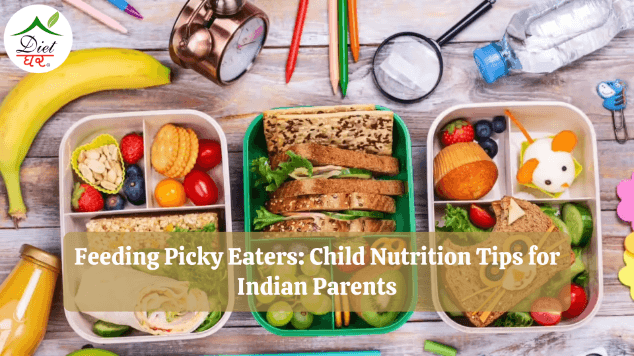
Your four-year-old has been eating only dal chawal and plain roti for three months. They push away vegetables with theatrical disgust. They ate bhindi yesterday and today they act as though it is poison. You are alternating between bribing them with screen time, hiding vegetables in every dish, and lying awake wondering if they are getting enough nutrition.
If this sounds familiar, you are a normal Indian parent of a normal child. Picky eating affects 20–50% of children between the ages of 2–8 years, with peak fussiness typically between ages 2–4. It is not a parenting failure. It is not a sign of a deficient child. In most cases, it is a predictable developmental phase with biological underpinnings that can be navigated thoughtfully.
This guide gives you the science, practical strategies, and realistic expectations for feeding your picky eater, and tells you when to actually be concerned versus when you can breathe and trust the process.
Why Children Become Picky Eaters: The Biology
Understanding why picky eating happens makes it less maddening to manage.
Neophobia (fear of new foods) is evolutionary. Young children are biologically programmed to be suspicious of new foods, because in ancestral environments, an unfamiliar food was more likely to be poisonous than safe. This is the same reason toddlers often reject foods they loved last week, any variation in appearance, texture, temperature, or plating can trigger neophobia. It is not irrational from a survival standpoint.
Increased sensitivity to bitterness, children have more taste buds per square centimetre than adults and are particularly sensitive to bitter taste compounds (found in broccoli, bitter gourd, dark leafy greens). The bitterness threshold literally decreases as children age, which is why vegetables rejected at age 4 are often enjoyed by age 10–12. Forcing bitter vegetables before a child's palate is ready may actually worsen long-term aversion.
Sensory processing sensitivity, some children (particularly those with ADHD, autism spectrum traits, or sensory processing differences) have heightened sensitivity to food textures, temperatures, smells, and colours. For these children, "picky eating" is not primarily behavioural but sensory, and standard strategies are less effective. An occupational therapist with experience in feeding difficulties can help.
Loss of appetite between 12–18 months and 7–10 years, growth rate slows dramatically after the first year of life. The average one-year-old gains 20–25 kg from birth to 12 months; the average two-to-five-year-old gains only about 2 kg per year. Lower growth means lower caloric needs, meaning smaller appetite. Many Indian parents interpret normal toddler appetite as "not eating properly", comparison with the large milk-fed infant appetite of the first year sets an unrealistic expectation.
What Makes Picky Eating Worse (Common Indian Parenting Traps)
Several very common responses to picky eating actively make it worse, and many are deeply embedded in Indian parenting culture.
Pressure to eat, "One more bite," "You can't leave the table until you finish," "Look, auntie's son eats everything", all of these increase anxiety around food and decrease the child's intrinsic appetite awareness. Research consistently shows that pressure increases picky eating rather than resolving it. Children who are pressured to eat specific foods develop stronger aversions to those foods over time.
Hiding vegetables, blending spinach into dal, hiding carrot in roti dough, mixing vegetables into meals without telling the child. While this ensures some vegetable consumption in the short term, it does nothing to expand the child's actual comfort with visible vegetables. The long-term goal is a child who can see, identify, and eventually choose to eat a vegetable, not a child who unknowingly consumed it blended beyond recognition.
Short-order cooking, making a separate meal specifically for the picky child while the family eats something else. This reinforces the idea that refusing family food results in preferred food being produced, and removes the child from the social learning that happens when they see family members eating diverse foods.
Emergency compensation, rushing to give biscuits, mithai, chips, or other highly palatable foods when the child refuses dinner, because "at least they ate something." This pattern teaches the child that refusing the family meal produces preferable food.
Anxiety and mealtime tension, when parents are visibly stressed or anxious about a child's eating, children perceive this as food being dangerous. Mealtimes become stressful, further reducing appetite.
The Division of Responsibility: The Framework That Works
The most evidence-based approach to picky eating is Ellyn Satter's Division of Responsibility (DOR). The principle is simple and powerful:
The parent is responsible for: What food is offered, when it is offered, and where eating happens (family table, regular mealtimes).
The child is responsible for: Whether they eat, how much they eat.
When parents take over both sides of this division, deciding what, when, where, AND whether and how much, children lose intrinsic regulation and eating problems worsen. When parents let go of whether and how much (while maintaining what, when, and where), feeding dynamics improve over time.
Practically for Indian families:
- Offer the family meal. Include at least one food you know your child reliably eats as part of the meal (plain roti, rice, dal, whatever their safe food is).
- Put all food on the table. Let the child serve themselves or serve them a small portion of everything.
- Do not comment on what they eat or do not eat.
- Do not make an alternate meal. Do not beg, bargain, or pressure.
- Let the child be excused when they indicate they are done, without drama.
This feels counterintuitive and difficult, especially for Indian grandparents who equate feeding with love. It requires patience. Results are measured in months, not days. But it is genuinely the most effective long-term approach.
Exposure: The Science of Expanding the Palate
Children need to be exposed to a new food 8–15 times before they are likely to try it, and sometimes 20+ times before they will eat it comfortably. Every exposure counts, seeing it on the plate, smelling it, touching it, licking it, even if they do not eat it. Throwing food away in frustration ("they refused it again, I'm not making it anymore") prevents the accumulation of exposures needed.
The most effective exposure strategies:
- Serve the rejected food alongside accepted foods without pressure or comment, repeatedly
- Involve children in cooking and preparation, children who help cook are significantly more likely to try the food
- Eat the food yourself with visible enjoyment, children learn food preferences through observation
- Offer in different forms, some children who reject boiled carrot will eat raw carrot, or carrot grated into curd
- Food play is effective for very young children, let them touch, smell, squish food with no expectation of eating
Nutrition: What Picky Eaters Actually Need
Most picky eaters have wider nutritional coverage than parents fear, because the "safe foods" they eat reliably often provide significant nutrition:
- Plain dal and rice: protein, carbohydrate, iron, B vitamins
- Curd: calcium, protein, probiotics
- Banana: potassium, B6, carbohydrate
- Chapati with ghee: carbohydrate, fat-soluble vitamins from ghee
The actual nutritional gaps in typical Indian picky eaters:
- Vitamin D: Almost universally low in Indian children regardless of diet. Supplementation (400–600 IU daily for children 1–5 years; 600–1,000 IU for older children) is recommended independently of diet.
- Iron: Iron-deficiency anaemia affects 40–60% of Indian children. If your child eats minimal dal and no meat, check haemoglobin and ferritin. High-iron fortified cereals, ragi, and iron drops (as prescribed by paediatrician) can supplement dietary gaps.
- Zinc: Found in legumes, whole grains, nuts, and meat. Check if these are completely absent from the diet.
- Vitamin A: From yellow and orange vegetables and dairy. If the child eats any dairy and eggs, vitamin A is usually adequate.
- Fibre: If the child eats no vegetables and limited fruit, constipation is a common problem. Add psyllium husk (isabgol) in small amounts to curd or dal, and ensure adequate fluid intake.
Indian Foods That Picky Eaters Often Accept
Some Indian food forms are more palatable to picky eaters than others:
- Ragi ladoo, sweet, familiar, high in calcium and iron
- Moong dal cheela with mild seasoning, soft, familiar texture
- Curd rice, many picky eaters accept this reliably
- Khichdi (soft-cooked, minimal spice), comfort food with protein from dal
- Poha with peanuts, mild flavour, soft texture
- Paneer in mild preparations, high protein, familiar dairy
- Dosa (plain) with mild chutney, beloved by most children
- Banana milkshake with a small amount of ragi or oats
When to Actually Worry
Most picky eating is developmentally normal and resolves or significantly improves by age 8–10. Seek evaluation from a paediatrician or feeding specialist if:
- The child's growth (height and weight) is falling off their growth curve
- The child accepts fewer than 10–15 total foods and this number is shrinking
- The child gags or vomits at the sight or smell of food (beyond normal sensitivity)
- Meals are consistently distressing for the entire family
- There are other developmental concerns (delayed speech, social interaction, sensory sensitivities in other areas)
- The child is losing weight or has significant anaemia
For moderate picky eating without red flags, remember: your job is to offer. Their job is to eat. Trust the process, reduce mealtime pressure, and stay consistent. The phase typically passes.
Get Your Personalized Diet Plan Today!
This article provides general information about nutrition and diet planning. Download the DietGhar app for a customized Indian diet plan tailored to your body type, health goals, and food preferences — with daily tracking and expert support.
About the Author
Written by the DietGhar expert team — certified dietitians with 10+ years of experience helping clients achieve their health goals through personalized Indian diet plans.
Find a Dietitian Near You
Get personalized nutrition plans from certified dietitians in your city. Online consultations available across India.

