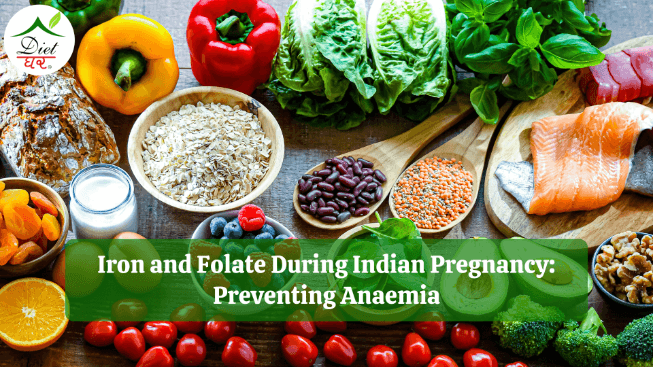
Iron and Folate During Indian Pregnancy: Preventing Anaemia
India has the highest burden of anaemia in pregnancy in the world. Over 50% of pregnant Indian women are anaemic, and in some states (Rajasthan, Uttar Pradesh, Bihar), the prevalence exceeds 60%. This is not just a number, anaemia in pregnancy increases the risk of preterm birth, low birth weight, maternal mortality, postpartum haemorrhage, and impaired newborn brain development. It is a public health crisis that begins in the individual kitchen.
The underlying causes of this crisis are multiple: widespread iron deficiency entering pregnancy, diets built around low-bioavailability plant iron, high phytate intake that blocks iron absorption, frequent pregnancies with inadequate recovery time between them, and widespread folate deficiency that worsens the anaemic picture.
This guide is for pregnant Indian women, and for women planning to conceive, who want to understand what their bodies need and how to get it from Indian food and targeted supplementation.
Why Pregnancy Demands So Much Iron
During pregnancy, your body needs iron for:
- Expanding blood volume (plasma volume increases by 40–50%, requiring massive red blood cell production)
- Fetal iron stores (the baby builds iron reserves that will last their first 4–6 months of life)
- Placental iron transfer (the placenta has active iron transport proteins)
- Postpartum blood loss recovery
Total additional iron requirement over a full pregnancy: approximately 1,000 mg, distributed as:
- 500 mg for maternal red blood cell expansion
- 300 mg for the fetus
- 200 mg for placenta and other tissues
Daily iron requirements jump from 18 mg (non-pregnant women) to 27 mg during pregnancy. In the third trimester, requirements reach 40–50 mg per day. Meeting this through diet alone is extremely difficult for most Indian women given the predominance of low-bioavailability plant iron sources.
Folate and Folic Acid: The Neural Tube Connection
Folate (the natural form) or folic acid (the synthetic supplement form) is required for DNA synthesis and cell division. The neural tube. The embryonic structure that becomes the brain and spinal cord, closes between days 21 and 28 after conception, often before a woman even knows she is pregnant. Adequate folate during this critical window reduces neural tube defects (spina bifida, anencephaly) by up to 70%.
This is why folic acid supplementation is recommended starting at least one month before conception, not just after a positive pregnancy test. Many Indian women first take folic acid when they confirm pregnancy, by which time the neural tube has already closed.
Recommended intake: 400–800 mcg of folic acid per day for low-risk pregnancies; 5 mg (5,000 mcg) per day for women with a personal or family history of neural tube defects, diabetes, obesity, or certain epilepsy medications.
Iron-Rich Indian Foods for Pregnancy
The challenge for Indian pregnant women is that the highest bioavailability iron (haem iron from meat) is not consumed by vegetarians, and the plant iron sources (non-haem) require specific strategies to be absorbed effectively.
For Vegetarian Mothers
Horsegram (kulthi): 7 mg iron per 100g cooked. The highest among common Indian legumes. Make a simple kulthi soup or add sprouted kulthi to salads.
Rajma: 6.7 mg per 100g. The familiar North Indian curry, make it with tomatoes (vitamin C) for enhanced absorption.
Masoor dal: 4.9 mg per 100g. The fastest-cooking dal, easiest to prepare when pregnancy fatigue is high.
Drumstick leaves (moringa): 28 mg per 100g dried. Among the highest plant iron sources available. Drumstick leaf dal (sahjan ke patte ki dal), dried moringa powder in chaas, or drumstick leaf curry, consume two to three times weekly.
Sesame seeds (til): 14.5 mg per 100g. Use in chutneys, laddoos, and as garnish. Even two tablespoons (20g) provides approximately 3 mg iron.
Amaranth grains and leaves (rajgira/chaulai): Rajgira grain provides 7.6 mg per 100g. Amaranth leaves are high in iron and folate. Use in sabzis during pregnancy.
Jaggery (gur): 11 mg per 100g. One small piece (10g) with each iron-rich meal adds to daily intake while providing cultural comfort. Limit in gestational diabetes or blood sugar concerns.
Dates (khajoor): 1 mg per 100g, not the highest, but easily accepted in pregnancy and provides additional B vitamins, fibre, and calories. Traditional Indian recommendation of eating 2–3 dates daily has modest nutritional merit.
For Non-Vegetarian Mothers
Chicken liver (kaleji): 13 mg per 100g haem iron, 25–30% bioavailable. One serving twice a week significantly improves iron status. Also rich in folate (145 mcg per 100g), nearly half the daily requirement in a single serving. However, limit to two servings per week as liver is very high in preformed vitamin A (retinol), excess of which can cause birth defects.
Mutton: 2.7 mg per 100g with excellent bioavailability. Weekly consumption supports iron intake alongside plant sources.
Eggs: 1.2 mg per egg. Not iron-dense but the haem fraction and supporting nutrients make them complementary to plant sources. Daily consumption is reasonable and safe in pregnancy.
Folate-Rich Indian Foods
Getting folate from food is important even when supplementing, because food folate provides a matrix of supporting nutrients:
- Methi leaves (fresh fenugreek): 95 mcg folate per 100g. Include in rotis (methi thepla, methi paratha), sabzi, and dal.
- Spinach (palak): 194 mcg per 100g cooked. Despite the oxalate concern for kidney stone patients, spinach is an excellent folate source for pregnant women without stone history.
- Moong dal (sprouted): 226 mcg per 100g. Sprouted moong is one of the best plant folate sources and is easy to digest.
- Lobia (black-eyed peas): 210 mcg per 100g cooked.
- Amaranth leaves: 85 mcg per 100g.
- Beetroot: 109 mcg per 100g, also provides iron and fibre.
- Rajma: 130 mcg per 100g cooked.
- Drumstick leaves: 44 mcg per 100g fresh.
Absorption Strategies: Making Food Iron Work
The most important nutritional skill for pregnancy is maximising iron absorption from plant sources. The same strategies that help non-pregnant women (detailed in our iron deficiency guide) are even more critical during pregnancy:
- Squeeze lemon over dal and sabzi at every meal
- Eat vitamin C-rich foods (amla, guava, tomatoes, capsicum) at each meal
- Avoid tea and coffee for 2 hours around meals
- Soak legumes 8–12 hours before cooking
- Separate iron-rich foods from calcium-rich foods when possible
- Cook in cast iron kadai for tomato-based dishes
The Supplement Reality: What You Must Take
Dietary changes are essential but insufficient for most Indian pregnant women. Supplementation is necessary. Here is what should typically be taken (confirm all dosing with your OB/GYN):
Folic acid: 400 mcg daily from before conception through the first trimester minimum; ideally continued throughout pregnancy. 5 mg if in high-risk category.
Iron supplement: Most Indian OBs prescribe 60 mg elemental iron daily during pregnancy. For women who are already iron deficient at conception, a therapeutic dose (120–200 mg elemental iron) may be prescribed for initial correction.
To improve iron supplement absorption: take on empty stomach or with vitamin C-rich food; avoid taking with milk, tea, coffee, or calcium supplements; take at least 2 hours after antacids.
If standard ferrous sulphate causes severe nausea, constipation, or dark stools, ask about alternatives: ferrous bisglycinate (gentler, better absorbed, can be taken with food), ferrous ascorbate, or IV iron infusion for severe anaemia or intolerance to oral iron.
Calcium: 500–1,000 mg daily. Separate from iron by at least 2 hours, they compete for the same intestinal transporter.
Vitamin D: 1,000–2,000 IU daily. Deficiency is near-universal in Indian pregnant women.
B12: Critical for vegetarian and vegan mothers. Deficiency impairs neurological development in the fetus. Supplement 500–1,000 mcg daily if following vegetarian diet.
Monitoring During Pregnancy
A complete blood count (CBC) should be checked at the first antenatal visit, at 28 weeks, and at 36 weeks minimum. Target haemoglobin: above 11 g/dL in first and third trimesters; above 10.5 g/dL in second trimester. Serum ferritin below 30 mcg/L indicates depleted iron stores even with borderline haemoglobin and should prompt increased supplementation and dietary focus.
Anaemia in pregnancy is preventable and treatable. The combination of dietary iron optimisation, absorption enhancement strategies, and appropriate supplementation, started early and maintained consistently, protects both mother and baby through the most nutritionally demanding period of a woman's life.
Get Your Personalized Diet Plan Today!
This article provides general information about nutrition and diet planning. Download the DietGhar app for a customized Indian diet plan tailored to your body type, health goals, and food preferences — with daily tracking and expert support.
About the Author
Written by the DietGhar expert team — certified dietitians with 10+ years of experience helping clients achieve their health goals through personalized Indian diet plans.
Find a Dietitian Near You
Get personalized nutrition plans from certified dietitians in your city. Online consultations available across India.

