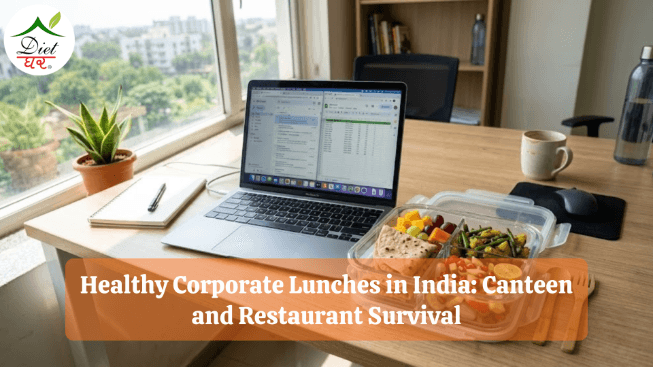
Healthy Corporate Lunches in India: Canteen and Restaurant Survival
The Office Eating Problem
Most working Indians spend more waking hours at the office than anywhere else. Lunch. The single most important meal of the nutritional day, happens in an environment optimised for convenience and palatability, not nutrition. The canteen serves what people will buy quickly. The nearby restaurants offer large, oily portions designed to be satisfying, not balanced. And the food delivery apps that have colonised Indian office culture optimise for taste, speed, and your past orders, not for helping you eat well.
The result: millions of urban Indian professionals eat a nutritionally compromised lunch every single working day, then wonder why they are tired by 3pm, gaining weight despite their intentions, and not achieving the health outcomes they want.
This guide is practical and specific to the Indian corporate context. It does not tell you to meal-prep elaborate breakfasts or bring tiffin boxes every day (though those are fine options). It tells you how to navigate the actual environment you are in.
The Office Canteen: Making the Best of What Is There
Most corporate canteens in India offer some version of a thali with rice, dal, one or two sabzis, and roti. The default serving proportions are typically heavy on rice and light on everything else. The oil content is usually higher than home cooking. But the raw material, whole grains, legumes, vegetables, is reasonably good if you make specific choices.
Canteen Navigation Strategies
Fill half your plate with sabzi and dal before taking rice or roti. When you control what goes on your plate first, the overall composition improves automatically. Most people fill the plate with rice and then add accompaniments, reverse this habit.
Ask for extra dal. In most canteens, this is possible and sometimes free. Dal is your primary protein source in a vegetarian canteen meal. A double portion of dal with a half portion of rice dramatically improves the nutritional balance of the meal.
Choose curd (raita) over additional sabzi fried in oil. Curd adds protein, probiotics, and calcium without adding significant calories. It is also cooling and digestive. If the canteen offers raita or plain curd, include it.
Skip the fried sides. Many canteens offer fried options as extras, puri instead of roti, papad (fried), chips, or pakora sides. These add empty calories. The main components of a canteen thali are nutritionally acceptable; the fried additions are not.
Choose roti over puri or bhatura. The cooking method matters. Plain roti is a whole grain, moderate-calorie option. Puri is deep-fried in refined oil. If you can choose, always choose the roti.
The Restaurant Lunch: Order Like You Know What You Are Doing
North Indian Restaurants
Dal makhani, paneer butter masala, chicken gravy, these restaurant staples are made with significantly more cream, butter, and oil than any home version. A restaurant portion of dal makhani can contain 400–500 calories in the dal alone. Navigation strategies:
- Order tandoori items (chicken tikka, tandoori roti, seekh kebab) over gravy preparations, much lower in fat
- Dal tadka is significantly lighter than dal makhani, order it instead
- Request roti over naan (which has butter and maida)
- Raita as a side is nutritionally excellent, yogurt and vegetables with minimal oil
- Avoid the bread basket, garlic naan, butter naan, and lacha paratha are extremely calorie-dense
South Indian Restaurants
South Indian is generally the most nutritionally favourable cuisine option in Indian corporate areas. Dosa, idli, sambar, rasam, these are relatively low in unhealthy fat and high in fermented probiotic content. Navigation:
- Plain dosa or masala dosa over cheese dosa or butter dosa (same nutrition, one-third the calories)
- Idli sambar is an excellent, protein-reasonable, low-fat lunch
- Include rasam. The thin tamarind-based soup is excellent for digestion and is very low calorie
- Curd rice to finish, probiotic, cooling, satiating
Thali Restaurants
A traditional unlimited thali is both the best and worst option depending on how you eat it. It offers variety and genuine whole foods. The problem is the "unlimited" aspect, most people overeat significantly. Strategy: eat one round thoughtfully, including all items in balanced proportions. Resist the reflexive "one more roti" or additional helpings of the sweetest or most appealing items. The first round of a thali is usually well-balanced. The second is usually excess.
Street Food and Quick Service
Not all street food is unhealthy. Rajma chawal from a roadside stall is genuinely nutritious. Dal rice is excellent. Egg bhurji with roti is a high-protein, moderate-calorie lunch. The problematic street foods are those dominated by maida, deep frying, and excess oil: kachori, puri bhaji as a daily lunch, pakoras, and the increasingly prevalent Chinese-Indian fusion items (hakka noodles, Manchurian) which combine refined carbohydrates with excess oil and sodium.
Food Delivery Apps: The Algorithm Works Against You
Swiggy, Zomato, and other delivery apps have made the selection problem worse by learning your preferences and serving you more of what you have ordered before. If you have ordered butter chicken thrice, the algorithm weights these options prominently. Breaking out of this feedback loop requires conscious intention.
Better Delivery Choices
- Bowls and salads: Many delivery apps now have health-focused restaurants offering grain bowls, salad bowls, and protein bowls in Indian flavours. These are worth exploring and can become reliable rotation items.
- Grilled over fried: Most restaurants offer both, actively choose grilled or tandoor-prepared items over fried
- Dal over gravy: When ordering Indian, dal tadka or plain dal is a far better choice than butter- or cream-based gravies
- Customise orders: Ask for less oil, less salt, or extra vegetables, many restaurants accommodate this
- Portion size: Restaurant delivery portions are typically designed for 1.5–2 people. Eat half, save the rest for a snack or split with a colleague
The 3pm Slump: Why It Happens and What to Do
The post-lunch energy crash that hits most Indian corporate workers between 2:30–4pm is not weakness or laziness. It is a physiological consequence of eating a high-glycaemic lunch (lots of rice and refined carbohydrates, little protein and fibre) that causes a blood sugar spike followed by a sharp decline.
The solution is lunch composition, not caffeine (which is a temporary fix that delays the crash and disrupts evening sleep). A lunch with adequate protein and fibre sustains blood sugar through the afternoon without a crash. The practical test: if you feel drowsy an hour after lunch, your lunch was too carbohydrate-heavy and too low in protein and fibre.
Alongside a better-composed lunch, a small afternoon snack at 4pm prevents the worst of the slump. See our guide to office snacking for the best options.
The 5-Day Lunch Plan for Corporate Indians
- Monday: Canteen thali, half plate sabzi and dal, quarter plate rice, curd
- Tuesday: Delivery: dal tadka + 2 tandoori roti + raita from a North Indian place
- Wednesday: South Indian: masala dosa + sambar + curd rice
- Thursday: Brought from home: rajma chawal in a tiffin box
- Friday: Restaurant: dal rice + paneer sabzi + salad, one round of thali
Consistency over perfection. Five nutritionally reasonable lunches per week, even imperfect ones, beats two excellent lunches and three fast food meals. Set a standard you can maintain, not an ideal you will abandon.
Sources
- Dietary Guidelines for Indians 2024, ICMR National Institute of Nutrition (NIN), Hyderabad
- Indian Food Composition Tables (IFCT) 2017, ICMR National Institute of Nutrition (NIN), Hyderabad
- Healthy diet (fact sheet), World Health Organization
Get Your Personalized Diet Plan Today!
This article provides general information about nutrition and diet planning. Download the DietGhar app for a customized Indian diet plan tailored to your body type, health goals, and food preferences: with daily tracking and expert support.
About the Author
Written by The DietGhar Team nutritionists, helping clients since 2016 with personalised Indian diet plans. How our nutritionists work
Popular guides
Diet plans
Articles
- PCOD diet chart, 7-day Indian meal plan
- Insulin resistance diet for Indians
- PCOS acne and skin: diet changes
- Indian keto diet for beginners
- Stress eating and cortisol
- Gluten-free Indian food for celiac disease
- Nutrition for Indians over 60
- South Indian diet for weight loss
- North Indian diet makeover
- Breastfeeding diet chart
- Winter diet and immunity foods
- Best Indian foods for hair growth
- Why crash diets fail
Find a Dietitian Near You
Get personalized nutrition plans from qualified nutritionists in your city. Online consultations available across India.

