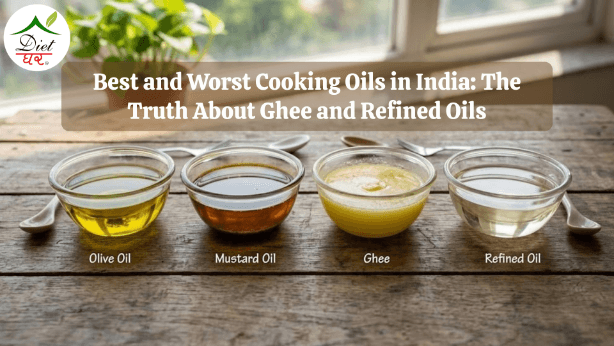
Best and Worst Cooking Oils in India: The Truth About Ghee and Refined Oils
India's Complicated Relationship with Cooking Fat
No topic in Indian nutrition generates more confusion than cooking oils. For decades, Indians were told that ghee (the beloved traditional fat) was dangerous and refined vegetable oils were heart-healthy. Then the science shifted, and suddenly ghee was being rehabilitated. Now coconut oil is trending, cold-pressed oils are fashionable, and rice bran oil is marketed as the ideal for heart health.
Behind all the marketing and confusion, there is a relatively clear scientific picture that this article will explain. The answer is not "all natural fats are good" or "all vegetable oils are bad". It is considerably more nuanced and depends on the fatty acid profile of the oil, how it is processed, and how it is used in cooking.
The Science of Dietary Fats: What Matters
Saturated Fats
Saturated fats, abundant in ghee, coconut oil, and animal fats, were the dietary villain of the 1980s-2000s, blamed primarily for raising LDL cholesterol and heart disease risk. More recent meta-analyses have substantially revised this picture: replacing saturated fat with refined carbohydrates (which most people did) did not reduce heart disease risk. Replacing saturated fat with unsaturated fat from whole food sources (nuts, seeds, fish) is beneficial. Saturated fat in moderate amounts from whole food sources (dairy, coconut) is not the crisis it was painted as.
Monounsaturated Fats (MUFA)
Oleic acid is the primary MUFA, found in high quantities in olive oil and to a lesser extent in mustard oil. MUFAs are associated with reduced LDL cholesterol, anti-inflammatory effects, and cardiovascular protection. The Mediterranean diet, rich in olive oil, has the strongest evidence base of any dietary pattern for heart health.
Polyunsaturated Fats (PUFA)
PUFAs include both omega-3 and omega-6 fatty acids. Omega-3s (found in fatty fish, flaxseed, walnuts) are anti-inflammatory. Omega-6s (found in sunflower, soybean, and corn oil) are necessary in small amounts but inflammatory in excess, particularly when the omega-6 to omega-3 ratio is very high, as in most modern Indian diets. The typical Indian urban diet now has an omega-6:omega-3 ratio of 15:1 or higher; the healthy target is 4:1 or lower.
Trans Fats
Industrially produced trans fats (found in hydrogenated vegetable oils, vanaspati, and many commercial fried foods and baked goods) are uniformly harmful. They raise LDL, lower HDL, and promote inflammation. India has moved toward trans fat restrictions in food production, but partially hydrogenated oils still appear in cheap baked goods and commercial fried foods. Always check for "partially hydrogenated" on ingredient labels.
The Best Cooking Oils for Indian Kitchens
Ghee, Traditional, Rehabilitated, Nuanced
Ghee (clarified butter) is India's traditional cooking fat, used for thousands of years. It is about 65% saturated fat, which drove its demonisation. But ghee also contains butyrate (which supports gut health and reduces colon cancer risk), conjugated linoleic acid (CLA, which has modest anti-inflammatory and anti-obesity properties), fat-soluble vitamins A, D, E, and K, and has a high smoke point (250°C) that makes it excellent for high-heat cooking.
The verdict on ghee: 1–2 teaspoons per day for healthy adults is not harmful and may be beneficial. The quantity matters. The traditional Indian diet used ghee judiciously, not in the excess that Western fears (and sometimes the reaction against those fears) suggest. Ghee is not a health food in unlimited quantities, but it is a legitimate, nutritious traditional fat in moderate use.
Cold-Pressed Mustard Oil, The North Indian Workhorse
Traditional cold-pressed mustard oil (kachi ghani sarson ka tel) has a fatty acid profile that is genuinely excellent: approximately 60% MUFA (oleic acid), 22% ALA omega-3, and only 5% saturated fat. This gives it among the best omega-3 to omega-6 ratios of any commonly available Indian cooking oil. Erucic acid, once a concern in mustard oil, has been shown to be safe at culinary amounts in humans (concerns arose from studies with very high doses in animals).
Mustard oil has a high smoke point, strong flavour (characteristic in Bengali and North Indian cooking), and antimicrobial properties from its allyl isothiocyanate content. Cold-pressed (kachi ghani) is significantly better than refined mustard oil. The red label on mustard oil bottles in India (a regulatory requirement that restricts its sale as edible oil in some contexts) is a legacy regulatory issue, not a health warning, most nutrition researchers consider it an excellent cooking oil.
Cold-Pressed Coconut Oil
Coconut oil is controversial. It is about 90% saturated fat. The highest saturated fat content of any commonly used oil. However, the saturated fat in coconut oil is primarily medium-chain triglycerides (MCTs), which are metabolised differently from long-chain saturated fats: they are absorbed directly to the liver and burned for energy rather than stored. Coconut oil modestly raises both LDL and HDL cholesterol.
The verdict: virgin/cold-pressed coconut oil in moderate amounts is reasonable for cooking at moderate heat. It has a lower smoke point than mustard oil or ghee and is not ideal for high-heat frying. It is culturally central in Kerala, Goa, and coastal Karnataka cuisine, where it pairs beautifully with the regional food. Using it as one of several oils in the household is sensible; using it exclusively is not justified by the evidence.
Til (Sesame) Oil
Cold-pressed sesame oil (til oil) has a good fatty acid profile, balanced MUFA and PUFA with some omega-3, and contains sesamol and sesamin, antioxidants with anti-inflammatory properties. It has a distinctive nutty flavour that is central to South Indian, particularly Tamil, cooking. Both for flavour and nutrition, sesame oil in South Indian cooking is an excellent tradition.
The Problematic Oils
Refined Sunflower Oil
Refined sunflower oil is the most commonly used cooking oil in urban India, and also the most nutritionally problematic. It is approximately 65–70% omega-6 linoleic acid. When used in quantities typical of Indian cooking, it dramatically shifts the omega-6:omega-3 ratio in the pro-inflammatory direction. It also has a lower smoke point than its refined status suggests (polyunsaturated fats degrade and oxidise when heated to cooking temperatures, producing harmful aldehydes).
Refined sunflower oil is cheap and widely available, which is why it dominates Indian kitchens. Nutritionally, however, it is one of the less desirable options. Reducing its use and replacing with mustard oil, ghee, or cold-pressed alternatives is one of the most impactful and underrated dietary improvements Indian families can make.
Refined Soybean Oil
Similar profile to refined sunflower oil, high in omega-6, poor stability at cooking temperatures, and heavily processed. Widely used in restaurant cooking and packaged foods in India. The same concerns apply.
Vanaspati (Partially Hydrogenated Oil)
Vanaspati. The solid, shelf-stable vegetable fat used in cheap fried foods and commercial baked goods, contains industrial trans fats and should be avoided entirely. It is increasingly restricted in Indian food production but still appears in some commercial products and cheap street food frying.
Palm Oil
Palm oil is widely used in commercial food production in India (check ingredient labels. It appears in biscuits, instant noodles, and countless packaged foods). It is about 50% saturated fat and 40% MUFA. The saturated fat content is a concern in excess, but more importantly, industrial palm oil production is associated with severe deforestation and environmental destruction. From a health perspective, it is not dramatically harmful in moderate amounts, but from an environmental perspective, reducing packaged foods that contain it is worthwhile.
The Practical Oil Strategy for Indian Homes
- Daily cooking tadkas and sabzis: Cold-pressed mustard oil (for North and East India) or cold-pressed coconut/sesame oil (for South and West India)
- High-heat frying: Ghee or refined groundnut (peanut) oil, better smoke point stability
- Salad dressings and finishing: Extra-virgin olive oil (increasingly affordable in India)
- Daily moderate amount: Total added fat 3–4 teaspoons per day. The Indian tradition of generous oil in cooking significantly exceeds recommended amounts and is worth reducing
No oil is perfect, and variety is actually sensible, different oils provide different fatty acid profiles and fat-soluble compounds. Using traditional Indian oils (ghee, mustard, sesame, coconut) in moderate amounts is genuinely better than using large amounts of refined industrial vegetable oils.
Get Your Personalized Diet Plan Today!
This article provides general information about nutrition and diet planning. Download the DietGhar app for a customized Indian diet plan tailored to your body type, health goals, and food preferences — with daily tracking and expert support.
About the Author
Written by the DietGhar expert team — certified dietitians with 10+ years of experience helping clients achieve their health goals through personalized Indian diet plans.
Find a Dietitian Near You
Get personalized nutrition plans from certified dietitians in your city. Online consultations available across India.

