
Winter Vegetables and a Week of Indian Meals
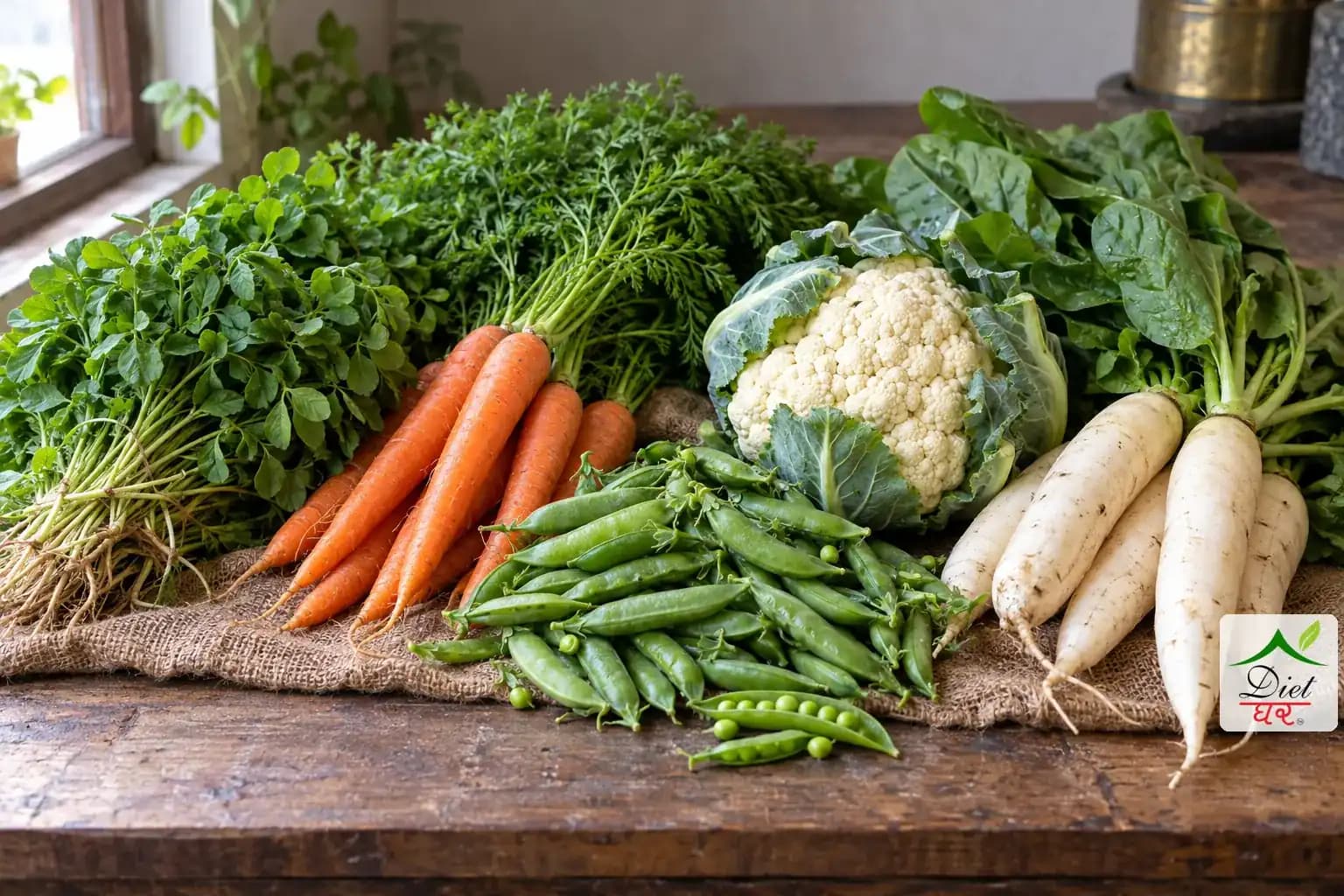
Illustrative image generated with AI
November is when the sabzi market gets good. Methi, palak, sarson and bathua pile up in the greens corner, carrots turn red and sweet, mooli is long and sharp, peas are in the pod, and amla sits in small heaps at the end. This is the best vegetable season in north India, and it is cheap.
Most people buy the same five things. Here is what is worth putting in the bag, what each one actually offers, and a week of meals that use them without any special effort.
The winter list
Numbers below are per 100 g raw, rounded, from IFCT 2017 (National Institute of Nutrition) and USDA FoodData Central. Tables differ by a few calories, so treat them as close, not exact.
Methi (fenugreek leaves). About 45 to 50 kcal, 4 g protein, with a lot of iron and fibre for a leaf. The bitterness is the point. Add it to parathas, dal, besan chilla or a plain aloo methi.
Palak (spinach). About 23 to 26 kcal and 2.5 to 3 g protein. A good source of folate and vitamin K, with iron. The iron is not absorbed as well as people think, so a squeeze of lemon helps. People with kidney stones advised to limit oxalate should ask their doctor about spinach.
Sarson (mustard greens). About 30 to 35 kcal, 3 to 4 g protein. The core of sarson ka saag, usually cooked with some palak and bathua and finished with makki atta. The calorie count of the saag depends almost entirely on the ghee and butter on top.
Bathua. About 30 kcal, 3.5 g protein. Mild, a bit earthy. Mix it in the dal, raita or paratha filling. Cooked bathua is a common winter dish in Uttar Pradesh and Punjab, and it is a decent source of calcium for a leaf.
Gajar (carrot). About 40 to 48 kcal, 1 g protein, lots of beta carotene. Eat it raw as a salad, as a sabzi, or as a small bowl of gajar halwa on a day you plan it. The halwa is a sweet: made with khoa, sugar and ghee, a 100 g bowl is often 200 kcal or more.
Mooli (radish). About 16 to 20 kcal. Very low in calories, good as a salad or a stuffed paratha filling. The paratha is where the calories come from.
Matar (green peas). About 80 to 90 kcal, 5 to 6 g protein, 5 g fibre. Peas have more calories than most vegetables, but they bring real protein. Matar paneer is a fine meal, with a lighter hand on the oil.
Shalgam (turnip). About 25 to 30 kcal. Slightly sweet, often under used. Cook it with a little hing and mustard, or add it to a mixed vegetable.
Amla (Indian gooseberry). About 45 to 60 kcal and one of the richest natural sources of vitamin C. Reported values vary a lot from table to table, from roughly 250 to 600 mg per 100 g depending on fruit and method, so treat the number loosely. It is tart. Eat it in a chutney, a murabba (that one has sugar) or a small raw piece with salt.
Cooking them without losing the point
Winter vegetables fall short when they get buried in oil, butter and cream. Palak paneer with cream is lovely, but it is a heavy dish. Make it with a small amount of oil and a modest amount of paneer and it is much lighter.
Steaming or a quick saute keeps the colour and texture. Cooking greens for a long time in a lot of water loses some vitamin C and folate. Not a disaster, but there is no gain either.
A week of winter meals
This is a normal north Indian household week, not a diet. Quantities are for an adult eating a moderate meal. Adjust to your own plan.
Monday. Breakfast: methi paratha, one, with curd. Lunch: two rotis, moong dal, mooli salad, a small bowl of curd. Dinner: palak dal with one roti and a gajar salad.
Tuesday. Breakfast: besan chilla, two, with mint chutney. Lunch: matar pulao, raita, salad. Dinner: aloo shalgam sabzi, dal and one roti.
Wednesday. Breakfast: vegetable dalia with peas and carrot. Lunch: two rotis, rajma or chana, bathua raita. Dinner: sarson saag with one makki roti and a spoon of white butter.
Thursday. Breakfast: two idlis or an egg bhurji with one roti. Lunch: palak paneer, two rotis, salad. Dinner: vegetable soup with a mix of carrot, peas and beans, and toasted brown bread or a roti.
Friday. Breakfast: stuffed mooli paratha, one, with curd. Lunch: dal, rice, a gobi or matar sabzi. Dinner: khichdi with a vegetable and a small spoon of ghee.
Saturday. Breakfast: poha with peas and peanuts. Lunch: two rotis, kadhi, an aloo gobi, salad. Dinner: baked or grilled paneer or tofu, a large plate of stir fried winter vegetables, one roti.
Sunday. Breakfast: sprouts chaat with chopped carrot and amla if you like the sourness. Lunch: matar paneer, two rotis, a bowl of raita. Dinner: dal, jeera rice and a large salad, or soup.
Between meals: a fruit, roasted chana, a handful of peanuts or a cup of chai with half the sugar.
Buying and storing
- Greens wilt fast. Wash, spin dry or pat, then store loose in a cloth bag or a container lined with paper in the fridge. Cook them within two to three days.
- Carrots and mooli keep a week in the fridge. Remove the leaves from mooli, which pull moisture out of the root, and use the leaves in a sabzi or a paratha.
- Shell peas just before cooking, or buy frozen peas when the fresh ones are out. Frozen peas are fine, not a compromise.
- Wash well. Leafy winter vegetables hold sand.
If you take medicines
Vitamin K in greens matters if you take warfarin or a similar blood thinner. Keep your greens intake steady, not suddenly large or small, and tell your doctor. If you have kidney stones, thyroid problems or a medical diet, check how much spinach, bathua, cauliflower and cabbage suit you. See our note on thyroid and goitrogen foods for one example.
Want a plan around the winter market?
A nutritionist at DietGhar can build a plan using the vegetables your family likes and the winter foods near you. Plans start at Rs 499 for 15 days. See our plans or message us on WhatsApp at +91 78382 49321. You may also like winter diet for Indians and bajra, makki and jowar rotis for winter.
Figures from IFCT 2017 (NIN, Hyderabad) and USDA FoodData Central, rounded, last checked 13 October 2026. This is general information, not medical advice.
Sources: Indian Food Composition Tables 2017 (ICMR-NIN); USDA FoodData Central; ICMR-NIN Dietary Guidelines for Indians. Values are rounded and vary between tables.
FAQ
Which vegetables are best in winter in India?
Methi, palak, sarson, bathua, carrot, mooli, matar and amla are all at their best and cheapest in winter. Eat a mix so you get different nutrients.
Is it fine to eat green leafy vegetables every day?
For most people, yes. If you take a blood thinner like warfarin, have kidney stones or thyroid problems, ask your doctor how much suits you.
Are frozen peas as good as fresh ones?
Frozen peas are a sound choice when fresh ones are not in season. They are usually frozen soon after picking.
How do I stop winter sabzis from becoming heavy?
Use a small amount of oil or ghee, avoid cream and butter on top, and steam or saute greens lightly. Add dal, curd or paneer for protein.
Sources
- Dietary Guidelines for Indians 2024, ICMR National Institute of Nutrition (NIN), Hyderabad
- Indian Food Composition Tables (IFCT) 2017, ICMR National Institute of Nutrition (NIN), Hyderabad
- Healthy diet (fact sheet), World Health Organization
Get Your Personalized Diet Plan Today!
This article provides general information about nutrition and diet planning. Download the DietGhar app for a customized Indian diet plan tailored to your body type, health goals, and food preferences: with daily tracking and expert support.
About the Author
Written by The DietGhar Team nutritionists, helping clients since 2016 with personalised Indian diet plans. How our nutritionists work
Popular guides
Diet plans
Articles
- PCOS and PCOD diet plan, 7-day Indian meal plan
- Insulin resistance diet for Indians
- PCOS acne and skin: diet changes
- Indian keto diet for beginners
- Stress eating and cortisol
- Gluten-free Indian food for celiac disease
- Nutrition for Indians over 60
- South Indian diet for weight loss
- North Indian diet makeover
- Breastfeeding diet chart
- Winter diet and immunity foods
- Best Indian foods for hair growth
- Why crash diets fail
Find a Dietitian Near You
Get personalized nutrition plans from qualified nutritionists in your city. Online consultations available across India.

