
Bajra, Makki and Jowar Rotis for Winter
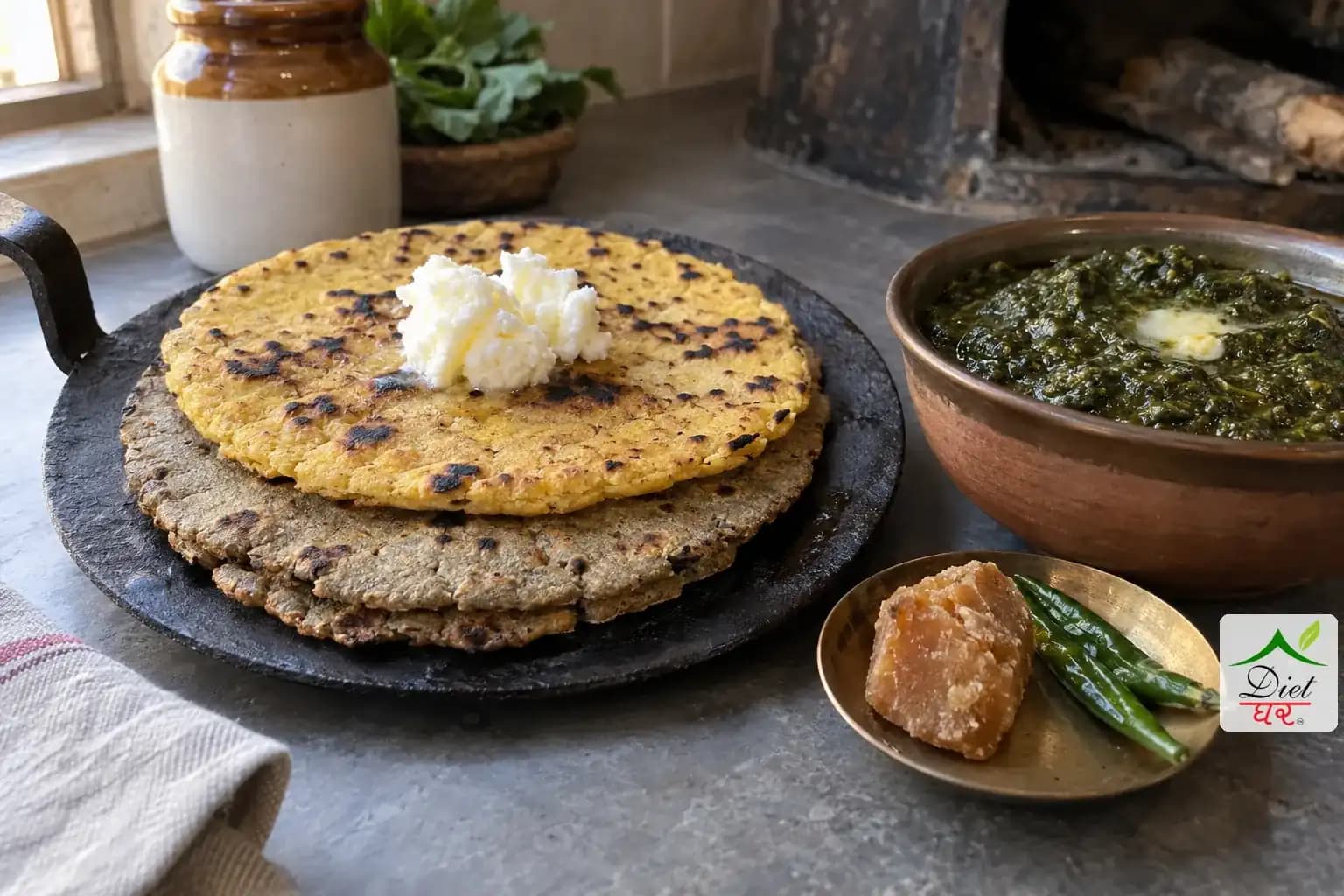
Illustrative image generated with AI
When the cold arrives, the roti changes in a lot of Indian homes. Bajra in Rajasthan and Gujarat, makki with sarson in Punjab, jowar in Maharashtra and Karnataka. These are old winter foods, and the reasons are practical: warming, filling, and local.
People also ask if these rotis are better for weight loss than wheat. The honest answer is somewhat, in a few ways, and not as much as the internet says.
What the tables say
Per 100 g of flour, rounded, from IFCT 2017 (National Institute of Nutrition) and USDA FoodData Central:
- Whole wheat atta: about 340 to 350 kcal, 10 to 12 g protein, around 11 g fibre.
- Bajra (pearl millet): about 350 to 365 kcal, 10 to 12 g protein, 11 g fibre.
- Jowar (sorghum): about 335 to 350 kcal, 10 to 11 g protein, around 10 g fibre.
- Makki (maize flour): about 340 to 360 kcal, 7 to 9 g protein, 7 to 9 g fibre.
Look closely. The calories are almost the same as wheat. Bajra is a touch higher, jowar and makki about equal. The protein is similar, and none of them is a high protein food. They do not win on a calorie table.
So why bother? Fibre, the way they are eaten, and variety. All three are naturally gluten free, which matters for people who avoid wheat. Bajra has a lot of iron for a grain, and jowar has a slower, steadier feel on the stomach. Millets also add variety, and variety is good in itself, because it spreads the nutrients.
What a roti actually costs
A roti uses about 30 to 40 g of flour. That makes:
- Wheat roti, 30 g flour: about 100 to 110 kcal, 3 g protein.
- Bajra roti, 40 g flour: about 145 kcal, 4.5 g protein.
- Jowar roti, 40 g flour: about 135 kcal, 4 g protein.
- Makki roti, 40 g flour: about 140 kcal, 3.5 g protein.
These are plain, with no ghee. A bajra roti is thicker, so one bajra roti is usually more filling than one wheat roti. That is the real benefit: you may eat fewer. The extras matter much more than the grain. A spoon of ghee or white butter on top is 40 to 90 kcal. Sarson saag with butter and a makki roti can be 450 to 500 kcal before you have added anything else.
How to make bajra, makki and jowar rotis
These flours have no gluten, so the dough does not stretch. Almost every complaint about these rotis ("it breaks", "it is hard", "it tastes like cardboard") is solved by the same few things.
- Use hot water. Pour it slowly into the flour and mix with a spoon first, then knead with the heel of your hand while still warm. The hot water cooks some of the starch and makes the dough hold together.
- Knead for longer than wheat. Five minutes, with a little oil on your hands.
- Make it fresh. Millet dough dries fast. Cover with a damp cloth.
- Pat, do not roll. Press a ball on a plastic sheet, a wet cloth or a banana leaf. Pat out evenly to about 3 mm. A rolling pin tears it.
- Cook on a hot tawa, then over the flame. Cook one side, flip, then finish on the flame for a few seconds so it puffs (bajra and jowar do puff).
- Mix if you must. If the pure ones are hard going, mix 50 percent wheat flour into bajra or jowar dough. Many homes do this and it is fine.
- Add the green. Methi, bathua or grated mooli in makki and bajra dough makes it soft, and adds a winter vegetable.
What to eat them with
These rotis are good with:
- Sarson saag, the classic with makki.
- Garlic chutney, and a bowl of curd, for bajra.
- A vegetable curry and dal for jowar.
- Kadhi, baingan bharta, ringna, or a mixed sabzi.
- A hot glass of buttermilk or a small spoon of jaggery with ghee, for bajra, if you want to eat the winter way. That spoon is a sweet, count it.
Pair them with dal, curd, paneer or an egg and you have a balanced meal. The protein will come from the side, not the roti. See our note on protein in vegetarian food for ideas.
Who should go slow
- Thyroid problems. Pearl millet and some other millets contain goitrogens. In normal food amounts, cooked, most people do not have any issue, but if you have an underactive thyroid ask your doctor how often to eat bajra. Our note on goitrogen foods has more.
- Kidney problems. Millets are higher in potassium and phosphorus than refined flour. If you have kidney disease, check with your doctor before swapping.
- Diabetes. Millet rotis are often called "low GI". The evidence is mixed and depends on the grain, the grind and the portion. They are not a treatment. Check your own readings and follow your doctor.
- Children and the elderly. Digestive tolerance varies. Start with one roti.
- Bloating. Going from none to two bajra rotis a day can make some people gassy. Build up slowly and drink water.
Want a winter plan with millets in it?
A nutritionist at DietGhar can put these rotis into a plan that fits your family kitchen. Plans start at Rs 499 for 15 days. See our plans or message us on WhatsApp at +91 78382 49321. You may also like winter vegetables and a week of Indian meals.
This is general information, not medical advice. If you have a thyroid, kidney or blood sugar condition, check with your doctor before changing your staple grain.
Sources: Indian Food Composition Tables 2017 (ICMR-NIN); USDA FoodData Central; ICMR-NIN Dietary Guidelines for Indians. Figures are rounded.
FAQ
Is bajra roti better than wheat roti for weight loss?
Calories per gram are nearly the same. A bajra roti is thicker and more filling, so many people eat fewer, which is a modest edge and not a special effect.
Can I eat bajra roti every day in winter?
Most healthy people can, in normal amounts. Rotate with wheat, jowar and makki, and ask your doctor first if you have a thyroid or kidney condition.
Which has the most protein, bajra, jowar or makki?
Bajra and jowar are about 10 to 12 g per 100 g of flour, and makki is a little lower. All are close to wheat, so the protein should come from dal, curd, paneer or eggs on the side.
Why does my makki roti break?
Maize flour has no gluten. Use hot water, knead well, and pat the dough on a wet cloth or sheet. A spoon of wheat flour or a little boiled mashed potato helps it hold.
Sources
- Dietary Guidelines for Indians 2024, ICMR National Institute of Nutrition (NIN), Hyderabad
- Indian Food Composition Tables (IFCT) 2017, ICMR National Institute of Nutrition (NIN), Hyderabad
- Healthy diet (fact sheet), World Health Organization
Get Your Personalized Diet Plan Today!
This article provides general information about nutrition and diet planning. Download the DietGhar app for a customized Indian diet plan tailored to your body type, health goals, and food preferences: with daily tracking and expert support.
About the Author
Written by The DietGhar Team nutritionists, helping clients since 2016 with personalised Indian diet plans. How our nutritionists work
Popular guides
Diet plans
Articles
- PCOS and PCOD diet plan, 7-day Indian meal plan
- Insulin resistance diet for Indians
- PCOS acne and skin: diet changes
- Indian keto diet for beginners
- Stress eating and cortisol
- Gluten-free Indian food for celiac disease
- Nutrition for Indians over 60
- South Indian diet for weight loss
- North Indian diet makeover
- Breastfeeding diet chart
- Winter diet and immunity foods
- Best Indian foods for hair growth
- Why crash diets fail
Find a Dietitian Near You
Get personalized nutrition plans from qualified nutritionists in your city. Online consultations available across India.

