Why Indians Get So Much Bloating: Foods, Triggers and Real Fixes
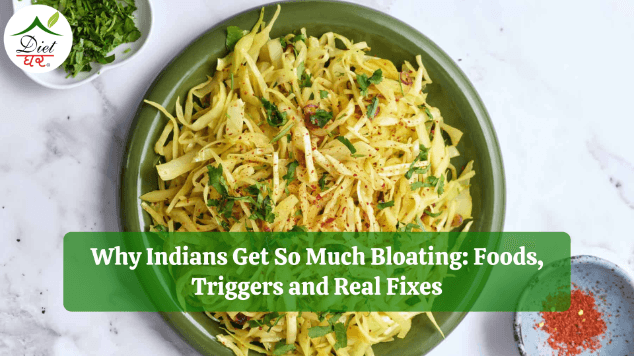
There is a particular kind of misery in feeling stuffed, distended, and gassy after what was supposed to be a perfectly healthy meal of dal, roti, and sabzi. Bloating after eating is possibly the most common digestive complaint in India, and yet most people either accept it as inevitable ("dal ka gas toh hoga") or reach for digestive tablets that address the symptom without the cause.
The causes of bloating in the Indian context are specific and mostly addressable. This is not a problem you simply have to live with.
What Is Bloating and What Causes It?
Bloating is the sensation of abdominal fullness, pressure, and distension, sometimes accompanied by visible swelling of the abdomen. It is caused by gas accumulating in the gastrointestinal tract, impaired intestinal motility that prevents gas from moving through, or visceral hypersensitivity (the gut being unusually sensitive to normal amounts of gas).
Gas in the digestive tract comes from two main sources: swallowed air, and gas produced by bacterial fermentation of undigested food in the large intestine. Most chronic bloating in Indians is caused by the second source, bacteria fermenting specific carbohydrates that the small intestine could not digest.
The Main Indian Bloating Triggers
Dal and Legumes: The Biggest Culprit
Legumes (dal, rajma, chana, moong, urad) contain oligosaccharides, specifically raffinose and stachyose, that humans cannot digest because we lack the enzyme alpha-galactosidase. These undigested oligosaccharides reach the large intestine intact, where bacteria ferment them vigorously, producing carbon dioxide, hydrogen, and methane. The result: significant gas and bloating within 1–3 hours of eating dal.
This is not a sign that you are allergic to dal or that dal is bad for you. Legume fermentation is normal human physiology. The question is whether it is excessive, and whether it can be reduced.
Solutions for dal-related bloating:
- Soak legumes for 8–12 hours before cooking. Soaking leaches raffinose and stachyose into the water (discard the soaking water, do not use it for cooking). Studies show soaking reduces oligosaccharide content by 25–65% depending on the legume and soaking time. Overnight soaking of whole legumes (rajma, chana, moong) before cooking is the single most effective anti-bloating step.
- Cook thoroughly until completely soft. Under-cooked legumes are harder to digest and cause more gas. Pressure cooker cooking until completely tender is preferable to partially cooked legumes.
- Sprout legumes before cooking. Germination activates enzymes that break down oligosaccharides. Sprouted moong dal has significantly less gas-producing compounds than unsprouted moong. Use sprouted legumes more often.
- Introduce legumes gradually if you have been eating a low-legume diet and then suddenly increase intake. The gut microbiome adapts over 3–4 weeks of consistent exposure, developing bacteria that ferment oligosaccharides more efficiently with less gas production.
- Cook with carminative spices: Hing (asafoetida), jeera (cumin), ajwain (carom seeds), saunf (fennel), and coriander seeds all reduce legume bloating. This is the reason Indian dal always includes a tempering. It is not just flavour, it is digestive technology. Make sure your dal contains these spices.
Hing (Asafoetida): The Best Anti-Bloating Spice in India
Hing (asafoetida) is the most effective Indian spice for bloating prevention. It inhibits the fermentation process that produces gas from oligosaccharides and has direct antispasmodic effects on intestinal smooth muscle. A pinch of hing added to the tempering of dal reduces bloating measurably. This is one of the most clinically validated traditional Indian food practices, hing has been studied in IBS and functional bloating with positive results.
Lactose Intolerance: The Hidden Dairy Problem
Lactose intolerance is more common in India than most people realise, estimates suggest 60–70% of Indian adults have some degree of lactase insufficiency (the inability to produce adequate lactase enzyme to digest lactose, the sugar in milk). Most Indian adults evolved in populations without long histories of dairying and therefore lack the genetic lactase persistence mutation common in Northern Europeans.
However, many lactose-intolerant Indians eat dairy, including significant amounts of milk in chai, cooking, and as a beverage without connecting it to bloating. Symptoms: bloating, gas, diarrhoea, and cramping 30 minutes to 2 hours after consuming milk or lactose-containing products.
The nuance is important: most lactose-intolerant Indians tolerate fermented dairy products quite well. Curd (dahi) and chaas (buttermilk) are made through bacterial fermentation that converts most lactose to lactic acid, reducing the lactose burden dramatically. The bacteria in curd also produce lactase. Many lactose-intolerant Indians can eat curd daily without symptoms while being unable to tolerate a glass of milk.
If you suspect lactose intolerance: try eliminating milk from chai and replacing with black tea for two weeks. Continue eating curd and chaas. If bloating significantly reduces, milk lactose is likely a trigger.
Onion and Garlic: FOS and Inulin
Onion and garlic are high in fructooligosaccharides (FOS) and inulin, prebiotic fibres that feed beneficial gut bacteria but produce significant gas in people with sensitive guts or dysbiosis. The same fibres that support gut health also cause bloating in susceptible individuals.
This is frustrating because onion and garlic are nutritionally beneficial. The solution is rarely complete elimination. It is often about cooked versus raw (cooking breaks down some FOS), portion control, and allowing the gut microbiome to adapt over several weeks of gradual exposure.
Gluten Sensitivity and Wheat
True coeliac disease affects about 1% of the Indian population. But non-coeliac gluten sensitivity (NCGS), where people experience digestive discomfort from wheat without the autoimmune damage of coeliac disease, may affect a broader group. Additionally, modern wheat varieties used in commercial atta are higher in certain proteins that some people find harder to digest than traditional wheat varieties.
If you consistently bloat after roti and bread but not after rice or millets, a two to four week trial of eliminating wheat (replace with jowar, bajra, ragi, or rice) can help identify whether wheat is a trigger.
Excess Air Swallowing
Eating too fast, talking while eating, drinking through straws, and carbonated drinks all increase swallowed air. For many people, simple behaviour changes, eating slowly, chewing thoroughly, reducing carbonated drink consumption, significantly reduce upper GI bloating (the type that causes a full, gassy feeling immediately after eating rather than 1–2 hours later).
The FODMAP Connection
FODMAP is an acronym (Fermentable Oligosaccharides, Disaccharides, Monosaccharides, And Polyols) describing categories of poorly-absorbed, fermentable carbohydrates that cause bloating and IBS symptoms in susceptible people. Indian diet is rich in high-FODMAP foods: wheat, onion, garlic, legumes, certain fruits (apple, mango, watermelon), honey, and milk.
A low-FODMAP diet, developed at Monash University, reduces IBS symptoms in about 75% of IBS patients. The full low-FODMAP protocol involves a strict elimination phase followed by systematic reintroduction to identify personal triggers. It is complex to implement and ideally done with a dietitian trained in FODMAP protocol. However, even partial FODMAP reduction (reducing the most symptomatic triggers identified through self-observation) helps many people with chronic bloating.
Practical Anti-Bloating Strategies for Indian Eating
Daily jeera water: Boil one teaspoon of cumin seeds in a glass of water for five minutes. Drink warm before meals or first thing in the morning. Jeera stimulates digestive enzyme production and reduces gut spasms. This is one of the most consistently effective Indian home remedies with solid scientific backing.
Ajwain (carom seeds): More potent than cumin for acute gas and bloating. Half a teaspoon of ajwain with a pinch of salt and warm water addresses active bloating episodes. Also effective as a preventive measure, add to dal and legume preparations during cooking.
Ginger: Accelerates gastric emptying (how quickly food moves from the stomach to the small intestine), a major cause of bloating when delayed. Fresh ginger in cooking, ginger tea, or raw ginger (small piece) with meals reduces bloating by improving motility.
Saunf (fennel seeds): Eating saunf after meals is a traditional Indian practice with real science behind it. Anethole in fennel has antispasmodic effects on intestinal smooth muscle, reducing gas-related cramping and bloating. Make it a consistent post-meal practice rather than reaching for digestive tablets.
Digestive enzyme supplements: Products containing alpha-galactosidase (the enzyme humans lack for legume digestion) like Beano are available in India and reduce legume-related bloating significantly when taken just before eating. This is a reasonable short-term support while the gut microbiome adapts, or for occasions when soaking was not possible.
Probiotics: A dysbiotic gut microbiome ferments food less efficiently, producing more gas. Regular curd consumption (two servings daily) improves microbiome composition over weeks, reducing bloating in many people. Clinical trials of specific probiotic strains (Lactobacillus acidophilus, Bifidobacterium) reduce IBS-type bloating significantly.
Reduce eating speed: The simple act of chewing each bite 20–30 times and putting the spoon/roti down between bites reduces swallowed air and allows digestive enzymes to begin breaking down food in the mouth (amylase in saliva starts starch digestion). This is underrated and costs nothing.
Chronic severe bloating with pain, unexplained weight loss, visible blood in stool, or nocturnal symptoms requires medical evaluation. It may indicate conditions like coeliac disease, IBD, or other gastrointestinal pathology beyond dietary management. For the majority of Indians with functional bloating after typical Indian meals, the strategies above produce noticeable improvement within two to four weeks of consistent application.
Sources
- Dietary Guidelines for Indians 2024, ICMR National Institute of Nutrition (NIN), Hyderabad
- Indian Food Composition Tables (IFCT) 2017, ICMR National Institute of Nutrition (NIN), Hyderabad
- Healthy diet (fact sheet), World Health Organization
Get Your Personalized Diet Plan Today!
This article provides general information about nutrition and diet planning. Download the DietGhar app for a customized Indian diet plan tailored to your body type, health goals, and food preferences: with daily tracking and expert support.
About the Author
Written by The DietGhar Team nutritionists, helping clients since 2016 with personalised Indian diet plans. How our nutritionists work
Popular guides
Diet plans
Articles
- PCOD diet chart, 7-day Indian meal plan
- Insulin resistance diet for Indians
- PCOS acne and skin: diet changes
- Indian keto diet for beginners
- Stress eating and cortisol
- Gluten-free Indian food for celiac disease
- Nutrition for Indians over 60
- South Indian diet for weight loss
- North Indian diet makeover
- Breastfeeding diet chart
- Winter diet and immunity foods
- Best Indian foods for hair growth
- Why crash diets fail
Find a Dietitian Near You
Get personalized nutrition plans from qualified nutritionists in your city. Online consultations available across India.

