Sattu protein: 20g per 100g, 8g a glass
Quick answers
- How much protein is in sattu?
- Roasted chana sattu has about 20 to 25g of protein per 100g. A 40g glass has 8 to 10g.
- How many calories are in one glass of sattu?
- A 40g glass of sattu mixed in water is about 150 calories. Sugar on top adds calories and no protein.
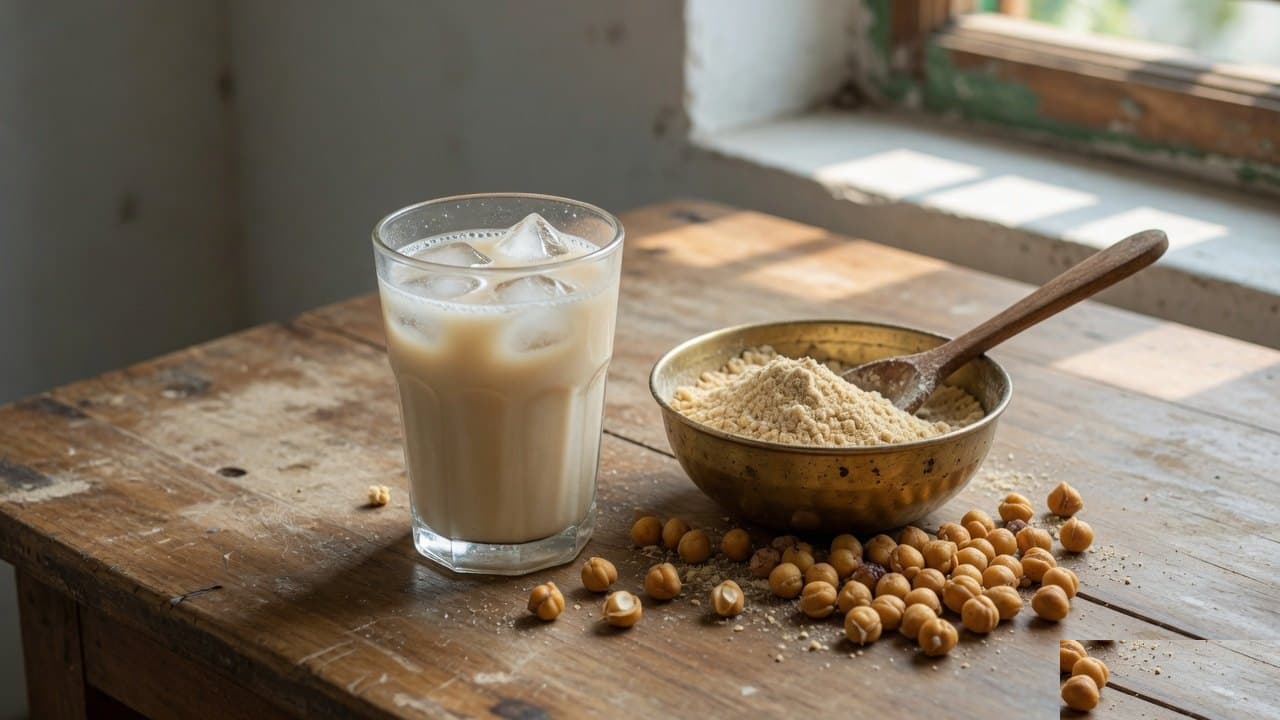
People search "sattu protein" because the glass looks light and the packet sounds serious. The useful number is plain. Roasted chana sattu has about 20 to 25g of protein per 100g. A home glass is not 100g of flour. A usual mix is 30 to 40g in water, which is 8 to 10g of protein and about 150 calories. That is close to one large egg. It is not a protein shake.
The mix-up is counting the 100g packet number for two spoons in a glass. Two spoons is closer to 20g of flour and about 4 to 5g of protein.
How much protein is in one glass of sattu?
A normal sattu sharbat uses 30 to 40g of flour, a glass of water, a pinch of salt, roasted cumin, and lemon. At 40g you get about 8 to 10g of protein. If the glass is thick enough to stand a spoon in, you are closer to 60g of flour: about 12 to 15g of protein and over 200 calories. Sweet sattu with two teaspoons of sugar adds calories and no protein. If the drink is standing in for a snack, leave the sugar out.
| Amount of sattu | Protein | Calories, roughly |
|---|---|---|
| 20g, a heaped tablespoon | 4 to 5g | 75 |
| 40g, one normal glass | 8 to 10g | 150 |
| 60g, a thick glass | 12 to 15g | 220 |
| 100g | 20 to 25g | 370 |
These ranges match the figures on our Indian high protein diet chart. If the packet prints protein per 100g, use that and scale it. A 40g scoop is 40 percent of the 100g line. Sugar, jaggery, or a banana changes calories, not the protein.
Sattu is roasted chana, not a separate food group
Sattu is flour from roasted Bengal gram. The protein is the same family as chana. A katori of cooked chana and a glass of sattu are not two different miracles. You can drink one and still eat the other later, but do not count both as if they appeared from nowhere. If lunch is already chana dal, the morning glass is extra pulse, which is fine, and it is still one food.
Per 100g, sattu sits with besan. The practical difference is cooking. Sattu is already roasted, so you can stir it into water before work. Besan usually becomes a chilla, and the oil on the tawa changes the calories more than the protein. One moong or besan cheela is often 150 to 180 calories with about 8 to 10g of protein if you keep the oil to a teaspoon. A 40g sattu glass is similar on protein and a bit lighter if you skip sugar.
About 40g of paneer is around 7g of protein. Hung curd, 150g, is 15 to 18g. Sattu is the convenient morning option. It is not the densest one.
Where the glass belongs in a day
Mid-morning works better than stacking it on a heavy breakfast. If breakfast was poha and tea, a 40g glass at 11:00 replaces the samosa. If you drink a thick glass and also eat two parathas, you did not make breakfast lighter. You added a snack on top of it.
A day that is only sattu, tea, and two rotis still lands around 40g of protein. ICMR-NIN's adult allowance is about 0.83g per kg, near 50g for a 60kg woman, and fat loss usually wants a bit more from dal, curd, and paneer. One glass covers a slice of that. It does not cover the day.
This is a simple split that stays inside home food:
- Breakfast: moong cheela or poha, plus tea with milk and no sugar. Protein is mostly in the cheela, not the tea.
- Mid-morning: 40g sattu in water, salt, jeera, lemon. About 8 to 10g protein.
- Lunch: one katori dal, sabzi, a small katori of rice, curd. Dal is another 6 to 9g.
- Evening: a small handful of roasted chana, about 20g, close to 4g protein. Or skip it if the sattu was thick.
- Dinner: thin khichdi or soup. Do not pour a second full glass at night and call it dinner.
That pattern is the one used on the vegetarian weight loss diet chart. Lunch stays dal, sabzi, and a small portion of rice. Sattu is the snack. If you are building toward 80g, the protein guide for Indian vegetarians goes through paneer, curd, dal, soya, and eggs for people who eat them.
Weight loss, gas, and the glass that backfires
Sattu can replace a fried snack. A 40g salted glass is about 150 calories and keeps you from the samosa at 11. It will not cancel a heavy lunch. People stall when the glass becomes sweet, large, and extra, on top of the same roti count as last month.
Some people with gas do better with a thinner glass and jeera, not a paste. If whole chana bloats you, a thick daily glass can do the same thing. Start with 20g for a few mornings. If the afternoon is fine, move to 40g. Do not force it because a chart said "high protein drink".
Black salt and lemon are enough. A glass with sugar, ice cream, or three dates is a cold sweet, and the protein line on the packet does not describe that drink. Read the calorie chart for Indian food if you are trying to see where the rest of the day went. Drinks are the quiet part.
What to buy
Buy roasted chana sattu, not a sweet mix with milk powder and sugar already in the pouch. Keep it in a tight jar. Weigh it once with the spoon you always use. Two spoons and four spoons are not the same glass, and the protein number only holds if the flour stays still.
Frequently asked questions
How much protein is in sattu?
Roasted chana sattu has about 20 to 25g of protein per 100g. A 40g glass has 8 to 10g. A heaped tablespoon, about 20g, has 4 to 5g.
How many calories are in one glass of sattu?
A 40g glass mixed in water is about 150 calories. Sugar, jaggery, or banana on top adds calories and almost no protein.
Is sattu good for weight loss?
It can replace a fried snack. It does not erase a heavy lunch. Keep the glass salted, around 40g, and keep dinner light.
Sattu or besan, which has more protein?
They are close per 100g. Sattu is already roasted, so you can mix it in water. Besan usually becomes a chilla, and the oil changes the calories more than the protein.
Can I drink sattu every day?
Yes, if it does not bloat you. If chana makes you uncomfortable, use a thinner glass or switch the snack to curd and fruit.
Plans on DietGhar start at ₹499 if you want the glass fitted to your timings instead of a generic scoop. The rest of the plate still decides whether the number on the packet shows up on the scale. In Ghaziabad and nearby, the same idea is on the dietitian page for Ghaziabad.
Get Your Personalized Diet Plan Today!
This article provides general information about nutrition and diet planning. Download the DietGhar app for a customized Indian diet plan tailored to your body type, health goals, and food preferences — with daily tracking and expert support.
About the Author
Written by the DietGhar dietitian team, helping clients since 2016 with personalised Indian diet plans. How our dietitians work
Find a Dietitian Near You
Get personalized nutrition plans from certified dietitians in your city. Online consultations available across India.

