
Endurance Nutrition for Indian Runners and Cyclists
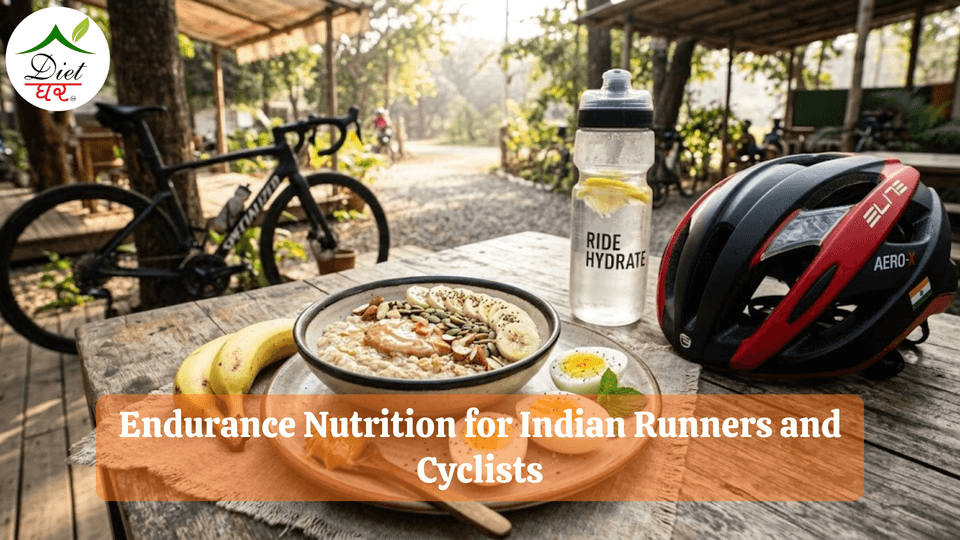
The running and cycling communities in India have grown exponentially over the past decade. Half marathons in Mumbai, Bengaluru, Delhi, and Chennai regularly draw tens of thousands of participants. Long-distance cycling groups have appeared in every major city. Yet the nutritional guidance available to these athletes is almost entirely developed for Western athletes eating Western foods, and the translation to Indian food culture is poorly done or simply absent.
This guide is specifically for Indian runners and cyclists who train seriously, whether you are preparing for a 10K, a half marathon, a full marathon, or 100+ km rides, and want to fuel performance with the food actually available in Indian markets and kitchens.
The Energy Demands of Endurance Exercise
Endurance exercise, running or cycling at moderate-to-high intensity for 60 minutes or more, burns significant calories and depletes glycogen (stored carbohydrate in muscles and liver). Understanding these demands is the foundation of endurance nutrition.
Approximate energy expenditure per hour:
- Running at 6 min/km pace: 600–700 kcal/hour for a 70 kg person
- Cycling at moderate-vigorous intensity: 500–650 kcal/hour
Glycogen stores in trained athletes: approximately 400–600g (1,600–2,400 kcal) total. At high intensity, these stores can deplete within 90–120 minutes. The mechanism behind "hitting the wall" in marathon running.
The nutritional priorities for endurance athletes are: adequate carbohydrate to maintain glycogen stores, sufficient protein for muscle repair and adaptation, optimal hydration and electrolyte balance, strategic timing of nutrients around training, and targeted micronutrient support (particularly iron, vitamin D, and B12 for Indian athletes).
Carbohydrate: The Primary Fuel
Indian athletes are, in a sense, nutritionally well-positioned for endurance sports, our food culture is carbohydrate-centric. But the type, timing, and quality of carbohydrate needs to be optimised for athletic performance.
Daily carbohydrate requirements: Endurance athletes need 5–10g of carbohydrate per kg of body weight per day depending on training volume. A 65 kg runner training 10–12 hours per week needs 325–650g of carbohydrate daily. This is substantial and reassuringly achievable within Indian food culture.
Best Indian endurance carbohydrate sources:
Rice, rapidly digestible, low in fibre on training days (which is actually desirable, you want quick-absorbing carbs around training, not slow-digesting high-fibre options). Rice with dal and vegetables is an excellent post-training recovery meal. Basmati rice has a slightly lower GI than regular white rice.
Banana. The original sports nutrition food. Easy to carry, quick to eat, provides glucose and fructose for sustained energy plus potassium (electrolyte). Eat one to two bananas 30–60 minutes before long runs and during runs over 90 minutes.
Dates (khajoor), extremely energy-dense (70% carbohydrate), easy to carry, tastes great. Three to four dates before a run provide approximately 100 kcal of fast-acting carbohydrate. Many Indian endurance athletes use dates as their in-run fuel instead of imported energy gels.
Chikki (peanut brittle with jaggery), a traditional Indian sports snack that predates commercial energy bars by centuries. Jaggery provides quick carbohydrate; peanut provides fat and protein. Homemade chikki makes an excellent mid-ride fuel.
Boiled potato with salt, widely used by cyclists in Indian race events. Small boiled potatoes with a pinch of salt provide carbohydrate and sodium in a format that is palatable even mid-ride.
Poha, flattened rice is quickly digestible and ideal as a pre-workout meal 1.5–2 hours before training. Poha with peanuts and lemon juice provides carbohydrate, some protein, vitamin C, and is easy on the stomach.
Idli, one of the best pre-training Indian foods. Fermented, easy to digest, primarily carbohydrate, low fat. Two to three idli with minimal coconut chutney eaten 2 hours before a run is an excellent combination.
Carbohydrate Periodisation: When to Load and When to Reduce
Not every training day requires the same carbohydrate intake. Periodising carbohydrates based on training intensity improves both performance and body composition.
High carbohydrate days (5–10g/kg): Days with long runs (over 90 minutes), intense speed work, or race days. Load rice, roti, banana, and starchy vegetables.
Moderate carbohydrate days (3–5g/kg): Medium-distance easy runs, moderate cycling. Normal Indian eating with some restraint on portions.
Lower carbohydrate days (2–3g/kg): Rest days or very easy recovery days. Reduce rice and roti portions; fill volume with vegetables, protein (dal, paneer, eggs), and healthy fats. This is "train low" periodisation and teaches the body to oxidise fat more efficiently at lower intensities.
Pre-Run and Pre-Ride Nutrition
2–3 hours before: Full meal with complex carbohydrate, moderate protein, low fat and fibre (to allow full digestion).
- Idli sambar (2–3 idlis, minimal oil) with coconut chutney
- Poha (plain or with peanuts) with chaas
- Rice with dal (small portion), minimal sabzi
- Roti (2) with banana and peanut butter
30–60 minutes before: Small, easily digestible carbohydrate snack if needed:
- One or two bananas
- Three to four dates
- One slice toast with jam
- Small piece of homemade chikki
For early morning training: Many Indian runners train before sunrise for comfort in the heat. Pre-workout eating options for 5 AM runs: one to two bananas or 3–4 dates 30 minutes before (minimal digestion needed for short-medium runs under 90 minutes). For runs over 90 minutes, wake 2 hours early and have a small proper meal (2 idlis or a bowl of oats).
During-Run Nutrition (Runs Over 60–90 Minutes)
Carbohydrate during runs over 90 minutes significantly improves performance. Target 30–60g of carbohydrate per hour during the run.
Indian in-run fuel options:
- Dates (4–5 dates = approximately 30g carbohydrate), easy to carry in a small zip-lock bag
- Banana pieces (half to one banana per hour)
- Homemade jaggery water (one teaspoon jaggery dissolved in 500 ml water with a pinch of salt and lemon)
- Commercial energy gels or chews if preferred (available at Indian running events and online)
- Thin rice kanji with sugar and salt for marathon training long runs
Hydration and Electrolytes: The Indian Climate Challenge
Running and cycling in India involves heat and humidity that create sweat rates far higher than Western training environments. An Indian runner in humid Mumbai or hot Chennai may lose 1.5–2 litres of sweat per hour, significantly more than the 0.5–1 litre commonly cited in temperate climate sports nutrition guidelines.
Sweat contains sodium, potassium, chloride, and smaller amounts of magnesium and calcium. Replacing fluid without electrolytes causes dangerous hyponatraemia (dilutional low sodium), a serious risk in hot-climate endurance events. This is why plain water is not sufficient for runs over 60–90 minutes in Indian heat.
Indian electrolyte solutions:
- ORS (Oral Rehydration Solution). The original and most effective electrolyte replacement. Keep sachets in your running kit for post-long-run recovery.
- Nimbu paani with salt and sugar, homemade sports drink. 500 ml water + juice of half lemon + half teaspoon salt + one teaspoon jaggery or sugar. Provides sodium, potassium, and carbohydrate.
- Coconut water, naturally isotonic, excellent potassium source. One coconut post-run for runs of 60–90 minutes.
- Chaas with extra salt, a traditional Indian recovery drink that provides protein, probiotics, and electrolytes.
Post-Training Recovery Nutrition: The Indian Advantage
The 30–60 minute window after training is when muscles are most receptive to nutrient uptake for glycogen restoration and muscle protein synthesis. Indian food culture actually has excellent post-workout meals built in.
Target: 0.8–1.2g carbohydrate per kg body weight + 20–30g protein within 60 minutes post-training.
Ideal Indian post-workout meals:
- Rice with dal and paneer, complete recovery meal with carbohydrate and protein
- Roti with eggs (3 eggs) and dal, well-balanced
- Curd rice with a protein source
- Banana + a glass of chaas immediately post-run (quick and easy), followed by a proper meal within 2 hours
Iron: The Indian Endurance Athlete's Hidden Problem
Iron deficiency is extremely common in Indian endurance athletes, particularly women, and has devastating effects on performance. Iron is required for haemoglobin (oxygen transport) and myoglobin (muscle oxygen storage). Even mildly low ferritin (below 30 ng/mL) causes measurable reductions in endurance performance, VO2max, and perceived effort.
Foot strike haemolysis (the rupture of red blood cells with each foot strike) increases iron loss in runners beyond the normal sweat and GI losses. Heavy training volumes combined with typically iron-poor Indian vegetarian diets create significant risk.
Every Indian endurance athlete should have serum ferritin checked annually. Target ferritin above 50 ng/mL for optimal performance. Dietary strategies from our iron deficiency guide apply directly with the added urgency of athletic iron demands.
For more on general sports nutrition for Indian athletes, see our comprehensive sports nutrition guide and our post on post-workout recovery meals.
Get Your Personalized Diet Plan Today!
This article provides general information about nutrition and diet planning. Download the DietGhar app for a customized Indian diet plan tailored to your body type, health goals, and food preferences — with daily tracking and expert support.
About the Author
Written by the DietGhar expert team — certified dietitians with 10+ years of experience helping clients achieve their health goals through personalized Indian diet plans.
Find a Dietitian Near You
Get personalized nutrition plans from certified dietitians in your city. Online consultations available across India.

