
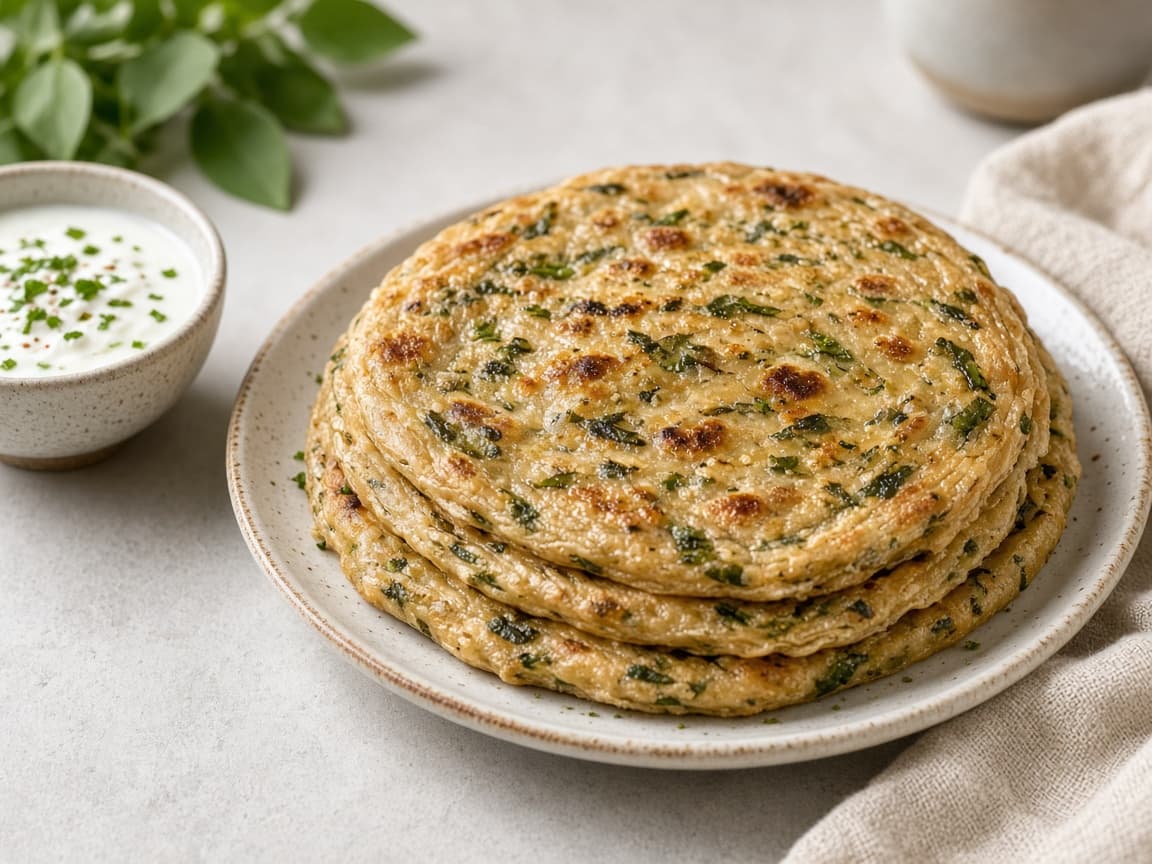
Millet & Methi Layered Paratha
A wholesome Indian recipe crafted for health-conscious eating: nutritious, delicious, and easy to make at home.
Parathas do not have to be a once-in-a-while indulgence. In DietGhar's kitchen we blend two smart flours — foxtail millet for its slow-release carbohydrates and whole wheat for that familiar soft chew — then fold in fresh fenugreek leaves for a gentle bittersweet aroma. The result is a layered, flaky paratha that behaves exactly like the classic version but keeps your blood sugar curve calm.
The folding technique creates delicate pockets inside the bread, so each paratha stays soft for hours and needs only a brush of oil at the end. Serve it with curd, a thin dal or a spoon of flaxseed chutney for a complete, balanced plate.
Ingredients
How to Make It
In a wide bowl whisk together the foxtail millet flour, whole wheat flour, ajwain, cumin powder, turmeric and salt.
Rub the 1 teaspoon of sesame oil into the flours with your fingertips until the mixture looks like fine breadcrumbs.
Add the chopped methi leaves and toss well so every leaf is coated with flour — this keeps the dough from turning sticky.
Pour the warm water in small splashes and gather the mixture into a shaggy ball. The millet flour absorbs slowly, so stop adding water the moment the dough comes together.
Knead on a clean counter for 6 to 7 minutes until the dough is smooth, slightly springy and does not stick to your palm.
Smear a few drops of oil over the surface, cover with a damp muslin cloth and rest for 15 minutes.
Divide the dough into 4 equal balls. Keep them covered while you work on one at a time.
Flatten a ball, dust it with dry flour and roll it into a thin circle about 5 inches wide.
Brush a thin film of oil over the circle. Fold it in half, brush the half again, then fold once more into a triangle.
Dust the triangle with flour and roll it gently into a 6-inch paratha. Do not press hard or the layers will seal shut.
Heat a tawa on medium flame until a drop of water sizzles and disappears.
Place the paratha on the tawa and cook for 40 seconds, until tiny bubbles appear on the top surface.
Flip, brush the cooked side with a little oil and press the paratha lightly with a spatula so the layers separate.
Flip once more, brush the second side and roast until both sides have golden-brown speckles, about 1 minute in total.
Repeat with the remaining dough balls, wiping the tawa with a dry cloth between parathas.
Stack the parathas in a covered casserole and serve warm.
Nutrition per serving
* Approximate values per serving
Health Benefits
Steady blood sugar: Foxtail millet has a low glycaemic index and its fibre slows glucose absorption, making this paratha a safer choice than a plain maida or refined-flour flatbread.
Fibre for gut health: One paratha delivers over 4 g of fibre from millet, wheat and methi leaves, which supports regular bowel movement and feeds beneficial gut bacteria.
Iron and calcium: Fenugreek leaves add iron, calcium and vitamin K, nutrients that are often low in vegetarian Indian diets.
PCOS support: The combination of millet, methi and sesame oil helps improve insulin sensitivity and keeps you full for longer, reducing mid-morning cravings.
Heart-friendly fats: Sesame oil replaces refined oil or vanaspati, offering unsaturated fats and a small amount of lignans.
Pro Tips
- →Methi leaves must be bone-dry before chopping, otherwise the dough turns sticky and the parathas tear while rolling.
- →If the millet dough feels crumbly, wet your palms and knead instead of pouring more water — millet dough tightens as it rests.
- →Resting the dough is not optional. A 15-minute rest hydrates the millet flour and gives you soft, pliable parathas.
- →Roast on medium heat only. High heat browns the outside before the inside cooks, leaving a raw centre.
- →Press the paratha gently with a spatula while roasting — this is what makes the layers puff and separate.
- →For a lunchbox, cool the parathas completely, wrap them in butter paper and then in foil so they stay soft.
Variations
- 1Swap the methi for grated carrot, beetroot or finely chopped spinach for a different colour and micronutrient profile.
- 2Use bajra or jowar flour in place of foxtail millet, but add 1 extra tablespoon of oil since these flours are drier.
- 3Add 2 tablespoons of roasted flaxseed powder for an extra omega-3 boost — increase the water by 1 tablespoon.
- 4For a protein-rich version, knead in 3 tablespoons of fine soya granules soaked and squeezed dry.
- 5Make a plain millet paratha by skipping the methi and adding 1/2 teaspoon of crushed black pepper instead.
Frequently Asked Questions
You Might Also Like
Get a Personalised Diet Plan
4.9★ on Google • 7,000+ clients helped

