
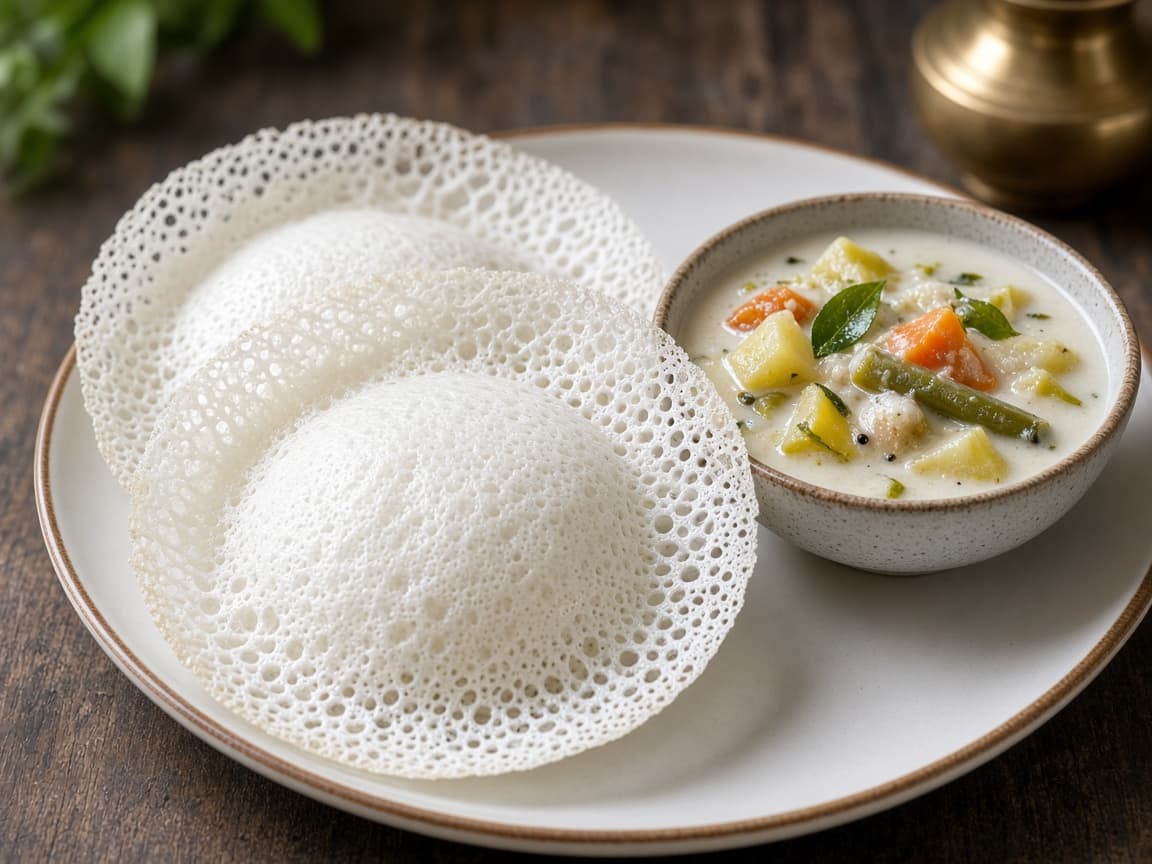
Diabetic-Friendly Kerala Appam: Soft, Lacy, and Blood Sugar Friendly
A wholesome Indian recipe crafted for health-conscious eating: nutritious, delicious, and easy to make at home.
Appam, the iconic Kerala rice pancake, is loved for its crispy edges and soft, spongy centre. Traditional recipes rely on white rice and sometimes added sugar, which can spike blood sugar. Our DietGhar version swaps refined rice for fibre-rich brown rice and oats, and eliminates added sugar. The result is a delicious, low-glycemic appam that fits seamlessly into a diabetic meal plan.
Fermentation not only gives appam its signature tang and texture but also improves digestibility and reduces the glycemic impact. Serve these appams with a vegetable stew or egg curry for a balanced, satisfying breakfast.
Ingredients
How to Make It
Rinse the brown rice and oats separately under running water. Soak the brown rice in enough water for at least 6 hours or overnight. Soak the oats in 1/2 cup water for 30 minutes.
Drain the soaked rice and transfer to a blender. Add the soaked oats, grated coconut, cooked brown rice (if using), and salt. Blend to a smooth batter, adding water gradually. The batter should be pourable but not too thin—similar to pancake batter.
Pour the batter into a large bowl. Sprinkle the instant yeast over the top and mix well. Cover and let it ferment in a warm place for 2–3 hours, or until the batter rises and becomes frothy. In cooler climates, it may take 4–5 hours.
Once fermented, gently stir the batter. If it's too thick, add a little water to reach a spreading consistency.
Heat an appam pan or a small non-stick skillet over medium heat. Lightly grease with coconut oil.
Pour a ladleful (about 1/4 cup) of batter into the centre of the pan. Quickly lift the pan and swirl it in a circular motion to spread the batter into a thin circle, leaving a thicker centre.
Cover with a lid and cook on medium-low heat for 2–3 minutes, until the edges turn golden and crispy and the centre is set.
Remove the appam with a spatula. Repeat with the remaining batter, greasing the pan as needed.
Serve hot with vegetable stew, egg curry, or a chutney of your choice.
Nutrition per serving
* Approximate values per serving
Health Benefits
This diabetic-friendly appam is a smart choice for managing blood sugar. Brown rice and oats are whole grains with a low glycemic index, meaning they release glucose slowly into the bloodstream. The fibre content helps improve insulin sensitivity and keeps you full longer. Coconut adds healthy fats that further slow digestion. Fermentation introduces beneficial bacteria that support gut health and may enhance nutrient absorption. Unlike traditional appam, this version contains no added sugar, making it suitable for people with diabetes or prediabetes.
Pro Tips
- →For best results, use a dedicated appam pan with a curved bottom to get the classic shape.
- →Fermentation time varies with climate; in winter, place the batter in a warm spot or use a preheated oven (turned off) to speed it up.
- →If the batter becomes too sour, add a pinch of baking soda before cooking to neutralise the tang.
- →To make the appams extra crispy, increase the heat slightly for the last minute of cooking.
- →Leftover batter can be stored in the refrigerator for up to 2 days. Bring to room temperature before using.
Variations
- 1Add 1/4 cup grated carrots or beetroot to the batter for extra colour and nutrients.
- 2For a protein boost, replace 2 tbsp of brown rice with 2 tbsp of moong dal (soaked and ground with the rice).
- 3Swap coconut with 2 tbsp of ground flaxseed for a nutty flavour and added omega-3s.
- 4For a savoury twist, add chopped curry leaves, green chillies, and a pinch of cumin to the batter.
- 5Make sweet appam by adding 1 mashed ripe banana (instead of sugar) and a pinch of cardamom.
Frequently Asked Questions
You Might Also Like

Get a Personalised Diet Plan
4.9★ on Google • 7,000+ clients helped

