
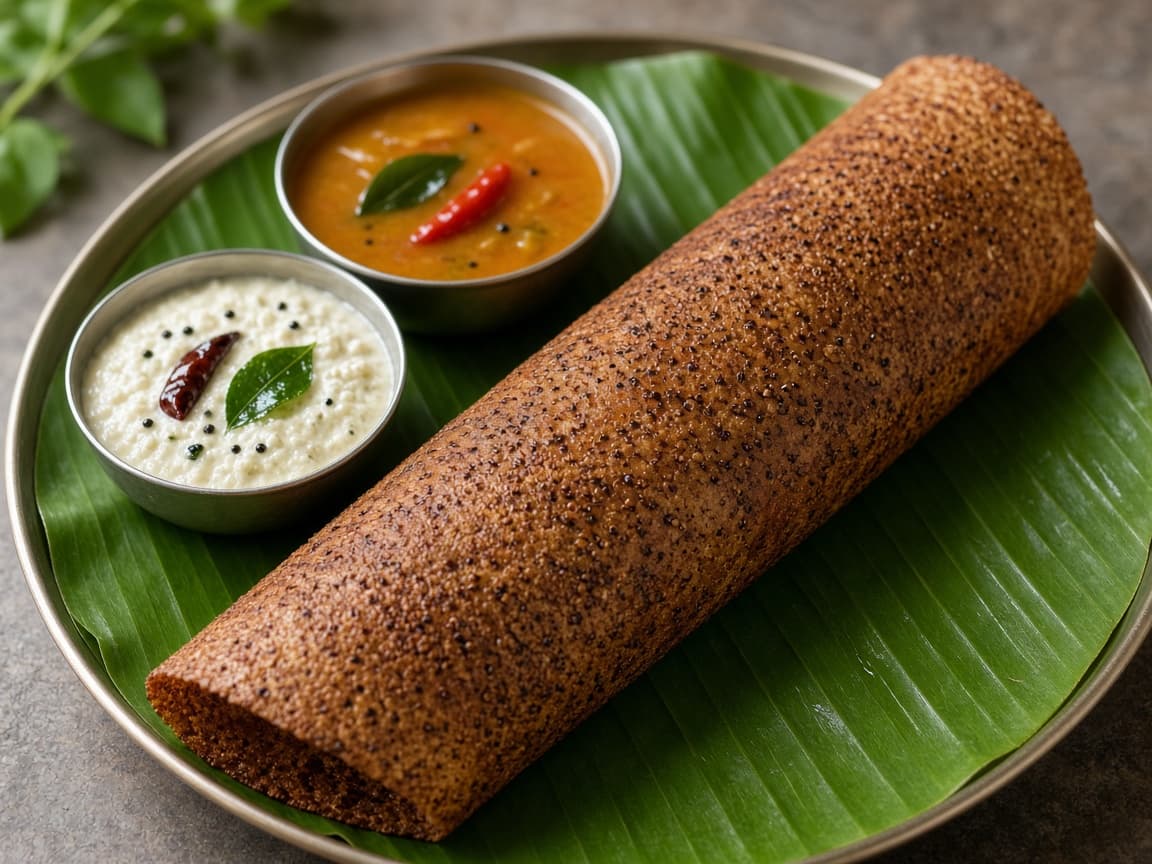
Ragi Millet Dosa: Crispy, Diabetic-Friendly South Indian Breakfast
A wholesome Indian recipe crafted for health-conscious eating: nutritious, delicious, and easy to make at home.
Ragi dosa, also known as finger millet dosa or nachni dosa, is a wholesome South Indian breakfast that combines the goodness of finger millet with the classic texture of dosa. This recipe is specially crafted for those managing diabetes, as ragi has a low glycemic index and is rich in fibre, helping to keep blood sugar levels stable. The dosa turns out crisp on the outside and soft inside, with a pleasant earthy flavour. Fermenting the batter not only enhances taste but also improves digestibility. Serve it hot with coconut chutney and sambar for a satisfying meal.
Ingredients
How to Make It
In a bowl, rinse the idli rice and poha together. Drain and soak in enough water for 3 to 4 hours.
In a separate bowl, rinse the urad dal and fenugreek seeds. Drain and soak in enough water for 3 to 4 hours.
After soaking, drain the rice and poha. Transfer to a wet grinder or high-speed blender. Add about 3/4 cup water and grind to a smooth, slightly grainy batter. Pour into a large mixing bowl.
Drain the urad dal and fenugreek seeds. Grind them in the same grinder, adding about 1/2 cup water gradually, until you get a smooth, fluffy batter.
Add the urad dal batter to the rice batter. Mix well.
Add the ragi flour and about 1/3 to 1/2 cup water. Mix thoroughly until no lumps remain. The batter should be of pouring consistency, similar to regular dosa batter.
Stir in the salt. Cover the bowl with a lid (not airtight) and let it ferment in a warm place for 8 to 9 hours, or until the batter doubles in volume and has a slightly sour aroma.
If the batter does not ferment well, mix in 2 tablespoons of yogurt and 1/4 teaspoon of baking soda. Let it sit for 30 minutes before making dosas.
Heat a cast-iron tawa or non-stick pan over medium heat. If using cast iron, smear a little oil on it using a halved onion or a paper towel.
Pour a ladleful of batter onto the hot tawa and spread it quickly in a circular motion to make a thin dosa.
Drizzle 1/2 to 1 teaspoon of oil around the edges and on top. Cook until the edges turn golden and the base is crisp.
Flip the dosa and cook the other side for a few seconds, or cover with a lid and cook only one side until the top is cooked and the bottom is crisp. Adjust heat as needed.
Remove the dosa and repeat with the remaining batter. Serve hot with coconut chutney and sambar.
Nutrition per serving
* Approximate values per serving
Health Benefits
Ragi is a nutritional powerhouse, especially for those with diabetes. It has a low glycemic index, meaning it releases glucose slowly into the bloodstream, preventing spikes. The high fibre content aids in better blood sugar control and keeps you full longer. Ragi is also rich in calcium, iron, and antioxidants, supporting bone health and overall immunity. The fermentation process increases the bioavailability of nutrients and introduces beneficial bacteria for gut health. This dosa is a smart swap for regular rice dosa, offering more protein and fibre with fewer simple carbs.
Pro Tips
- →For best results, use fresh ragi flour and ensure it's within its shelf life.
- →Fermentation time may vary depending on the climate. In colder weather, place the batter in a warm spot or inside an oven with the light on.
- →The batter should be thick but pourable. If it's too thick, add a little water; if too thin, add a spoonful of ragi flour.
- →Cooking on a cast-iron tawa gives a crispier texture. Make sure the tawa is well-heated but not smoking hot.
- →To make oil-free dosas, use a good non-stick pan and skip the oil drizzle.
Variations
- 1Add grated vegetables like carrots, beetroot, or spinach to the batter for extra nutrients.
- 2For a spicier version, mix in chopped green chillies, ginger, and curry leaves.
- 3Replace urad dal with moong dal for a lighter, easier-to-digest dosa.
- 4Use 1/2 cup ragi flour and 1/2 cup oats flour for an oat-ragi dosa.
- 5For a quick version, use ragi flour and rice flour with a little yogurt, no fermentation needed.
Frequently Asked Questions
You Might Also Like
Get a Personalised Diet Plan
4.9★ on Google • 7,000+ clients helped

