
PCOS signs self check
By The DietGhar Team
This is a checklist of signs often seen with polycystic ovary syndrome. It is not a test, it does not diagnose anything, and it cannot tell you that you have or do not have PCOS.
What it can do is help you decide whether to book a visit and what to tell the doctor. For adult women. It is not meant for teenagers.
How this check works
There is no formula. You tick the signs that apply, and the page counts them and shows a plain message. A higher count only means more of the commonly listed signs apply to you.
Doctors usually look for a mix of irregular or missing periods, signs of high androgen hormones (extra hair, persistent acne, hair thinning) and, where needed, ultrasound and blood tests, after ruling out other causes such as thyroid problems. That is why only a doctor can say whether it is PCOS.
If you are bleeding very heavily, have severe pelvic pain, have not had a period for 3 months or more, or might be pregnant, do not wait for a checker. Speak to a doctor.
Example of reading the result
Someone ticks 4 signs: long gaps between periods, acne that keeps returning, belly weight that is hard to shift, and a sister with PCOS. The page says to book a visit with a doctor or gynaecologist and take the list along. It does not say she has PCOS, because it cannot know.
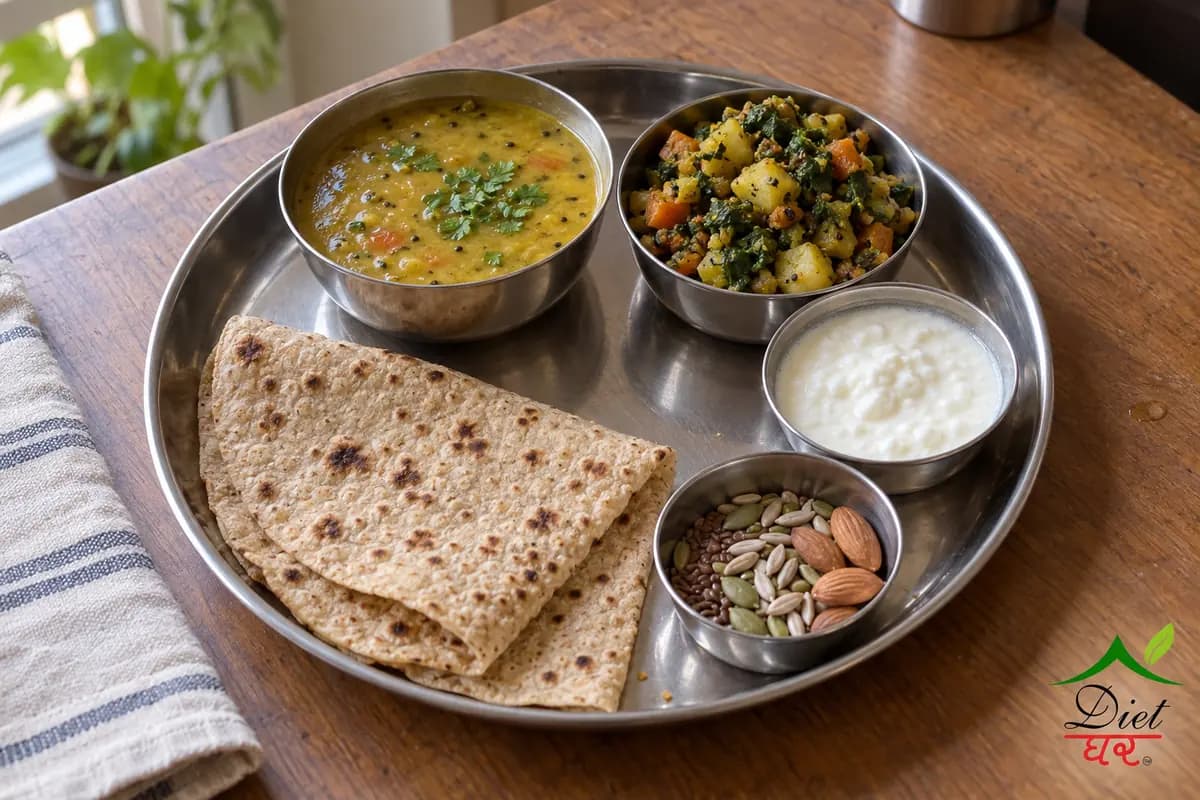
A general Indian plate, whatever the cause
Nothing here treats any condition. It is the same balanced plate that suits most adults.
- Half the plate vegetables: sabzi, salad, sambar or a bowl of cooked greens.
- A quarter protein: dal, paneer, curd, eggs or soya.
- A quarter roti or rice, and whole grains like jowar or bajra rotis often.
- Fruit as snacks, and fewer packaged sweets and sugary drinks.
If a doctor has diagnosed you, follow their advice first. A nutritionist can then plan food around it.
This is not medical advice and not a diagnosis. Only a doctor can diagnose PCOS or any other condition.
Questions people ask
- Can this checker tell me if I have PCOS?
- No. Only a doctor can, using your history, an examination and sometimes blood tests and an ultrasound.
- What are the common signs of PCOS?
- Irregular or infrequent periods, extra facial or body hair, persistent acne, thinning scalp hair, weight gain around the belly, darker skin patches and difficulty conceiving. Each of these has other causes too.
- I ticked several signs. Should I worry?
- It is a reason to talk to a doctor, not a reason to panic. Many of these signs are common and many conditions look alike, including thyroid problems.
- I ticked nothing. Does that mean I do not have PCOS?
- Not necessarily. Some people have PCOS with few visible signs. If you are concerned, see a doctor anyway.
- Which doctor should I see?
- A gynaecologist is the usual first stop. Your family doctor can also guide you. Take a note of your cycle dates for the last few months.
- Can diet help with PCOS?
- Food is one part of daily life with PCOS, and a nutritionist can build a plan around your doctor's advice. Diet does not replace medical care or cure the condition.
- Is my information saved?
- No. The ticks stay in your browser. The WhatsApp button shares only the number of signs you ticked, and only if you tap it.
Sources
- Recommendations from the 2023 international evidence-based guideline for the assessment and management of polycystic ovary syndrome. Hum Reprod 2023;38:1655-1679 (Teede HJ et al.) (checked 13 October 2026)
- Polycystic ovary syndrome (fact sheet), World Health Organization (checked 13 October 2026)

