
Indian Diabetes Risk Score (IDRS)
By The DietGhar Team
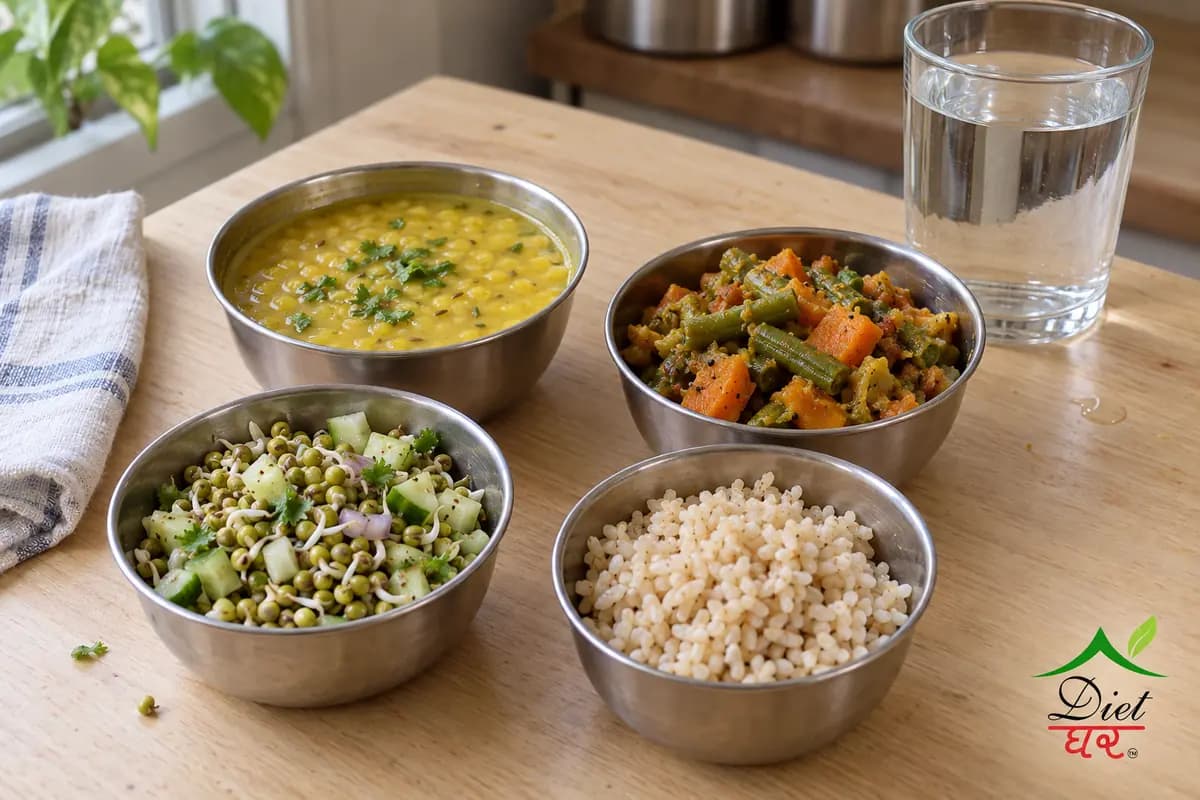
The Indian Diabetes Risk Score was built by Dr V Mohan and colleagues at the Madras Diabetes Research Foundation. It uses four simple questions to flag adults who should get a blood sugar test.
It is a screening score, not a diagnosis. A blood test is the only way to know whether you have diabetes or prediabetes.
How the score is added up
Age: under 35 is 0 points, 35 to 49 is 20, 50 and above is 30.
Waist: for women, under 80 cm is 0, 80 to 89 cm is 10, 90 cm and above is 20. For men, under 90 cm is 0, 90 to 99 cm is 10, 100 cm and above is 20.
Physical activity: regular exercise and a strenuous job is 0, one of the two is 20, neither is 30. Family history: no diabetic parent is 0, one parent is 10, both parents is 20.
The total is out of 100. Below 30 is the lower risk band, 30 to 50 is moderate, and 60 and above is higher risk. In the original study a cut-off of 60 and above picked up most undiagnosed diabetes but also flagged many people who did not have it, which is why a blood test is still needed.
Worked example
A man aged 38 (0 + 20 for age), with a waist of 92 cm (10), who exercises regularly but has a desk job (20), and no diabetic parent (0). Total: 20 + 10 + 20 + 0 = 50, the moderate band. Next step: ask a doctor about a fasting blood sugar or HbA1c test.
A diabetes-aware Indian plate, as general food advice
This is general healthy eating and not treatment. A doctor decides medicines and targets.
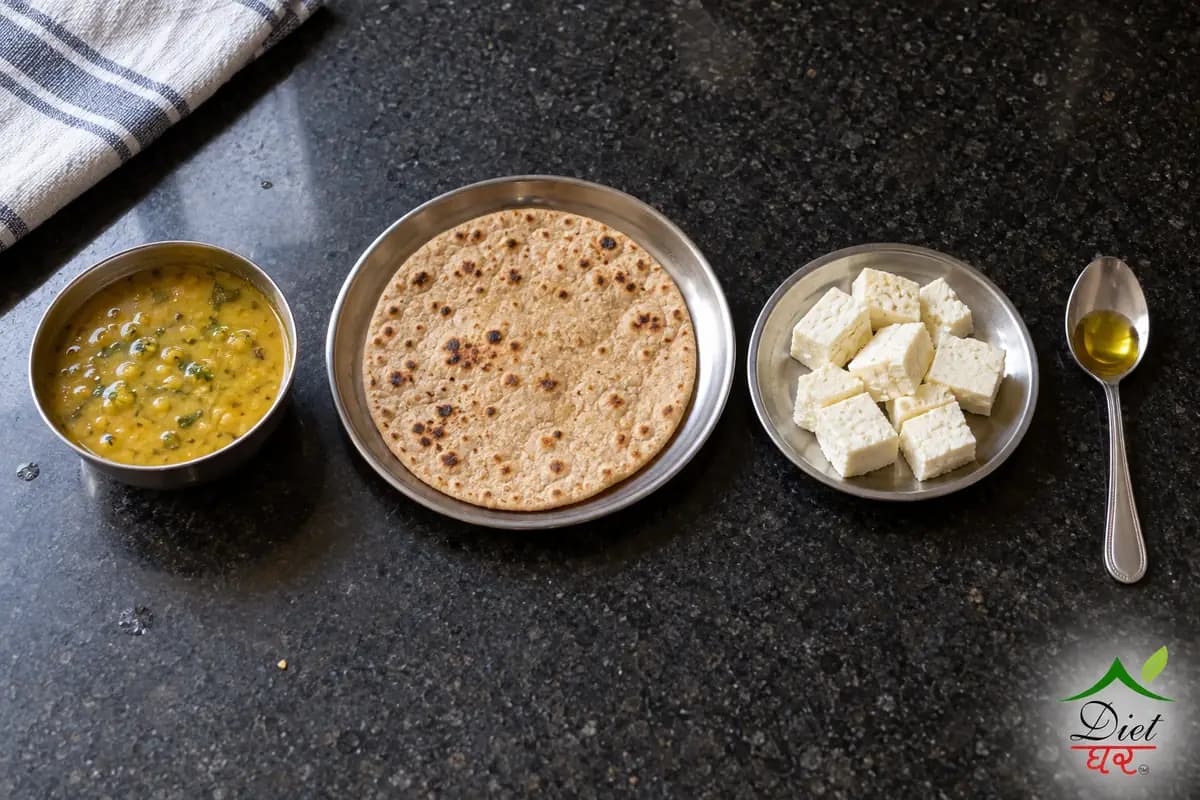
- Fill half the plate with vegetables and add dal or paneer for protein.
- Keep rotis or rice to about a quarter of the plate, and prefer millets or whole wheat.
- Eat fruit whole, not as juice. Cut sugary tea and sweets down.
- A 10 to 15 minute walk after meals is an easy habit to add.
If you already have a diagnosis, follow your doctor first. A nutritionist can plan Indian meals around it.
This is not medical advice and not a diagnosis. Only a blood test can show whether you have diabetes.
Questions people ask
- Does the IDRS tell me if I have diabetes?
- No. It estimates how likely it is that you could have undiagnosed diabetes. Only a blood test (fasting sugar, post meal sugar or HbA1c) can confirm it.
- Who developed the Indian Diabetes Risk Score?
- Mohan V, Deepa R and colleagues at the Madras Diabetes Research Foundation. It was published in the Journal of the Association of Physicians of India in 2005.
- My score is below 30. Am I safe?
- It means lower risk, not no risk. Risk rises with age, so recheck every few years, and get tested if you have symptoms like unusual thirst, frequent urination or unexplained weight loss.
- My score is 60 or more. What now?
- Ask your doctor about a blood sugar test soon. Many people with a high score do not turn out to have diabetes, but you will know for sure.
- Why does it use waist and not weight?
- Belly fat is closely linked to insulin resistance in Indians, so waist size is a stronger signal than weight alone.
- Is the score for people already diagnosed with diabetes?
- No. It is for adults who have not been diagnosed.
- Is my data stored?
- No. The score is calculated in your browser and nothing is sent anywhere unless you tap the WhatsApp button, which carries only the score.
Sources
- A simplified Indian Diabetes Risk Score for screening for undiagnosed diabetic subjects. J Assoc Physicians India 2005;53:759-763 (Mohan V, Deepa R, Deepa M, Somannavar S, Datta M) (checked 13 October 2026)
- Diabetes (fact sheet), World Health Organization (checked 13 October 2026)

