
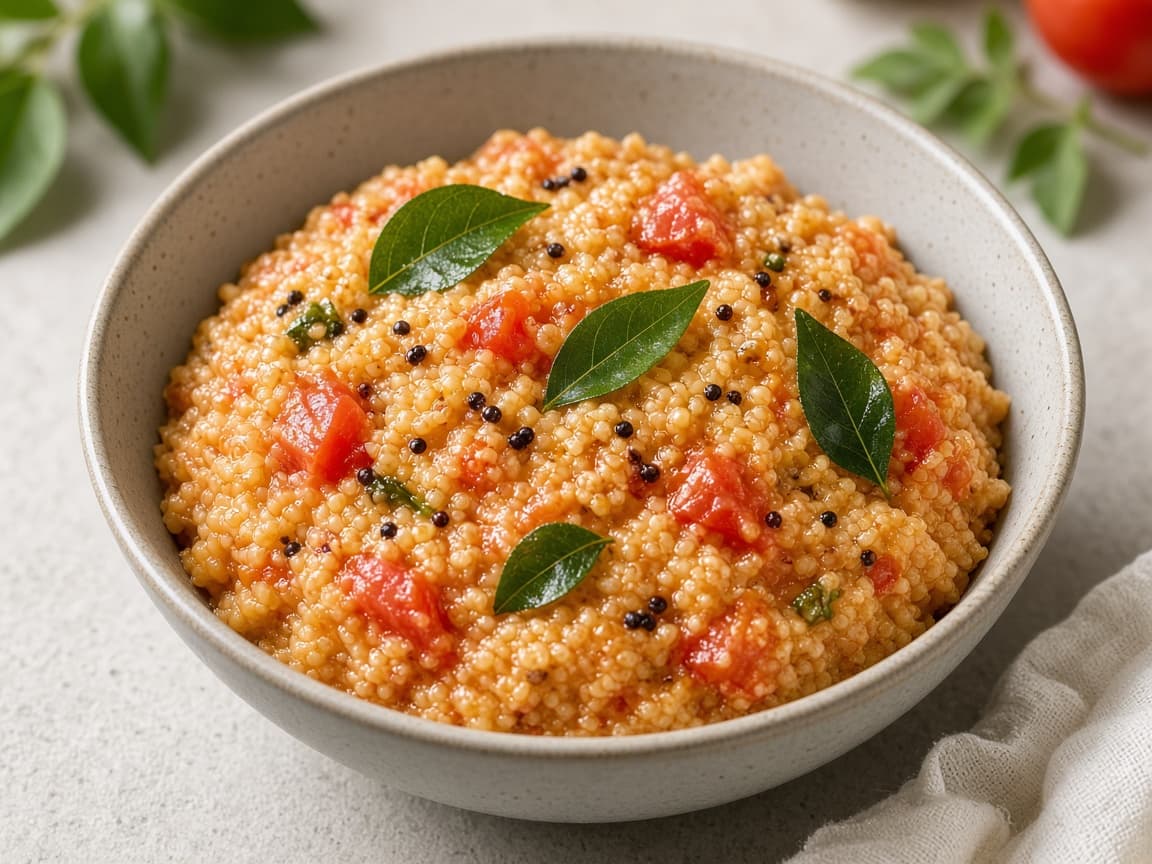
Millet Tomato Upma: A Low-GI Twist on a South Indian Classic
A wholesome Indian recipe crafted for health-conscious eating: nutritious, delicious, and easy to make at home.
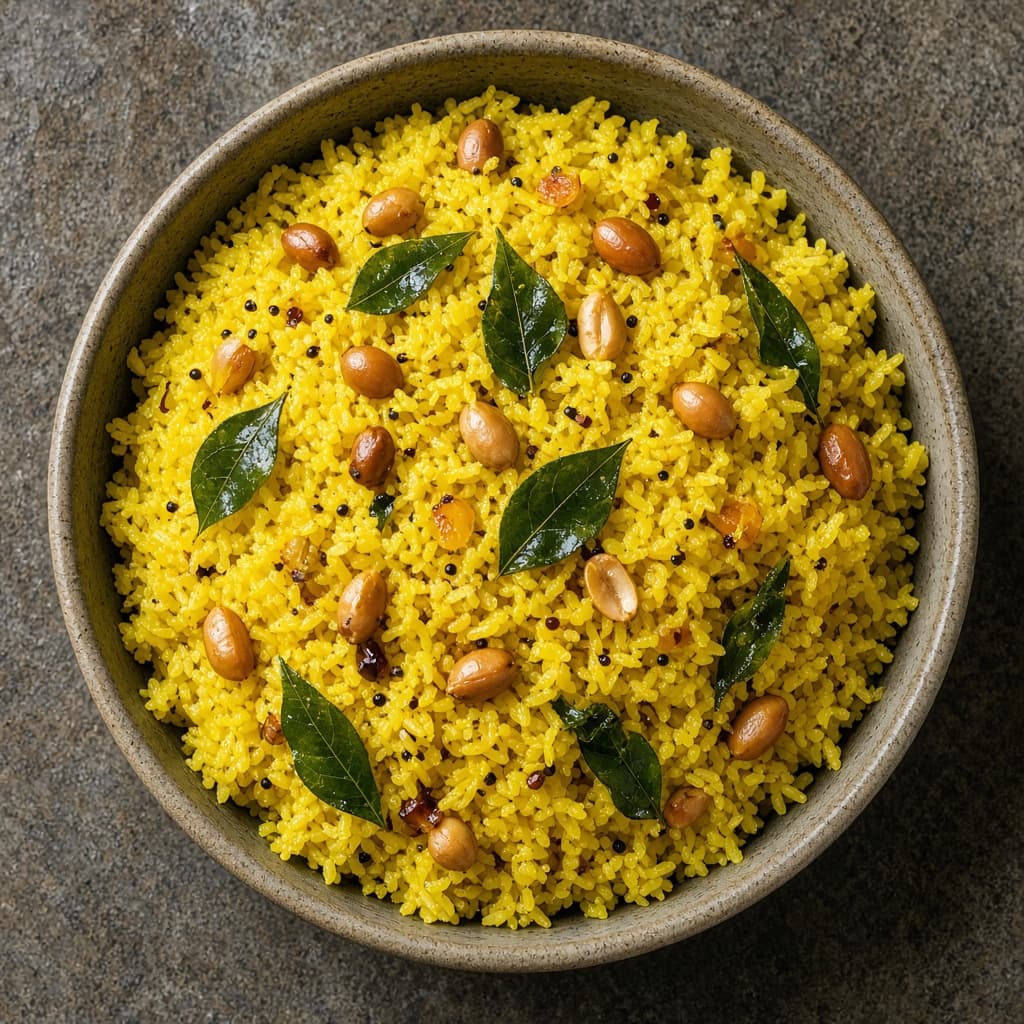
Upma is one of South India's most loved breakfast staples, and this DietGhar version swaps refined rava for a fibre-rich millet blend. The result is a fluffy, tangy upma with the same comforting aroma of curry leaves, mustard and ripe tomatoes, but with a gentler effect on blood sugar.
Millets bring slow-releasing complex carbohydrates, magnesium and B vitamins to the plate, while tomatoes add lycopene and a bright tang. A handful of roasted peanuts and a drizzle of cold-pressed sesame oil keep it satisfying without heaviness. It comes together in one kadai in about half an hour, making it a realistic weekday morning option.
Ingredients
How to Make It
Dry roast the millet rava in a heavy kadai on low heat for 4-5 minutes until it smells nutty and no longer clumps. Tip it onto a plate and set aside.
In the same kadai, warm the sesame oil. Add mustard seeds and wait for them to pop, then lower the heat and add cumin seeds, urad dal, chana dal and peanuts.
Fry on low heat until the dals turn golden and the peanuts are lightly speckled. Add the broken red chilli and asafoetida, stirring for a few seconds.
Add the chopped onion and saute until translucent, about 3 minutes.
Stir in the ginger, green chilli and curry leaves and cook for 30 seconds until aromatic.
Add the tomatoes, turmeric and red chilli powder. Cook on medium heat for 4-5 minutes until the tomatoes collapse and the oil separates at the edges.
Pour in the water and add salt. Taste the water; it should be slightly saltier than you want the final dish, since the millets will absorb seasoning.
Bring the water to a rolling boil, then reduce the flame to the lowest setting.
Add the roasted millet rava in 4-5 small batches, stirring briskly after each addition to prevent lumps.
Once all the rava is in, stir well, cover and steam on low heat for 4-5 minutes until the grains are tender and have absorbed the water.
Fluff with a fork, squeeze over the lemon juice if using, and fold in the coriander leaves.
Serve hot with a spoon of fresh coconut chutney or plain curd on the side.
Nutrition per serving
* Approximate values per serving
Health Benefits
Steady blood sugar: Millets have a lower glycemic index than refined semolina, and their fibre slows glucose absorption, making this upma a smarter choice for people managing diabetes or insulin resistance.
Heart-friendly fats: Sesame oil and peanuts supply monounsaturated fats and vitamin E, which support healthy cholesterol levels.
Digestive support: The fibre from millets, tomatoes and curry leaves encourages regular bowel movement and feeds beneficial gut bacteria.
Micronutrient boost: Tomatoes contribute lycopene and vitamin C, while millets add magnesium, iron and B vitamins that support energy metabolism.
Pro Tips
- →Roast the millet rava well in advance and store it in an airtight jar; it cuts morning prep to under 15 minutes.
- →Keep the flame low when adding rava to hot water and stir continuously, or the upma will turn lumpy.
- →Add the lemon juice only after switching off the heat so the vitamin C and fresh tang are preserved.
- →If you prefer a softer texture, use 3 cups water instead of 2.5 cups.
- →Skip the peanuts if you are on a very low-fat plan, and add extra curry leaves for aroma instead.
Variations
- 1Add 1/2 cup grated carrot and 1/4 cup green peas along with the onion for extra colour and fibre.
- 2Use barnyard millet rava for an even lower glycemic load, or a 50:50 mix of millet and oats rava.
- 3For a South Indian restaurant-style finish, drizzle 1 teaspoon of ghee on each portion just before serving.
- 4Swap tomatoes for 1/2 cup pureed pumpkin for a sweeter, beta-carotene-rich version.
- 5Make it protein-rich by stirring in 1/4 cup cooked moong dal or crumbled paneer at the end.
Frequently Asked Questions
You Might Also Like
Get a Personalised Diet Plan
4.9★ on Google • 7,000+ clients helped

