
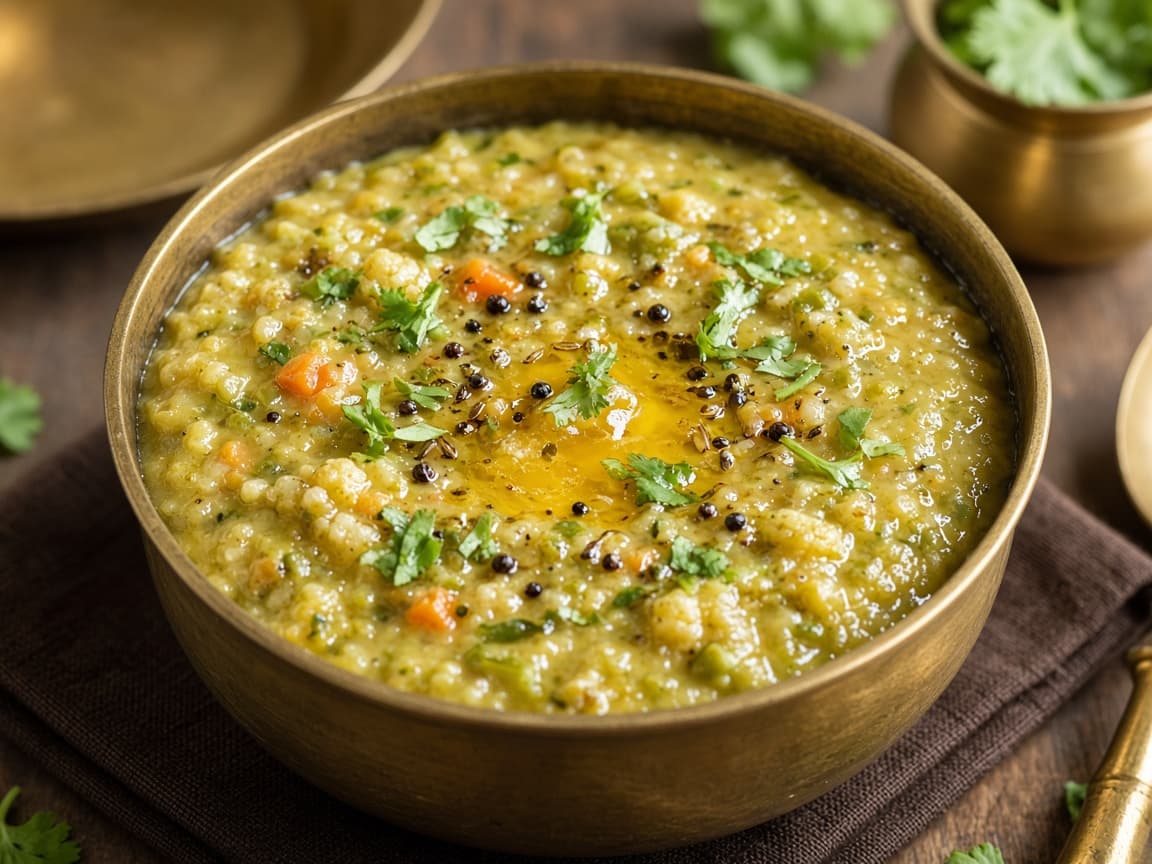
Moong Dal Vegetable Pongal Bowl
A wholesome Indian recipe crafted for health-conscious eating: nutritious, delicious, and easy to make at home.
This Moong Dal Vegetable Pongal Bowl is a comforting, one-pot South Indian breakfast that brings together soft rice, creamy moong dal, and a rainbow of vegetables. It is gently spiced with cumin, black pepper, ginger, and curry leaves, then finished with a fragrant ghee tempering. Unlike traditional pongal that is mostly rice and dal, this version packs in carrots, beans, and peas for extra fibre and colour.
The result is a warm, porridge-like bowl that is easy on the stomach and deeply satisfying. It is ideal for busy mornings, lazy weekend brunches, or even a light dinner. Serve it with coconut chutney or a simple tomato sambar for a complete meal.
Ingredients
How to Make It
Dry roast the moong dal in a small pan on low heat until it smells nutty and turns light golden. Do not brown it.
Rinse the roasted moong dal and rice together until the water runs clear. Drain well.
In a pressure cooker, combine the rinsed rice and dal, diced carrot, chopped beans, green peas, grated ginger, crushed cumin seeds, asafoetida, turmeric powder, and salt.
Pour in 3.5 cups of water and mix well.
Close the pressure cooker and cook on medium-high heat for 5-6 whistles, or about 10-12 minutes.
Let the pressure release naturally. Open the lid and check the consistency. If it is too thick, stir in 1/2 cup hot water. Mash lightly with the back of a spoon for a creamier texture.
For the tempering, heat ghee in a small pan. Add cumin seeds and let them splutter.
Add cashews and fry until light golden. Then add crushed black peppercorns and curry leaves. Fry until the curry leaves turn crisp.
Pour the entire tempering over the cooked pongal and mix well.
Cover and let it rest for 5 minutes so the flavours infuse. Serve hot with coconut chutney or sambar.
Nutrition per serving
* Approximate values per serving
Health Benefits
This pongal bowl is a gut-friendly meal because moong dal is easy to digest and provides both soluble and insoluble fibre, which supports regular bowel movements and feeds beneficial gut bacteria. The added vegetables contribute additional fibre, vitamins, and antioxidants. Rice and moong dal together form a complete protein, making this dish a good plant-based protein source. The use of ghee in moderation helps with the absorption of fat-soluble vitamins and adds a satisfying richness without needing heavy creams or oils. Black pepper and ginger may help stimulate digestion and reduce bloating.
Pro Tips
- →Roasting the moong dal is important; it enhances the aroma and reduces cooking time.
- →Adjust water quantity based on the consistency you prefer. For a thinner porridge, add more water.
- →Mash the cooked pongal lightly for a creamier texture that is easier to digest.
- →Add the tempering just before serving to retain the crunch of cashews and aroma of curry leaves.
- →For a vegan version, replace ghee with coconut oil or cold-pressed sesame oil.
Variations
- 1Replace rice with millets like foxtail millet or little millet for a lower-glycemic version.
- 2Add chopped spinach or moringa leaves in the last few minutes of cooking for extra iron.
- 3Skip cashews and add roasted peanuts for a different crunch.
- 4For a spicier kick, add 1/2 teaspoon crushed red chilli flakes to the tempering.
Frequently Asked Questions
You Might Also Like
Get a Personalised Diet Plan
4.9★ on Google • 7,000+ clients helped

