
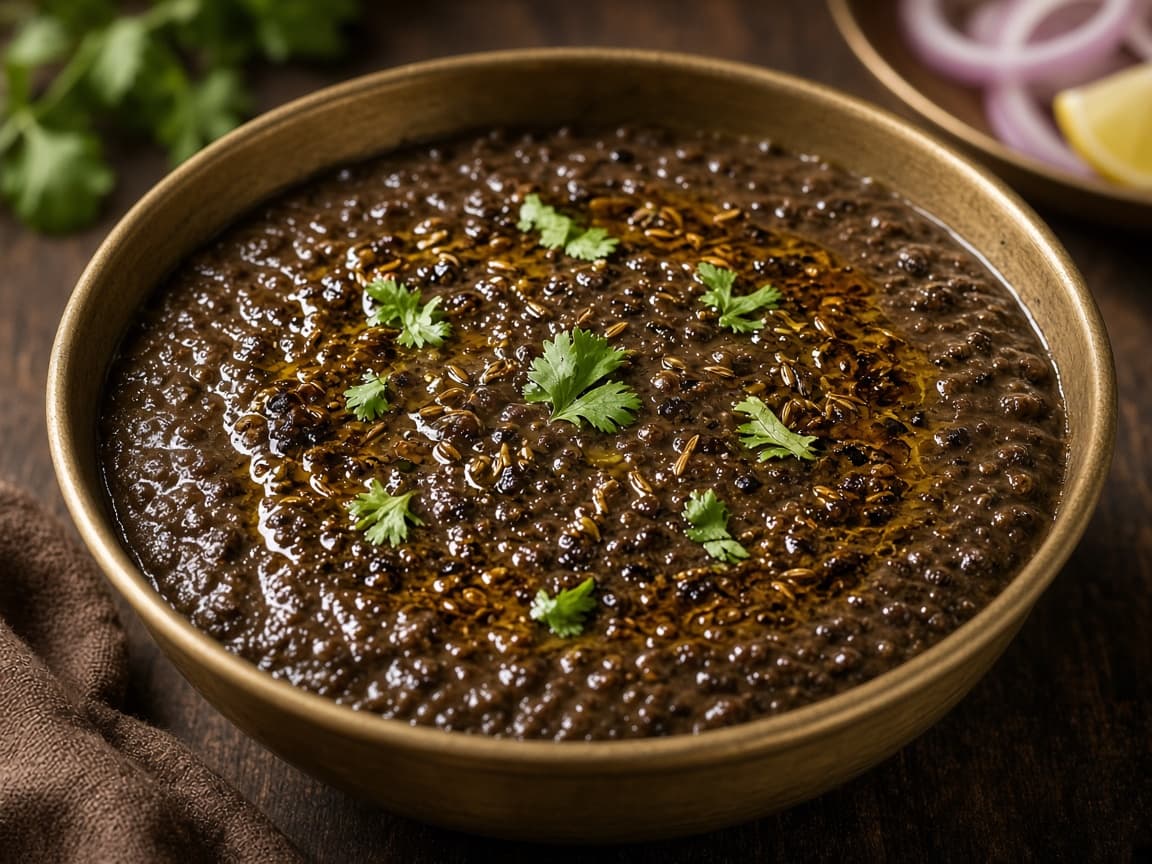
DietGhar Smoky Slow-Simmered Black Gram Dal
A wholesome Indian recipe crafted for health-conscious eating: nutritious, delicious, and easy to make at home.
There is something deeply comforting about a pot of black dal that has been coaxed, not rushed. Our DietGhar version keeps the soul of a Punjabi classic — whole black gram, a handful of rajma, warm whole spices and a whisper of smoke — but rebuilds it around heart-friendly fats, hung curd instead of cream, and a generous hand with ginger and kasuri methi.
The result is a dal that is glossy, deeply savoury and thick enough to cling to a roti, yet light enough to eat on a weeknight without a nap afterwards. The yogurt does double duty: it adds the silky body cream would normally give, and its gentle tang lifts the earthy urad dal. A short charcoal smoke at the end (optional but lovely) gives you the dhaba-style aroma without any restaurant shortcuts.
Serve it with a roti and a crunchy salad for a complete, protein-rich plate.
Ingredients
How to Make It
Drain the soaked urad dal and rajma, rinse well under running water, and place in a pressure cooker with 3 1/2 cups water.
Pressure cook on high until the first whistle, then lower the heat and cook for 18 to 20 minutes. Let the pressure release naturally. The urad dal should crush easily between your fingers and the rajma should be soft all the way through. If either is firm, add 1/2 cup water and cook for 8 to 10 more minutes.
Tip the cooked dal and beans into a bowl along with their cooking liquid. Mash roughly with the back of a ladle — you want some broken-down creaminess while still seeing whole beans. Set aside.
Warm the ghee in a heavy-bottomed pan over medium heat. Add the cumin seeds, green cardamom, black cardamom, cinnamon and bay leaf. Let them sizzle and release their aroma for about 30 seconds.
Add the chopped onion and cook, stirring often, for 6 to 7 minutes until soft and pale gold.
Stir in the grated ginger, crushed garlic and slit green chilli. Cook for 1 minute until the raw smell disappears.
Pour in the tomato puree along with the Kashmiri red chilli powder, ground coriander, ground cumin and nutmeg. Cook on medium-low for 8 to 10 minutes, stirring, until the mixture darkens and the fat separates at the edges.
Add the cooked dal and beans with all their liquid. Stir well, then add 1 cup water to loosen. Bring to a gentle simmer.
Simmer uncovered on low heat for 20 to 25 minutes, stirring every few minutes and scraping the base so nothing catches. Add a splash of hot water whenever the dal looks too thick.
Whisk the yogurt with 2 tablespoons of hot dal to temper it, then stir this back into the pan. Cook for 3 to 4 minutes more on low heat — do not let it boil hard or the yogurt may split.
Crush the kasuri methi and stir it in along with the salt. Taste and adjust.
Optional smoking step: heat the charcoal until red hot and place it in a small steel bowl. Nestle the bowl into the dal, drizzle the oil over the charcoal, and cover the pan immediately for 60 to 90 seconds. Remove the bowl and stir.
Rest the dal covered for 5 minutes, then serve garnished with fresh coriander and ginger juliennes.
Nutrition per serving
* Approximate values per serving
Health Benefits
Whole black gram and rajma together deliver a serious plant-protein punch — roughly 11 g per bowl — along with slow-digesting complex carbohydrates that keep blood sugar steadier than refined-grain meals.
The 9 g of fibre per serving supports gut health and helps with satiety, which is why a modest bowl feels genuinely filling. Replacing cream with hung curd cuts the saturated fat dramatically while still providing that rounded, silky finish.
Ginger, garlic, cinnamon and cardamom bring more than flavour: they are traditional aromatics that fit comfortably into a heart-conscious, low-refined-fat eating pattern. Note that this dal is potassium- and phosphorus-rich, so if you are on a renal diet, portion size should be discussed with your care team.
Pro Tips
- →Soak the dal and beans for a full 8 to 9 hours. Short soaking means stubborn beans and a longer cook.
- →A heavy-bottomed pan or a thick clay pot gives you the slow, even heat that makes this dal taste like it simmered all day.
- →Temper the yogurt with a little hot dal before adding it — this is the single best way to avoid a split, grainy finish.
- →The dal thickens considerably as it sits. Reheat with hot water, not cold, and stir well.
- →If you are skipping the charcoal step, a final pinch of smoked paprika stirred in at the end gives a similar background note.
- →Salt the dal only after the beans are fully cooked; salting early can keep them firm.
Variations
- 1No-onion-garlic version: omit both and increase the ginger to 1 1/2 inches along with an extra pinch of asafoetida for depth.
- 2Pressure-cooker-to-slow-cooker: after the tempering is ready, transfer everything to a slow cooker and cook on low for 3 to 4 hours for a deeper, hands-off result.
- 3Rajma-forward: swap the proportions to 1/2 cup urad dal and 1/2 cup rajma for a chunkier, bean-heavy dal.
- 4Vegan: use cold-pressed coconut oil or mustard oil in place of ghee and a plant yogurt such as soy or coconut curd.
- 5Methi-boosted: add 1/2 cup chopped fresh fenugreek leaves in the last 10 minutes for a pleasantly bitter, iron-rich twist.
Frequently Asked Questions
You Might Also Like
Get a Personalised Diet Plan
4.9★ on Google • 7,000+ clients helped

