
Type 2 Diabetes Reversal: Real Indian Diet Strategies That Work
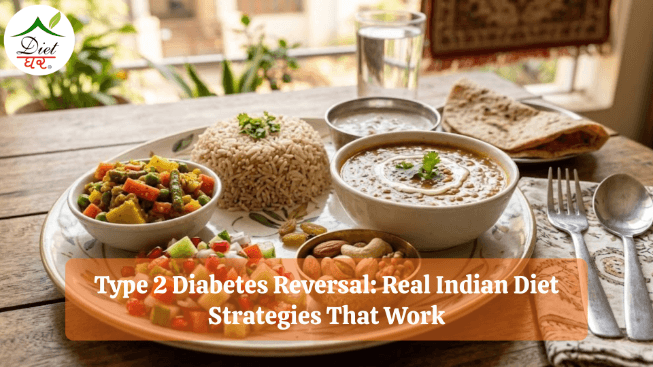
The phrase "diabetes reversal" was considered fringe medicine five years ago. Today it is mainstream clinical science. Multiple large randomised controlled trials — including the DiRECT trial in the UK and the Look AHEAD trial in the US — have demonstrated conclusively that type 2 diabetes can be reversed to non-diabetic blood sugar levels through dietary intervention alone. No surgery. No permanent medication. Real, measurable reversal.
India has the second-largest diabetic population in the world — over 101 million people with confirmed type 2 diabetes, and an estimated 136 million with prediabetes. The need for evidence-based reversal strategies that work within Indian food culture has never been more urgent. This post gives you exactly that.
What "Reversal" Actually Means
Let us be precise, because terminology matters. "Reversal" or "remission" of type 2 diabetes means achieving HbA1c below 6.5% (the diagnostic threshold for diabetes) for at least three months without diabetes medication. It does not mean the underlying tendency toward insulin resistance has disappeared permanently — if you return to the dietary patterns that caused the condition, blood sugar will rise again. But it does mean that with sustained lifestyle changes, you can function metabolically as a non-diabetic person.
Who is most likely to achieve reversal? People who:
- Have had type 2 diabetes for less than 10 years (longer duration = more beta cell loss)
- Are overweight or obese and successfully reduce body weight by 15% or more
- Do not have significant beta cell failure (C-peptide levels can help assess this)
- Adhere consistently to dietary change rather than using it as a short-term fix
Even if full reversal is not achievable for your specific situation, dramatic improvement in blood sugar control — reducing or eliminating medication, preventing complications — is realistic for almost everyone.
The Mechanism: Why Reversal Works
Type 2 diabetes develops when fat accumulates in the liver and pancreas. The DiRECT trial researchers (particularly Professor Roy Taylor at Newcastle University) demonstrated using MRI scanning that this "ectopic fat" directly impairs both hepatic insulin sensitivity and pancreatic beta cell function. When this fat is removed — primarily through significant weight loss — both functions recover. The liver becomes insulin-sensitive again. The pancreas resumes adequate insulin secretion. Blood sugar normalises.
For Indian patients, there is an additional important nuance: Indians develop type 2 diabetes at significantly lower BMI levels than Western populations — often at BMI 23–25 when Western guidelines consider this "healthy weight." This is the "thin-fat Indian" phenomenon — a genetic predisposition to accumulate metabolically dangerous visceral and ectopic fat at lower total body weights. It means that even modest weight reduction — 5–8% of body weight — can meaningfully reduce the ectopic fat burden in the liver and pancreas for Indian patients.
The Two Most Evidence-Based Approaches
Approach 1: Significant Caloric Restriction (Weight Loss First)
The DiRECT trial used a total diet replacement protocol — 800–900 calories per day for 12–20 weeks, achieving 15 kg average weight loss. This is aggressive and should only be done under medical supervision. However, the principle applies at less extreme levels: sustained caloric deficit that achieves meaningful weight loss (7–15% of body weight) produces substantial glycaemic improvement.
For most Indian patients, a realistic approach is a moderate caloric deficit of 500–700 calories per day below maintenance needs, achieved primarily by reducing refined carbohydrates and added fats. This produces 0.5–0.75 kg weight loss per week — slower but sustainable without medical monitoring for most people.
Approach 2: Low-Carbohydrate or Very-Low-Carbohydrate Diet
Reducing carbohydrate intake dramatically reduces blood glucose even without weight loss, because blood glucose comes directly from the carbohydrates you eat. Studies show that low-carb diets (less than 130g carbohydrate per day) or very-low-carb/ketogenic diets (less than 50g per day) reduce HbA1c more effectively than low-fat calorie-restricted diets in the short to medium term.
For Indian patients, strict ketogenic diets are challenging to maintain culturally (see our detailed post on Indian keto for beginners). A more sustainable "low-carb Indian diet" approach — reducing carbs to 80–120g per day rather than the typical 250–350g — is achievable and effective. We detail this in our low-carb Indian diet post.
Indian Foods That Help Reverse Diabetes
Foods That Improve Insulin Sensitivity
Methi (fenugreek): One of the most extensively studied Indian foods for diabetes. Methi seeds contain soluble fibre (galactomannan) and an unusual amino acid (4-hydroxy isoleucine) that both stimulate insulin secretion and improve insulin sensitivity. One teaspoon of methi seeds soaked overnight and consumed in the morning with water consistently reduces fasting blood sugar by 10–20% in clinical studies. Include methi leaves (fresh or dried kasuri methi) in cooking daily.
Bitter gourd (karela): Contains polypeptide-p (a plant insulin), charantin, and vicine — compounds that mimic insulin action and activate glucose transporters. One small karela juice in the morning (50–80 ml) is a traditional practice that has reasonable clinical backing. Cooked karela sabzi is less effective than juice but still contributes.
Cinnamon (dalchini): Several meta-analyses confirm that 1–6g of cinnamon daily reduces fasting blood glucose, improves insulin sensitivity, and lowers LDL cholesterol in type 2 diabetics. Half to one teaspoon in morning tea, oats, or yoghurt is a simple daily practice.
Amla (Indian gooseberry): Chromium in amla potentiates insulin action. Studies in Indian diabetic patients show amla powder (3g daily) reduces fasting and post-meal blood glucose and improves lipid profiles. Add to chaas, consume as fresh fruit, or use the dried powder.
Turmeric: Curcumin activates AMPK (an enzyme that improves insulin sensitivity) and reduces pancreatic inflammation. Regular inclusion in Indian cooking is beneficial; adding half teaspoon to meals daily is the maintenance dose.
Jamun seeds: Traditional Indian medicine for diabetes that has modern backing. Jamboline and jambosine in jamun seeds inhibit starch-to-sugar conversion and improve insulin sensitivity. Jamun seed powder (2–5g) is available at Ayurvedic shops and can be added to water or curd.
The Glycaemic Index Reality in Indian Food
Indian carbohydrates vary significantly in their glycaemic impact, and making the right swaps reduces post-meal blood sugar spikes dramatically.
High glycaemic (limit significantly): White rice (GI 64–72), white bread (GI 70–75), poha plain (GI 70), instant oats (GI 66–80), maida chapati (GI 70+).
Medium glycaemic (moderate portions): Whole wheat roti (GI 54), basmati rice (GI 50–56), brown rice (GI 50), steel-cut oats (GI 42).
Low glycaemic (include freely as base of meals): Jowar roti (GI 32), bajra roti (GI 41), ragi roti (GI 35), all legumes/dal (GI 25–43), most vegetables (GI 15–35).
Portion Control: The Indian Diabetes Problem No One Talks About
Many Indian patients eat "healthy" foods but in portions that prevent blood sugar control. Specific targets:
- Rice: Maximum one small katori (80–100g cooked) per meal, not three katoris as commonly eaten in South and East India
- Rotis: Two medium rotis per meal (50g each). Not five or six as sometimes consumed at lunch
- Dal: One to two katoris — a generous source of protein and resistant starch
- Fruit: One small fruit at a time. Not a large bowl of mixed fruit — this concentrates fructose and sugar load
The plate method for diabetes: fill half the plate with non-starchy vegetables, one quarter with protein (dal, paneer, egg, chicken), one quarter with low-GI carbohydrate.
The Timing Question: Meal Timing and Blood Sugar
Research on time-restricted eating (TRE) shows that eating within a compressed window (10–12 hours) and stopping food intake by 7–8 PM significantly improves insulin sensitivity and reduces fasting blood glucose. The mechanism involves circadian rhythms in pancreatic beta cell function and hepatic glucose metabolism — both of which are optimised when aligned with daylight hours.
For Indian patients, a practical schedule:
- First meal: 7–8 AM
- Last meal: 7–8 PM
- No food after 8 PM (chaas or plain water only)
This is achievable for most people and makes a noticeable difference within two to three weeks.
Walking After Meals: Simple, Powerful, Underused
A 10–15 minute brisk walk after meals reduces post-meal blood glucose by 20–35% by activating muscle glucose uptake through an insulin-independent pathway. This single habit, done consistently after all three meals, can reduce HbA1c by 0.5–1% over three months. It requires no equipment, no gym, no money — just consistency.
A Sample Diabetes Reversal Day
6 AM: One glass warm water with half teaspoon methi seeds (soaked overnight). Optional: 50 ml karela juice.
Breakfast (7:30 AM): Three moong dal chillas or two eggs with palak, OR steel-cut oats (small bowl) with nuts and half teaspoon cinnamon. No fruit juice, no white bread. Chaas without sugar.
10 minute walk after breakfast.
Mid-morning (10:30 AM): One small guava or apple. No mango, banana, or grapes.
Lunch (1 PM): Jowar roti (2 small) or one small katori brown rice. Generous dal (rajma or masoor). Methi or palak sabzi. Small bowl curd. Salad with raw vegetables and lemon.
10 minute walk after lunch.
Evening (4 PM): Small portion sprouted moong or roasted chana. Chaas. Avoid biscuits, glucose biscuits, fruit juice, and sugary chai.
Dinner (7 PM): Two small whole wheat rotis, light sabzi, moong dal. Include a generous portion of vegetables. Finish by 7:30–8 PM.
10 minute walk after dinner.
Monitoring Progress
Track your blood glucose with a home glucometer: fasting (before breakfast) and post-meal 2-hour readings (2 hours after finishing the meal). Target fasting below 100 mg/dL; post-meal below 140 mg/dL. HbA1c every 3 months. If you are on medication and blood sugar improves significantly, work with your doctor to reduce medication doses — this is the goal of reversal, but never reduce medication without medical guidance.
For personalised guidance on diabetes diet management in India, consulting a registered dietitian who understands Indian food culture makes the process significantly more effective and sustainable.
Get Your Personalized Diet Plan Today!
This article provides general information about nutrition and diet planning. Download the DietGhar app for a customized Indian diet plan tailored to your body type, health goals, and food preferences — with daily tracking and expert support.
About the Author
Written by the DietGhar expert team — certified dietitians with 10+ years of experience helping clients achieve their health goals through personalized Indian diet plans.
Find a Dietitian Near You
Get personalized nutrition plans from certified dietitians in your city. Online consultations available across India.

