
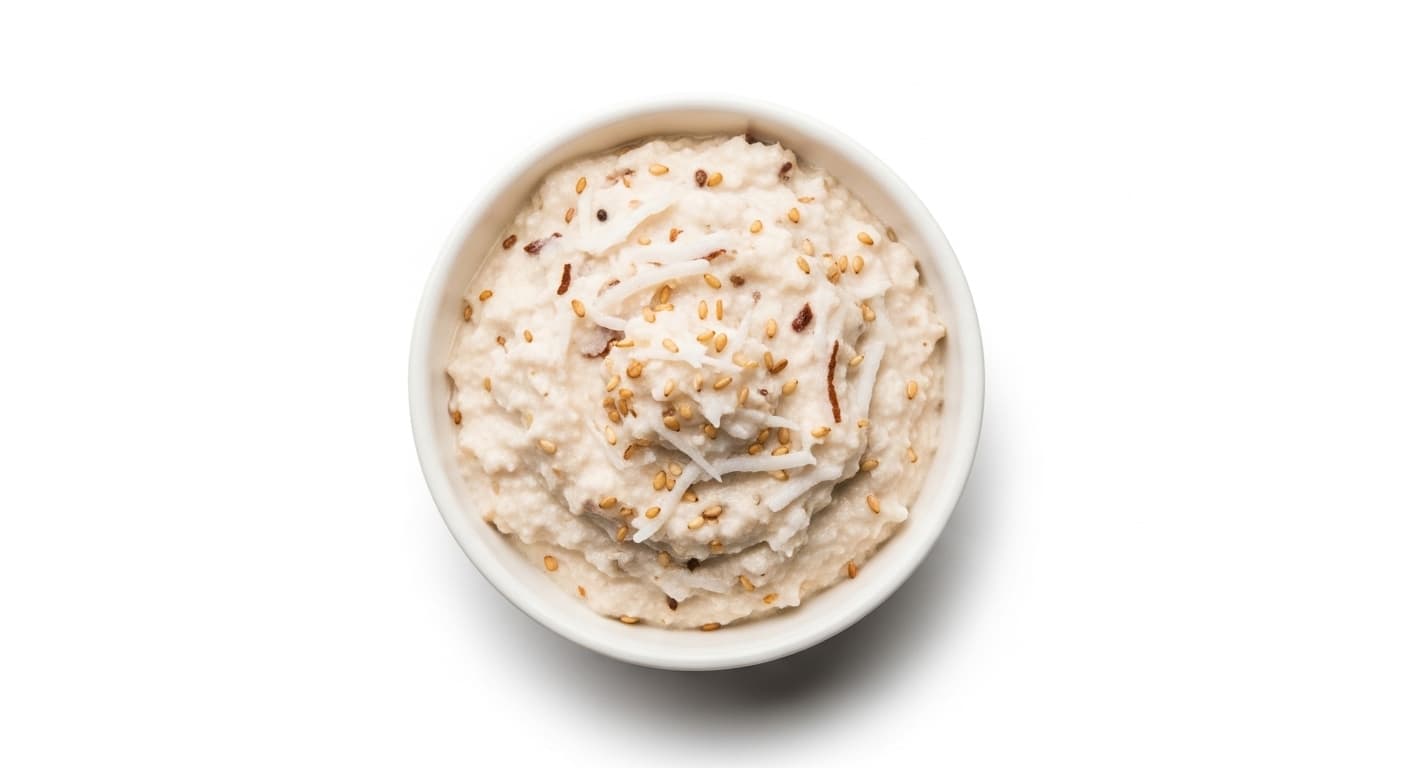
Coconut Sesame Chutney for Thyroid: A Selenium-Rich Daily Condiment
A wholesome Indian recipe crafted for health-conscious eating: nutritious, delicious, and easy to make at home.
A chutney may seem like a small thing, but when you eat it every day with idli or dosa, its nutritional contribution adds up meaningfully over time. This coconut sesame chutney is built around sesame seeds (til) alongside the traditional coconut. Sesame seeds are an excellent source of selenium (10mcg per tbsp) and are rich in zinc, both critical for thyroid enzyme function. They also bring calcium (88mg per tbsp) and iron to every meal.
The tadka uses dried red chilli, which provides capsaicin that mildly stimulates metabolism, relevant for people with hypothyroidism who typically struggle with a suppressed metabolic rate. Curry leaves add further antioxidants. This chutney takes 8 minutes, stores for 3 days in the fridge, and turns every dosa or roti into a quietly thyroid-supportive meal.
Ingredients
How to Make It
Toast the sesame seeds in a small dry pan on low heat for 2-3 minutes, stirring constantly, until they turn lightly golden and smell nutty. Let them cool completely before grinding.
In a mixer or blender, combine grated coconut, toasted sesame seeds, green chillies, ginger, and garlic. Add water gradually and blend to a smooth paste (or slightly coarse, depending on your preference).
Add lemon juice and salt. Blend once more to bring everything together.
Transfer to a serving bowl. Taste and adjust salt and lemon.
For the tadka: Heat oil in a small tadka pan. Add mustard seeds and cover immediately, they splutter. Add the dry red chilli, curry leaves, and hing.
Pour this hot tadka directly over the chutney. That sizzle blooms the spices and adds an amazing aroma.
Mix gently and serve with dosa, idli, uttapam, or as a spread on whole wheat toast.
Store in an airtight container in the fridge, the chutney stays fresh for 3 days. The colour may darken slightly but the flavour is unaffected.
Nutrition per serving
* Approximate values per serving
Health Benefits
Sesame seeds contain sesamol and sesamin, lignans with potent antioxidant properties that specifically protect thyroid tissue from the oxidative stress driving autoimmune thyroid destruction. Each serving of this chutney provides approximately 30mcg selenium from the sesame seeds, contributing meaningfully to the 55mcg daily requirement. The zinc in sesame (2.8mg per 30g) supports thyroid hormone receptor activity, the receptor that reads thyroid hormones in target tissues requires zinc to work. Coconut provides medium-chain triglycerides (MCTs), which are metabolised differently from long-chain fats and may modestly support metabolic rate, a benefit for hypothyroid patients managing weight.
Pro Tips
- →Toasting sesame seeds transforms the flavour, raw sesame tastes bitter and slightly unpleasant. Those 2-3 minutes of toasting make a real difference.
- →Fresh coconut is better than desiccated when you have access to it, the selenium and trace minerals are better preserved in fresh.
- →Add 2-3 Brazil nuts to the blender along with the sesame seeds for a significant selenium boost, this elevates the chutney from tasty to genuinely therapeutic for thyroid.
- →Don't blend with hot water, it can affect the texture and some of the bioactive compounds in fresh coconut.
Variations
- 1Add 1 tbsp roasted peanuts to the blend for additional protein and a slightly different, nutty flavour.
- 2Tomato coconut chutney variant: Add 1 medium tomato to the blend for a tangy, vibrant red-orange version with more Vitamin C.
- 3For a thicker, spreadable version, reduce water to 1-2 tbsp, this works well as a sandwich spread or roti accompaniment.
Frequently Asked Questions
You Might Also Like

Get a Personalised Diet Plan
4.9★ on Google • 7,000+ clients helped

