
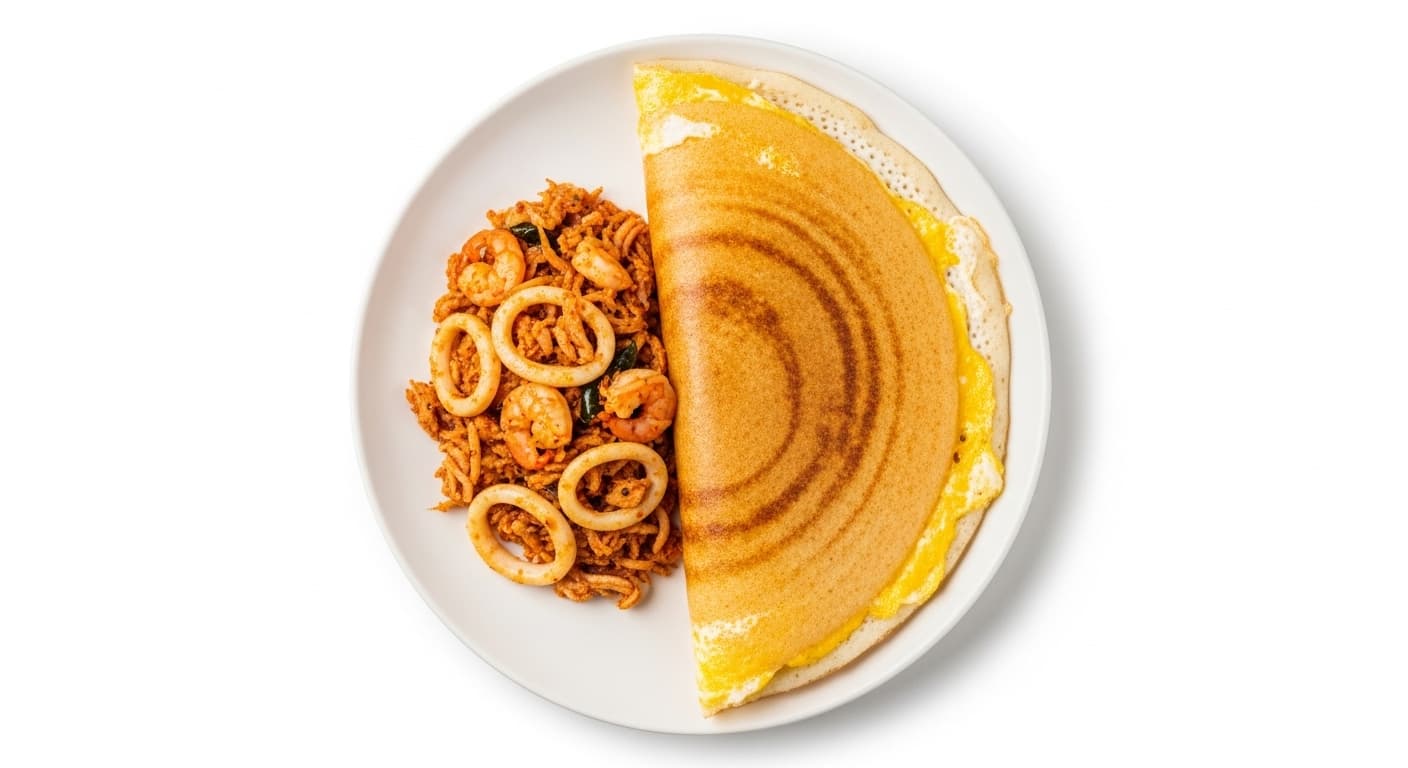
Egg Dosa for Thyroid Iodine: A Selenium & Iodine-Rich South Indian Breakfast
A wholesome Indian recipe crafted for health-conscious eating: nutritious, delicious, and easy to make at home.
Iodine is the foundational building block of thyroid hormones: without it, the thyroid cannot make T3 or T4 regardless of how much other support you provide. Iodine deficiency remains common in India, particularly in inland regions far from coastal seafood supplies. While seafood is the richest dietary iodine source, this egg dosa provides meaningful iodine through eggs (24mcg per egg) and iodised salt, making it an excellent thyroid-supportive option for vegetarians and anyone without easy access to fresh seafood.
The "seafood" in the title refers to the iodine-focused intent, this recipe places eggs at the centre of a crispy dosa that provides exceptional thyroid nutrition. The egg contributes selenium, iodine, and complete protein, all three are critical for thyroid hormone synthesis and conversion. Paired with coconut sesame chutney, this is a genuinely complete thyroid breakfast.
Ingredients
How to Make It
Beat 2 eggs with a pinch of turmeric, a pinch of iodised salt, and black pepper until well combined. Mix in half the chopped onion, green chilli, and coriander.
Heat a dosa tawa on high until very hot. Reduce to medium.
Pour a ladle of dosa batter onto the tawa and spread in the usual circular motion to form a thin dosa.
Immediately pour half the beaten egg mixture over the raw dosa surface. Using the back of the ladle, gently spread the egg across the dosa.
Drizzle ½ tsp oil around the edges. Cover with a lid and cook for 2-3 minutes until the egg is fully set and the dosa base is crispy.
Don't flip this dosa, the egg sets through steam under the lid.
Once the egg is set and no longer runny, slide it off carefully with a flat spatula. The egg side will have a beautiful, slightly golden-spotted look.
Serve immediately with coconut sesame chutney and sambar. Repeat for the second dosa.
Nutrition per serving
* Approximate values per serving
Health Benefits
This egg dosa provides 48mcg iodine (from 2 eggs) per serving, one-third of the daily 150mcg requirement, along with 28mcg selenium for T4-T3 conversion, and 16g complete protein including 300mg tyrosine (the amino acid that forms the backbone of T3 and T4). The fermented dosa batter provides probiotics that support gut health, and there's a meaningful gut-thyroid axis, gut dysbiosis worsens thyroid autoimmunity, and probiotics help through reducing intestinal permeability and inflammatory cytokine production. The rice and lentil base provides carbohydrates for energy, which thyroid patients genuinely need since low T3 reduces cellular energy production and fatigue is a common and debilitating symptom.
Pro Tips
- →Spread the egg over the dosa while the batter is still wet and unset: if the dosa has already dried, the egg doesn't adhere and slides off the edges.
- →Use iodised salt in both the egg mixture and the dosa batter. This seemingly small detail has a real impact on daily iodine intake for thyroid patients.
- →The lid is essential, covering creates steam that sets the egg thoroughly from above without needing to flip, which would ruin the appearance and texture.
- →Fresh dosa batter (fermented 8-12 hours) makes crispier dosas than commercial batter, and the fermentation increases B vitamin content.
Variations
- 1Add 1 tbsp grated cheese to the egg before covering, the melt creates a richer egg layer with additional calcium and protein.
- 2Prawn egg dosa (for non-vegetarians): Add 4-5 cooked, chopped prawns to the egg mixture, prawns are among the richest iodine sources (130mcg per 85g) and transform this into an exceptional thyroid meal.
- 3Mushroom egg dosa: Add ¼ cup finely chopped sautéed mushrooms to the egg: mushrooms provide selenium and Vitamin D, two additional thyroid-supportive nutrients.
Frequently Asked Questions
You Might Also Like
Get a Personalised Diet Plan
4.9★ on Google • 7,000+ clients helped

