
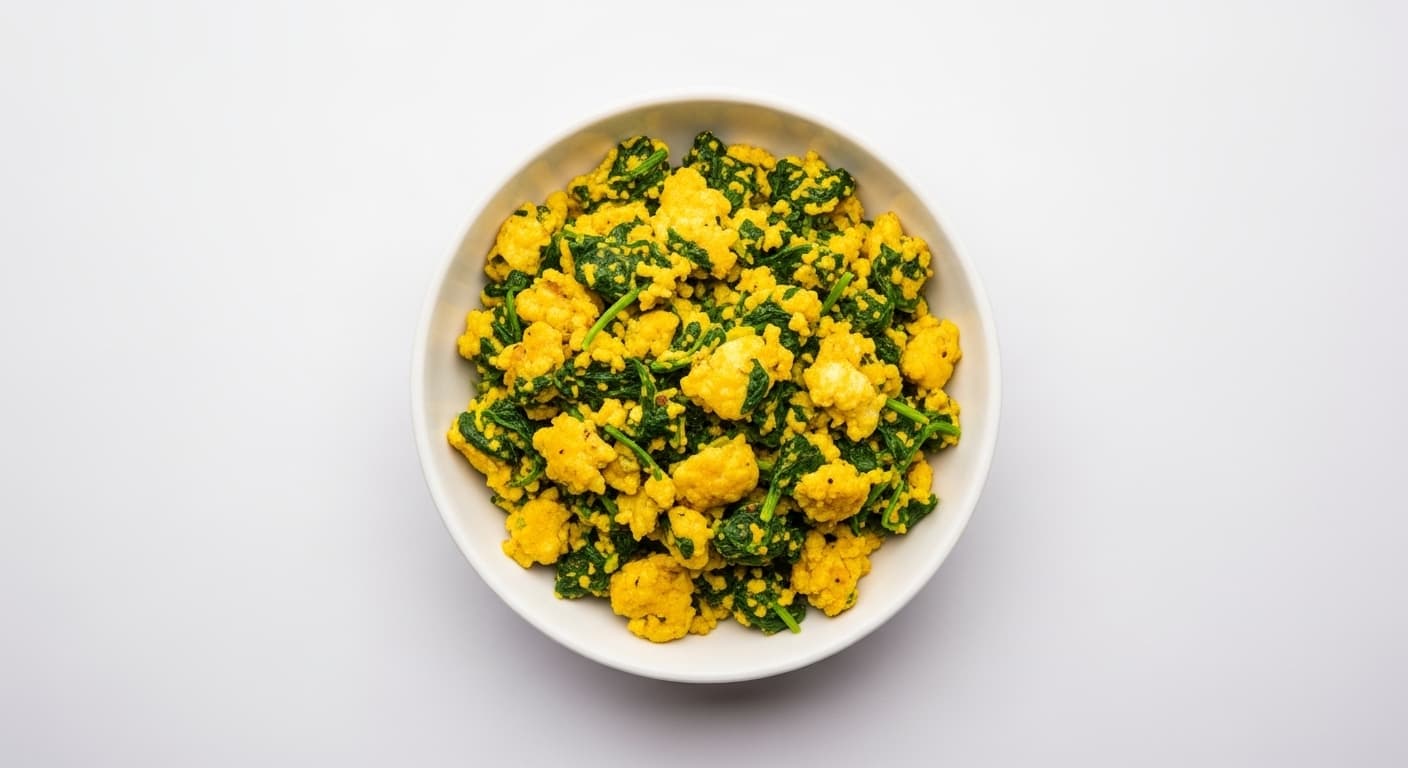
Egg Bhurji with Spinach for Thyroid: Selenium, Iodine & Iron in One Pan
A wholesome Indian recipe crafted for health-conscious eating: nutritious, delicious, and easy to make at home.
Eggs are one of the best thyroid-supportive foods in the Indian kitchen, and they're underappreciated for exactly this reason. A single whole egg provides selenium (14mcg), iodine (24mcg: 16% of the daily requirement), and complete protein with every amino acid needed for thyroid hormone synthesis. The iodine and selenium are concentrated in the yolk, eating only egg whites means you miss both of these critical nutrients entirely. For thyroid health, always eat the whole egg.
This bhurji is spiced in the classic Indian way (onion, tomato, green chilli, ginger, turmeric) but adds a large handful of spinach, which provides iron for thyroid peroxidase enzyme function and folate. The result is a 10-minute, one-pan breakfast with 18g protein, meaningful selenium and iodine, and iron, four critical thyroid nutrients in a single dish. Pair with 2 jowar rotis and you have a breakfast that genuinely powers your metabolism through the morning.
Ingredients
How to Make It
Beat the 4 whole eggs with a pinch of iodised salt and turmeric until fully combined and slightly frothy.
Heat oil or ghee in a non-stick pan. Add the onion and green chilli. Cook on medium heat for 3-4 minutes until the onion is soft and translucent.
Add the grated ginger and cook for 30 seconds. Add the chopped tomatoes and cook until they're completely soft and the mixture is relatively dry, about 3-4 minutes.
Add the red chilli powder and stir through. Add the chopped spinach, it will wilt down in 1-2 minutes.
Pour the beaten eggs over the vegetable mixture. Don't stir immediately: let the eggs begin to set for about 20 seconds.
Then gently fold the eggs with a wooden spoon or spatula, working them over themselves as they cook. Keep the heat at medium. Good bhurji is about gentle, constant folding, not aggressive scrambling.
Pull the pan off the heat when the eggs are just set and still slightly glossy, not dry and crumbly. The residual heat finishes them perfectly.
Add garam masala and a final pinch of iodised salt. Stir once. Garnish with fresh coriander. Serve immediately with jowar roti or whole wheat toast.
Nutrition per serving
* Approximate values per serving
Health Benefits
This dish addresses multiple thyroid nutrient deficiencies at once. Each egg provides 14mcg selenium and 24mcg iodine: two eggs per serving means 48mcg iodine, nearly a third of the 150mcg daily requirement. Spinach provides iron: thyroid peroxidase (the key enzyme that combines iodine with tyrosine to make thyroid hormone) requires iron as a cofactor, iron deficiency directly impairs thyroid hormone production even when iodine is adequate. The 16g of protein per serving supplies tyrosine, the amino acid that forms the backbone of both T3 and T4.
Pro Tips
- →Always use iodised salt in thyroid cooking. Rock salt (sendha namak) and pink Himalayan salt do not contain adequate iodine. Standard iodised table salt is what you need.
- →Don't overcook the eggs, overcooked eggs lose selenium through oxidation. Remove from heat when the eggs still look slightly underdone; they finish cooking on the plate.
- →If you have Hashimoto's, cooking the spinach as in this recipe is the right call, heat reduces goitrogenic compounds.
- →The combination of eggs (selenium for T4→T3 conversion) and iodised salt (raw material for thyroid hormone synthesis) makes this breakfast more impactful than most supplements for everyday thyroid support.
Variations
- 1Add ½ cup sliced mushrooms, mushrooms are one of the rare plant sources of both Vitamin D (thyroid cells have Vitamin D receptors) and selenium.
- 2Scatter 2 tbsp pumpkin seeds on top as garnish for additional zinc, which is required for thyroid receptor function.
- 3Replace spinach with moringa (drumstick) leaves for a denser mineral profile, moringa is exceptional for iron and calcium.
Frequently Asked Questions
You Might Also Like
Get a Personalised Diet Plan
4.9★ on Google • 7,000+ clients helped

