
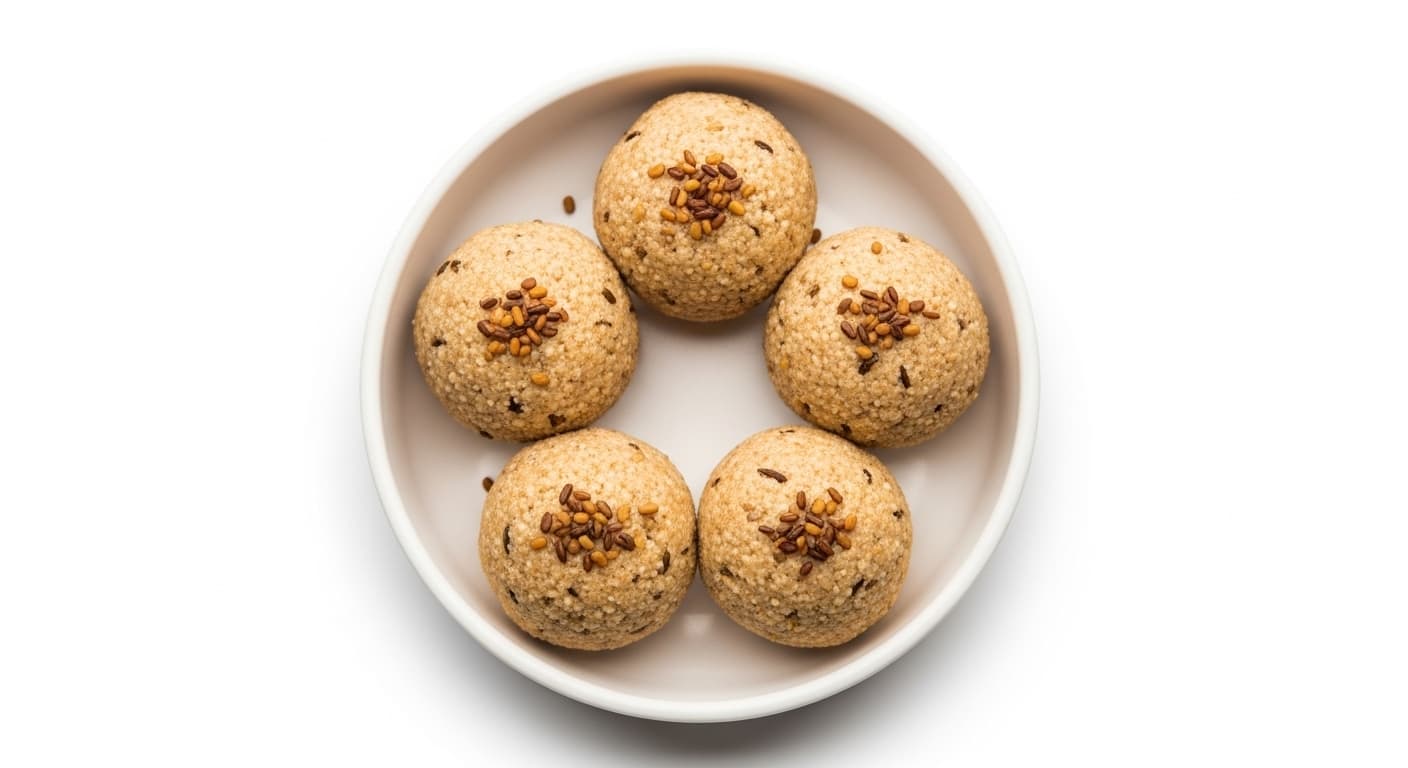
Methi Ladoo for Breastfeeding: The Most Powerful Indian Lactation Booster
A wholesome Indian recipe crafted for health-conscious eating: nutritious, delicious, and easy to make at home.
Methi (fenugreek) is the most clinically validated galactagogue in traditional Indian medicine. Multiple peer-reviewed studies confirm that fenugreek supplementation significantly increases breast milk production, one study found a 500 percent increase in milk volume within 24 to 72 hours of starting fenugreek. The active compounds diosgenin and trigonelline stimulate the mammary glands and increase prolactin levels. Methi ladoo makes the therapeutic dose of fenugreek genuinely enjoyable to eat, disguising the seeds' intense bitterness in a sweet ladoo with ghee, jaggery, and coconut.
Fenugreek should be started after delivery, not during pregnancy, it can stimulate uterine contractions. The ghee in this recipe provides fat-soluble vitamins (A, D, K2) that pass through breast milk and are critical for infant development, particularly bone mineralisation and immune function. These ladoos can be eaten from 2 to 3 days postpartum and throughout the entire breastfeeding period.
Ingredients
How to Make It
Dry roast methi seeds on low heat for 5 to 6 minutes until they turn slightly darker and smell nutty rather than harsh. The bitterness reduces significantly. Cool completely and grind to a fine powder.
Heat ghee in a kadhai. Add besan and roast on low heat for 8 to 10 minutes until golden and fragrant, stirring constantly.
Add atta and continue roasting for another 10 minutes. Both flours should be evenly golden with a nutty aroma. Don't rush this.
Add desiccated coconut and ground almonds. Roast 2 more minutes.
Remove from heat. Add ground methi powder, cardamom, saunth, and chopped dried dates. Mix well. Cool for 10 minutes.
Melt jaggery with 2 tbsp water. Add to the cooled flour mixture. Mix thoroughly.
While still warm, shape into medium-sized ladoos using firm, even pressure.
Store in an airtight container for 2 to 3 weeks at room temperature.
Nutrition per serving
* Approximate values per serving
Health Benefits
Methi ladoos provide comprehensive postpartum nutrition. Fenugreek's diosgenin directly stimulates prolactin secretion from the pituitary gland, increasing milk production. The iron in jaggery (11mg per 100g) and dried dates addresses the postpartum iron deficiency that causes severe fatigue in the weeks after delivery. Besan adds protein above the atta base, important because breastfeeding increases protein requirements by 25g per day above normal needs. Calcium from almonds and coconut supports the mother's bone density, which is depleted during breastfeeding as calcium transfers into breast milk. Saunth (dry ginger) reduces post-delivery inflammation and is more bioavailable than fresh ginger for anti-inflammatory purposes.
Pro Tips
- →Roasting the methi seeds is essential, raw or inadequately roasted methi is intensely bitter and makes the ladoos unpalatable. Proper roasting (5 to 6 minutes on low heat) reduces bitterness by 50 to 60 percent.
- →The methi-to-sweetener ratio in this recipe is calibrated for therapeutic benefit while staying pleasant to eat. Don't increase the methi quantity, more isn't better and creates very bitter ladoos.
- →If a new mother finds the ladoos too rich initially (common when digestion is still recovering), reduce ghee by 20 percent and add 1 to 2 tbsp milk to help with binding.
- →Watch for signs of excess lactation stimulation, if the baby is spitting up excessively or the mother has breast engorgement, reduce to 1 ladoo per day temporarily.
Variations
- 1Add 2 tbsp shatavari powder for a dual-galactagogue ladoo with synergistic lactation-boosting effects.
- 2Add 2 tbsp sesame seeds (til) for additional calcium and iron, important for bone density during breastfeeding.
- 3For mothers who find methi too bitter even in ladoo form: reduce methi to 2 tbsp and increase dried dates to ½ cup for more natural sweetness.
Frequently Asked Questions
You Might Also Like
Get a Personalised Diet Plan
4.9★ on Google • 7,000+ clients helped

