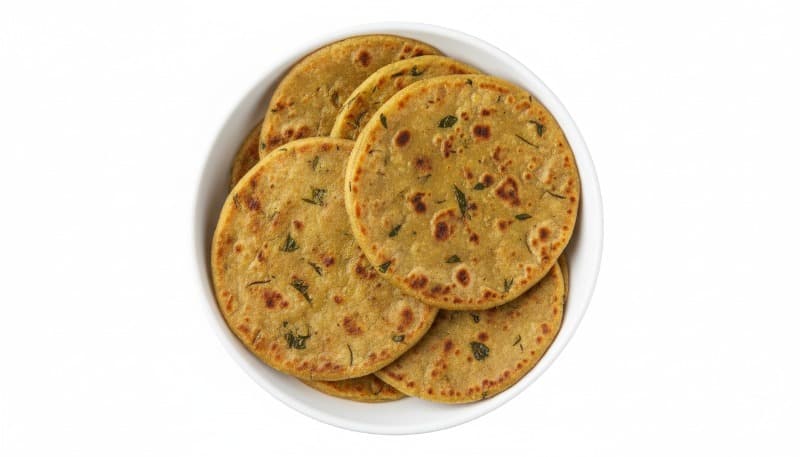
Methi Paratha for Diabetes: A Blood-Sugar Friendly Indian Flatbread
A wholesome Indian recipe crafted for health-conscious eating: nutritious, delicious, and easy to make at home.
If there's one paratha that a diabetic can eat without guilt, it's methi paratha. Fenugreek leaves and seeds contain an alkaloid called diosgenin and a soluble fibre called galactomannan — both of which slow down glucose absorption in the intestines. Your blood sugar rises much more gradually after a methi paratha than after a plain wheat roti. This isn't folk wisdom; multiple clinical trials have shown fenugreek supplementation significantly reduces fasting blood glucose and HbA1c.
In Indian households, methi paratha is a winter staple — but for people with diabetes, it deserves a place on the plate year-round. Whole wheat atta instead of maida adds another layer of fibre, and cooking on a tawa with just a teaspoon of ghee keeps the fat in check. One paratha with curd and a small katori of sabzi is a complete, satisfying meal that won't spike your sugar.
Ingredients
How to Make It
Wash the fresh methi leaves thoroughly 2-3 times to remove any grit. Chop finely. If the leaves are very bitter, sprinkle a pinch of salt over them, let them sit 5 minutes, then squeeze out the excess water — this tones down the bitterness without losing nutrition.
In a large mixing bowl, combine the whole wheat atta, chopped methi, green chilli, grated ginger, ajwain, turmeric, and salt. Mix everything, dry ingredients first.
Add water gradually — a little at a time — and knead into a smooth, soft dough. The methi leaves release some moisture as you knead, so go slow with the water. Cover the dough and let it rest for 10 minutes.
Divide into 8 equal portions. Roll each into a ball, then roll out on a lightly floured surface to about 6-7 inches in diameter. Don't roll too thin or it will tear on the tawa.
Heat a tawa on medium-high flame. Place the paratha on it and cook for about 1 minute — you'll see small bubbles forming on top. That's your cue to flip.
Apply ½ tsp ghee on the cooked side. Flip again and apply another ½ tsp on the second side. Press gently with a spatula to cook it evenly.
Both sides should have golden-brown spots. Each paratha takes approximately 2-3 minutes to prepare in total.
Serve hot with low-fat curd, green chutney, or a light sabzi. Skip the full-fat butter and heavy curries — they undo the low-GI benefit of this paratha.
Nutrition per serving
* Approximate values per serving
Health Benefits
Methi paratha offers real, measurable benefits for people with diabetes. The galactomannan fibre in methi forms a viscous gel in the gut that physically slows glucose absorption, blunting those post-meal spikes. Studies in the Journal of Diabetes & Metabolic Disorders show 10g of fenugreek fibre daily can reduce fasting blood sugar by 13-14%. Whole wheat atta has a glycaemic index of 54 compared to 70+ for white bread. The ajwain supports insulin activity. Eaten regularly — 3-4 times a week — as part of a balanced diet, this paratha can make a meaningful contribution to HbA1c reduction over time.
Pro Tips
- →Fresh methi leaves are significantly better than dried here — the texture in the paratha is far superior, and fresh leaves have higher diosgenin content. Dried kasuri methi can work in a pinch (use 2 tbsp, not a full cup — it's concentrated).
- →Don't overcook the methi after chopping. The bitterness increases with exposure. Let the kneaded dough rest at least 10 minutes so the methi softens into the atta.
- →Pair with low-fat curd, not flavoured yogurt. The protein in curd slows glucose absorption further — a smart combination.
- →If fresh methi is out of season, the dried kasuri methi version still works well. Just reduce to 2 tbsp and crumble it directly into the atta.
Variations
- 1For a higher protein version, add 2 tbsp besan (chickpea flour) to the dough along with the atta — this brings the GI down further.
- 2Add 4 tbsp finely grated lauki (bottle gourd) to the dough for extra fibre and a noticeably softer texture.
- 3Jowar or bajra atta can replace half the wheat flour for a gluten-reduced, lower-GI version that's especially good for PCOS alongside diabetes.
Frequently Asked Questions
You Might Also Like
Get a Personalised Diet Plan
4.9★ on Google • 7,000+ clients helped

