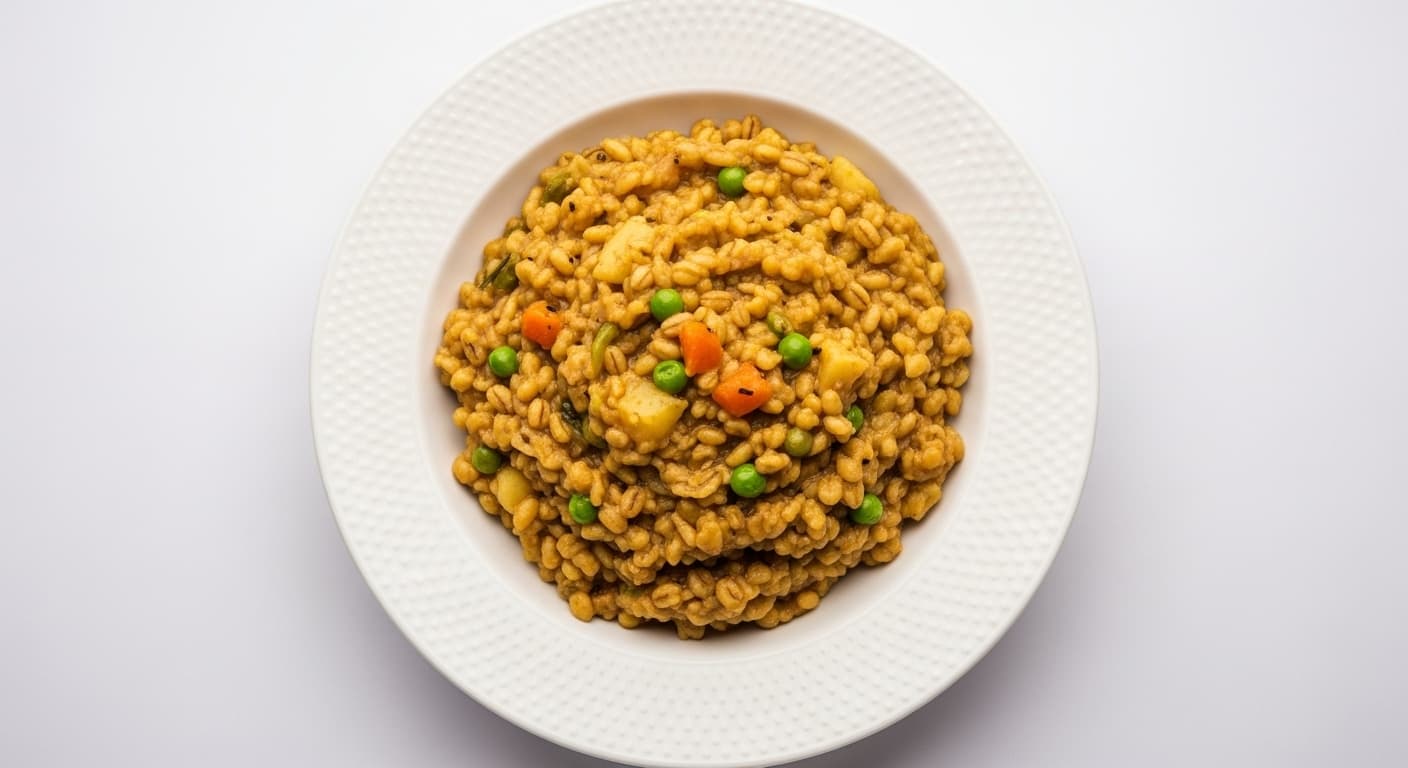
Barley Vegetable Khichdi for Diabetes: The Low-GI Comfort Meal
A wholesome Indian recipe crafted for health-conscious eating: nutritious, delicious, and easy to make at home.
Barley (jau) is one of the most underrated grains for diabetes management in India, despite sitting on the shelves of every kirana store. The glycaemic index of barley is just 28 — one of the lowest of any grain — and it's exceptionally rich in beta-glucan, the same soluble fibre found in oats that slows glucose absorption. A bowl of barley khichdi causes roughly 40-50% less blood sugar rise than the same calories from rice khichdi. Ayurveda prescribed jau for "prameha" (diabetes) for centuries. Modern science is now explaining exactly why that worked.
This khichdi combines barley with yellow moong dal and a variety of vegetables in one pot. The dal adds protein that further blunts the glucose response, while the vegetables add fibre and micronutrients. One pot, complete nutrition, easy on digestion — good for both lunch and dinner.
Ingredients
How to Make It
Soak barley for at least 2 hours—overnight is better. This cuts cooking time and makes it more digestible. Rinse and drain. Rinse the moong dal separately.
Heat the ghee in a pressure cooker. Add the hing and cumin seeds. Add the onions and cook until golden, about 5 minutes after the seeds pop.
Add ginger-garlic paste and cook for 2 minutes. Add tomatoes and cook until they soften and the oil separates from the masala, in about 5 minutes.
Add turmeric and coriander powder. Mix well.
Add the beans, carrot, moong dal, and drained barley. To coat everything with masala, stir everything together.
Add salt and four to five cups of water. Don't cut corners; barley requires more water than rice. Stir thoroughly.
On medium heat, pressure cook for four to five whistles. The khichdi becomes gluey if you rush it under cold water; instead, let the pressure release naturally.
Open the cooker and add the spinach. Stir gently—the heat from the khichdi wilts it in about 2 minutes. Check the consistency; add hot water if it's too thick. Adjust the salt. Serve with low-fat curd.
Nutrition per serving
* Approximate values per serving
Health Benefits
Barley's low GI of 28 comes from its beta-glucan structure, which forms a thick gel in the digestive tract that slows glucose absorption more effectively than wheat or rice fibre. Studies show barley reduces post-meal blood glucose peaks by up to 35% compared to wheat. The moong dal in this khichdi provides complementary amino acids and additional fibre, pushing the glycaemic impact of the meal down further. Spinach adds magnesium, which improves insulin sensitivity — a mineral most people with diabetes are short on. Pressure cooking breaks down the anti-nutrients in barley, making zinc and iron more accessible.
Pro Tips
- →Soak the barley for at least 2 hours before cooking. Unsoaked barley needs 6-7 whistles and ends up with a chewier, less pleasant texture.
- →Barley khichdi thickens noticeably as it cools. Add ½ cup hot water and reheat gently if making ahead.
- →A squeeze of lemon and fresh coriander just before serving adds brightness and the Vitamin C helps the body absorb iron from the spinach.
- →For a simpler summer version, skip the onion-tomato bhuna and make a straightforward pressure-cooked barley-dal-vegetable khichdi with just cumin and hing.
Variations
- 1Mix barley and brown rice (1:1) for a more familiar texture if pure barley feels too different from regular khichdi.
- 2Add 1 cup chopped lauki (bottle gourd) — lauki has almost no calories, keeps the khichdi light, and is excellent for people with diabetes.
- 3Use masoor dal instead of moong dal — masoor has a slightly lower GI and a higher iron content, which suits women with diabetes and anaemia.
Frequently Asked Questions
You Might Also Like
Get a Personalised Diet Plan
4.9★ on Google • 7,000+ clients helped

