
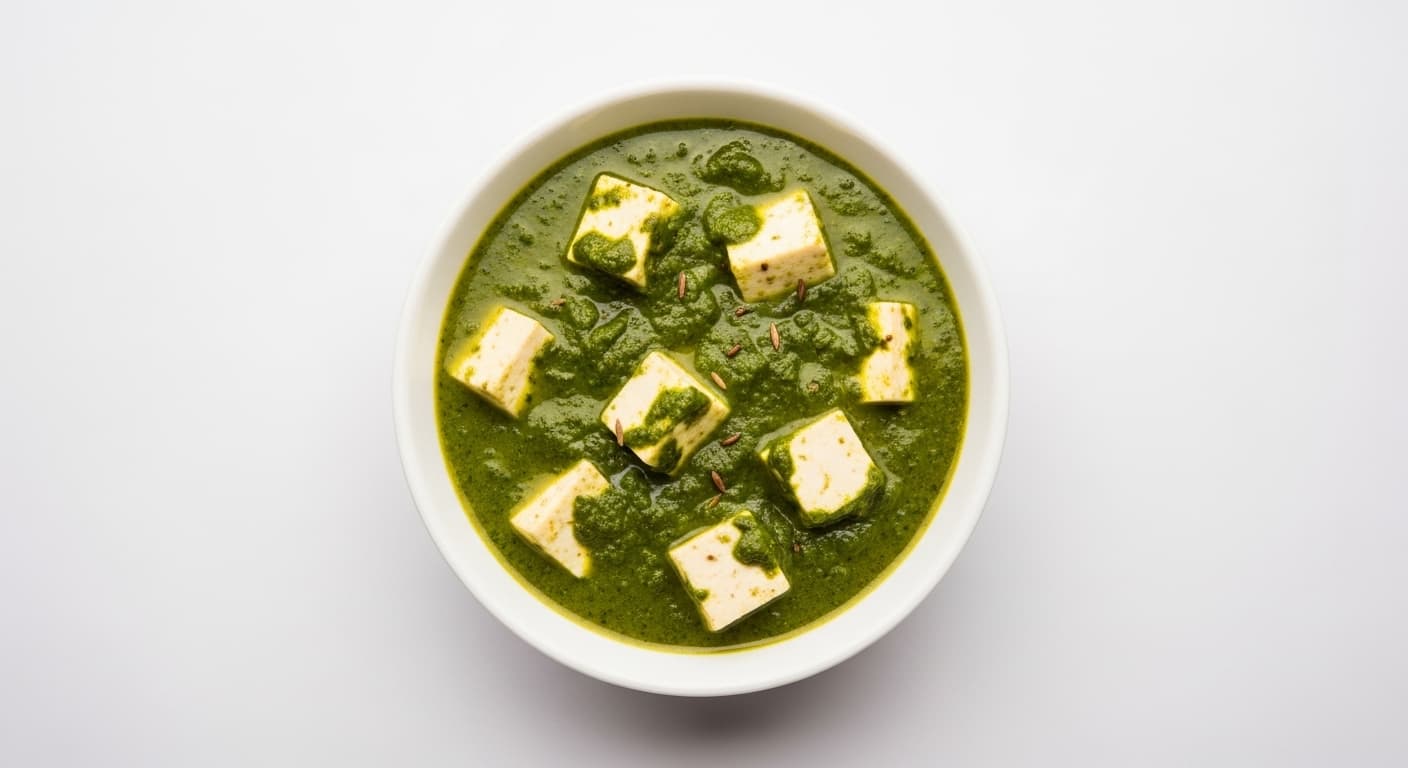
Low-Fat Palak Paneer for Diabetics: Restaurant Flavour, Diabetic-Friendly Nutrition
A wholesome Indian recipe crafted for health-conscious eating: nutritious, delicious, and easy to make at home.
Palak paneer doesn't need cream to taste good. This diabetic-friendly version uses low-fat paneer, skips the heavy cream entirely, and works with just one teaspoon of oil, yet delivers a vibrant green sabzi that's genuinely restaurant-worthy. The secret is in the technique: properly blanching the spinach, using Greek-style curd for creaminess, and building a well-bhunoed masala base.
For people with diabetes, this dish is a nutritional goldmine. Palak (spinach) is rich in magnesium, one of the most important minerals for insulin sensitivity, along with alpha-lipoic acid and iron. Low-fat paneer provides 14g of slow-digesting protein per serving, which prevents blood sugar spikes. The overall GI of this dish is extremely low. You can eat it with one small roti or a small serving of brown rice without any significant glucose impact.
Ingredients
How to Make It
Blanch the spinach: Bring a large pot of water to a rolling boil. Add spinach and cook for exactly 2 minutes: no longer, or you lose the colour and a lot of the nutrients. Immediately transfer to ice-cold water or run under a cold tap. This stops the cooking and locks in that vibrant green. Squeeze out excess water and blend to a smooth puree.
Heat oil in a heavy-bottomed kadhai. Add cumin seeds and bay leaf. Once the seeds pop, add the onions and cook on medium flame for 8-10 minutes until deep golden. This caramelisation is where the flavour comes from when you're skipping cream.
Add ginger, garlic, and green chilli. Sauté 2 minutes. Add tomatoes and cook until completely broken down and the oil surfaces, about 8 minutes. The masala should look dry and concentrated.
Add coriander powder, cumin powder, and turmeric. Bhuno for 2 minutes, adding a splash of water if it sticks. Getting this masala base properly cooked is what gives restaurant-style depth without the cream.
Add the spinach puree. Stir well and simmer for 5 minutes. The colour should stay a vibrant, deep green, if it's going yellowish, lower the heat.
Let the curd come to room temperature before you add it (cold curd straight from the fridge will curdle in hot gravy). Stir it in spoonful by spoonful, mixing constantly.
Add the paneer cubes. Simmer gently for 3-4 minutes just to warm the paneer through. Don't let it boil hard, overcooked paneer turns rubbery.
Add garam masala, adjust salt. Serve with whole wheat roti or brown rice.
Nutrition per serving
* Approximate values per serving
Health Benefits
This version of palak paneer is exceptional for people with diabetes primarily because of the magnesium in spinach. Magnesium is a cofactor for over 300 enzymes involved in glucose metabolism and insulin action, insulin resistance correlates directly with low magnesium levels in multiple large studies. Each serving provides approximately 80-90mg magnesium. The paneer's slow-digesting protein creates a prolonged amino acid release that complements insulin action without spiking blood glucose. Alpha-lipoic acid in spinach is used clinically to treat diabetic neuropathy and significantly improves peripheral insulin sensitivity at doses comparable to what 2 cups of spinach provides.
Pro Tips
- →The cold water shock after blanching is non-negotiable for bright green colour. Skip it and your palak paneer turns a dull, unappetising khaki-green.
- →Homemade low-fat paneer from toned milk is far better than commercial low-fat paneer, which is often bone dry. To make at home: heat 1 litre of toned milk, add 2 tbsp lemon juice, strain through muslin, press under weight for 30 minutes.
- →Don't boil the dish vigorously after adding the spinach, it destroys Vitamin C and concentrates oxalic acid, reducing calcium absorption.
- →Curd must be at room temperature before adding, cold curd curdles in hot gravy and ruins the texture.
Variations
- 1Add ½ cup boiled chickpeas (chana) along with the paneer for Palak Chana Paneer: even higher fibre and protein, excellent for people with diabetes.
- 2Replace paneer with firm tofu for a lower saturated-fat, lactose-free version with similar protein content and additional isoflavones that improve insulin sensitivity.
- 3For extra heat, finish the dish with a small tadka of sliced garlic in ½ tsp oil poured over the top.
Frequently Asked Questions
You Might Also Like
Get a Personalised Diet Plan
4.9★ on Google • 7,000+ clients helped

