Oats Vegetable Upma for Diabetics: A Beta-Glucan Rich Breakfast
A wholesome Indian recipe crafted for health-conscious eating: nutritious, delicious, and easy to make at home.
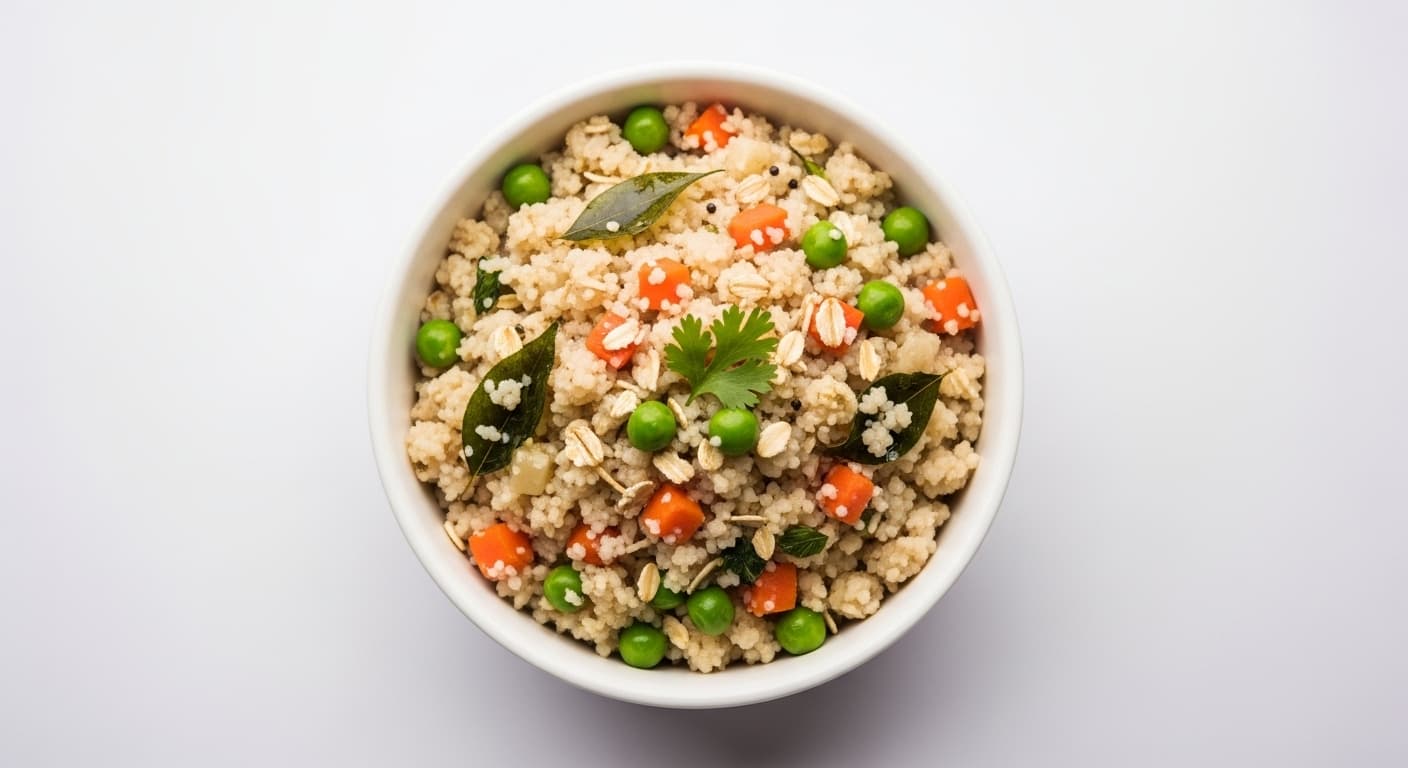
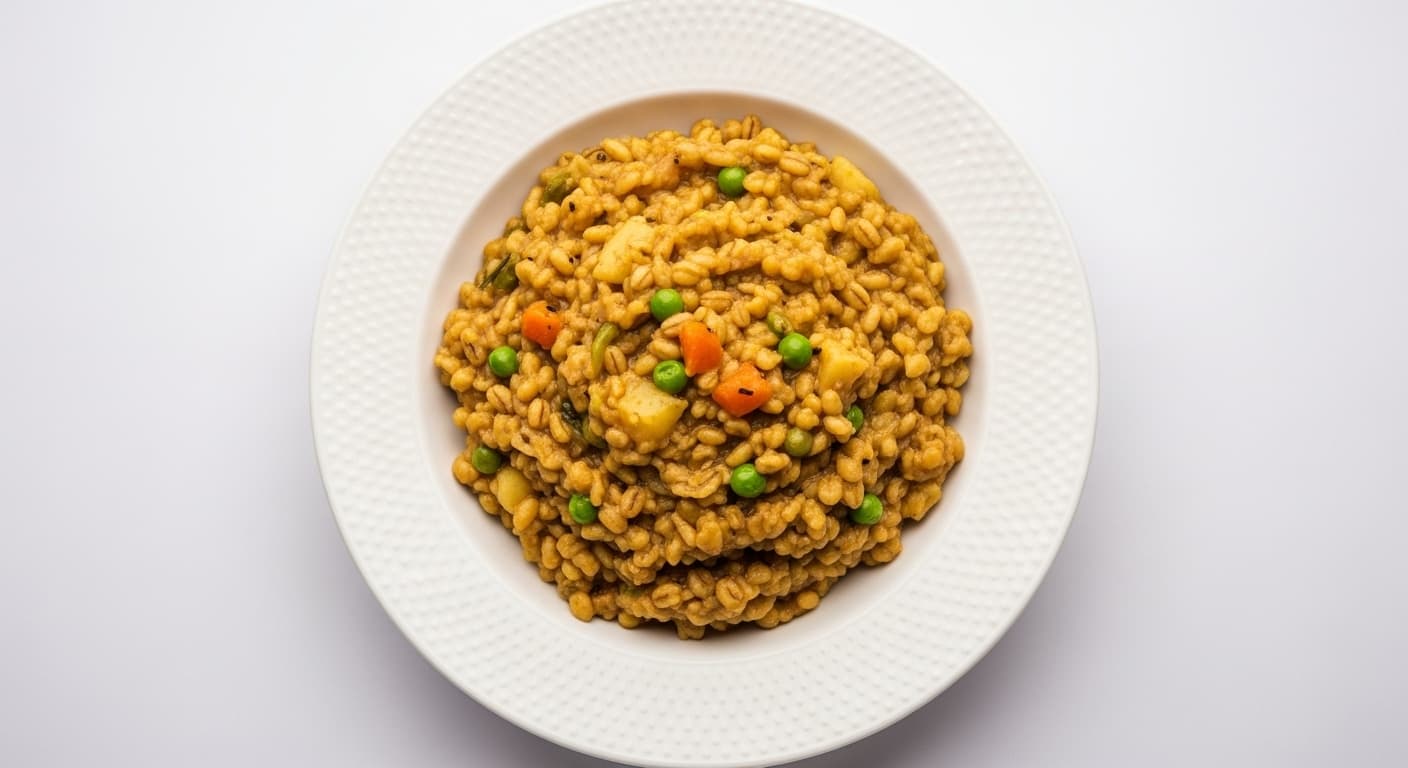
Traditional suji (semolina) upma has a glycaemic index of around 65-70, making it a rough choice for people with diabetes. This oats upma swaps the suji for rolled oats (not instant oats — that distinction matters), which contain beta-glucan, a soluble fibre with the strongest clinical evidence of anything in nutrition for reducing post-meal blood sugar. The European Food Safety Authority has approved the claim that 3g of beta-glucan from oats "reduces the blood glucose rise after a meal." One serving of this upma provides about 2.5-3g of it.
The vegetables add fibre and vitamins without adding carbohydrates. The South Indian tadka of mustard seeds and curry leaves makes this feel like comfort food, not diet food. This is genuinely delicious — not a compromise.
Ingredients
How to Make It
Dry roast the rolled oats in a pan for 3–4 minutes on medium heat, stirring the whole time, until they turn a light golden color and smell nutty. Turn off the heat and keep aside. This step prevents mushy upma—don't skip it.
Heat oil in the same kadhai, add mustard seeds, and let them pop. Add urad dal and chana dal—fry for 30 seconds until light golden, and add curry leaves (stand back—they splutter).
once mustard seeds start to splutter, add green chilies and ginger. Sauté for 30 seconds and add the onions and cook until translucent, about 3 minutes.
Add the diced carrots and french beans, stir, and cook for 3-4 minutes. Add the peas, tomato, and turmeric. Mix well and cook another 2 minutes.
Add 1.5 cups of water and salt. Bring to a boil.
Once the water starts boiling, add the roasted oats gradually, stirring as you go to prevent lumping. Reduce heat to low.
Keep stirring every minute for 4-5 minutes until the oats absorb all the water and reach that classic upma consistency — not dry, not wet, just slightly moist and clumped.
Turn off the heat. Add lemon juice and mix through. Garnish with fresh coriander. Serve with coconut chutney — skip sweet chutneys.
Nutrition per serving
* Approximate values per serving
Health Benefits
Beta-glucan in oats is the most researched dietary fibre for blood sugar management. It forms a viscous gel in the gut that slows gastric emptying and glucose absorption, flattening the post-meal glucose curve. Multiple meta-analyses confirm oat beta-glucan reduces post-meal glucose and insulin responses by 20-30% compared to equivalent carbohydrate meals without oats. The vegetables add chromium (in beans and peas), a mineral that enhances insulin receptor sensitivity. Lemon juice provides Vitamin C, which further reduces the glycaemic impact. Compare this breakfast to idli-sambar at the same calorie count — the 1-hour post-meal blood glucose reading will be noticeably lower with this upma.
Pro Tips
- →Rolled oats, not quick-cook or instant. Instant oats are pre-cooked and have a GI of around 72 vs 55 for rolled oats. The extra 5 minutes of cooking is worth it for blood sugar.
- →Dry roasting first is the single most important tip for good texture. Mushy oats upma is the number one complaint — toasting the oats beforehand fixes it completely.
- →Add salt to the water, not to the vegetables before that. Adding salt to vegetables first draws out moisture and changes the cooking timing.
- →Throw in a handful of boiled moong sprouts at the end for a quick protein boost with zero extra cooking.
Variations
- 1Stir 1 beaten egg into the upma right at the end — egg oats upma has 16g protein and keeps you full for 4-5 hours.
- 2Add a handful of fresh grated coconut at the very end for a South Indian flavour — it adds healthy fat and makes the upma more satisfying.
- 3Use half oats and half broken wheat (dalia) for a different texture and slightly higher fibre content.
Frequently Asked Questions
You Might Also Like
Get a Personalised Diet Plan
4.9★ on Google • 7,000+ clients helped

