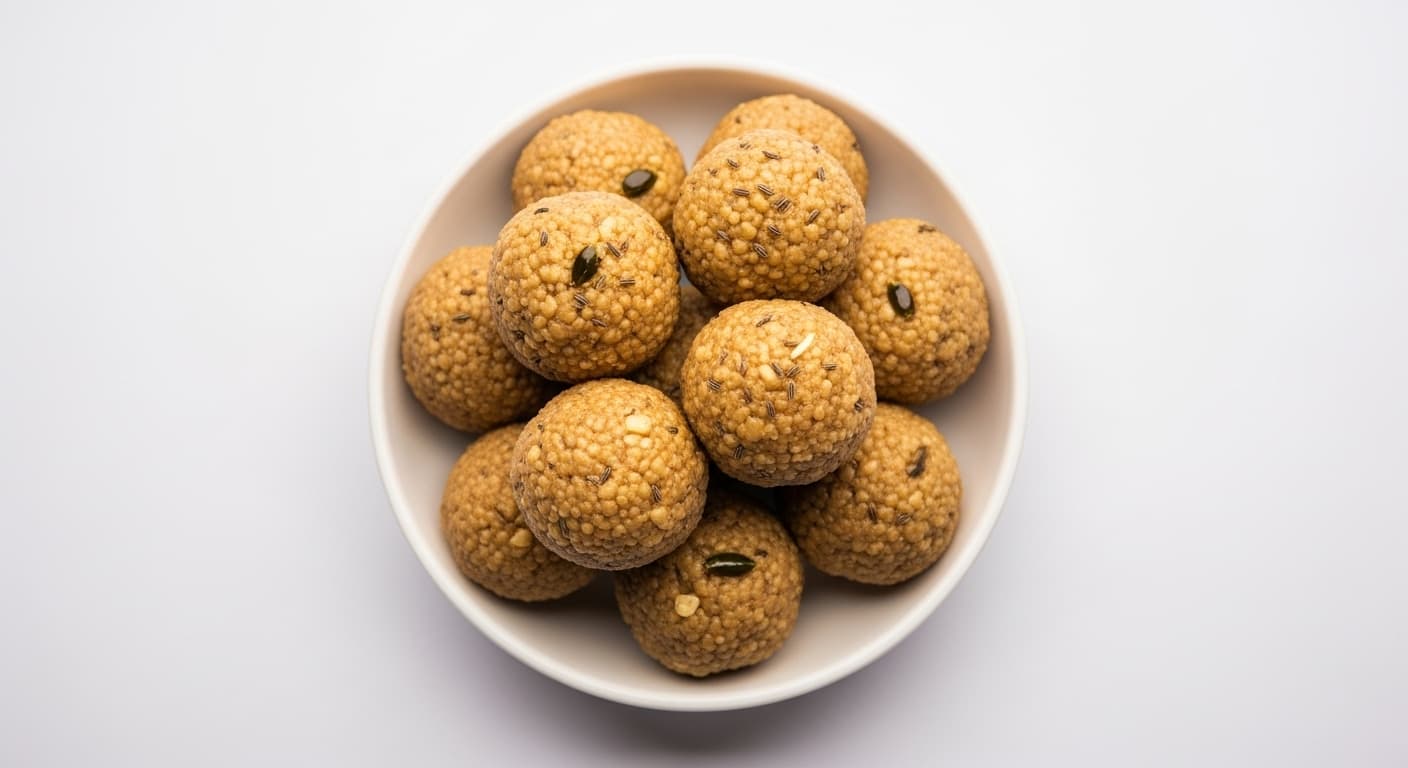
Ajwain Gond Ladoo for New Mothers: The Traditional Postpartum Strength Restorer
A wholesome Indian recipe crafted for health-conscious eating: nutritious, delicious, and easy to make at home.
Gond ke ladoo is one of the most important traditional foods given to women after childbirth across North India, and for very good reason. Gond (edible gum, also called tragacanth gum) is a botanical resin collected from Astragalus and related plants. It is intensely warming, joint-strengthening, and an effective galactagogue (milk-production stimulant). Traditional Indian postpartum care recognised what modern research is now confirming: childbirth depletes the body of essential minerals, weakens connective tissue and joints (particularly the pelvis and spine), and dramatically increases nutritional demands for milk production.
This recipe pairs gond with ajwain (carom seeds), which aid uterine involution, the shrinking of the uterus back to its normal size after delivery, while also relieving the post-delivery gas and colic that many new mothers experience. Whole wheat atta and ghee form the base, providing sustained energy and fat-soluble vitamins essential during breastfeeding. These ladoos are traditionally given starting 2 to 3 days after delivery.
Ingredients
How to Make It
Roast the gond: Heat 2 tbsp ghee in a kadhai. Add gond pieces one at a time on medium heat, they will puff up to 3 to 4 times their size in 1 to 2 minutes. Remove each piece immediately as it puffs. Don't over-roast. Cool and coarsely grind. Set aside.
In the same kadhai, heat the remaining ghee. Add atta and roast on low heat, stirring continuously, for 15 to 20 minutes until it turns golden-brown and smells nutty. This step cannot be rushed, under-roasted atta ladoos taste raw and don't bind properly.
In the last 2 minutes of roasting the atta, add the ajwain seeds. Let them release their aroma.
Remove from heat. Add dry ginger powder, cardamom, and poppy seeds. Mix well and let cool for 10 minutes.
In a separate pan, melt grated jaggery with 2 to 3 tbsp water until completely dissolved. Don't cook it to a syrup stage, just melt.
Add the melted jaggery to the cooled atta mixture. Add the ground gond and chopped dry fruits. Mix thoroughly while everything is still warm.
When the mixture is cool enough to handle (warm but not hot), shape into ladoos using firm, even pressure. The warmth helps them hold their shape.
Store in an airtight container at room temperature for up to 3 weeks. In summer, refrigerate for longer shelf life.
Nutrition per serving
* Approximate values per serving
Health Benefits
These ladoos address the specific nutritional needs of the postpartum period. Gond is collagen-rich and strengthens the ligaments, tendons, and joint cartilage that become loose during pregnancy due to the hormone relaxin. Its mucilaginous polysaccharides support breastfeeding by stimulating prolactin production. Ajwain's thymol reduces post-delivery uterine cramping and the gas and bloating that many new mothers experience as the digestive system readjusts after delivery. Dry ginger (saunth) is anti-inflammatory and warming, important because new mothers are considered in a "vata-dominant" (cooling, depleted) state in Ayurveda, requiring warming foods to restore balance. Jaggery provides iron to combat postpartum anaemia, and the dry fruits bring zinc, calcium, and healthy fats critical for breast milk quality.
Pro Tips
- →The gond-roasting step requires your full attention, each piece needs to come out as soon as it puffs. Leaving it in hot oil even 10 seconds too long burns it and creates a bitter flavour throughout the ladoo.
- →The atta must be properly roasted, 15 to 20 minutes on genuinely low heat. Under-roasted ladoos taste raw and won't bind well.
- →These ladoos are calorie-dense. One to two per day is the traditional dose for new mothers. Even during postpartum recovery when caloric needs are elevated, more than 2 to 3 per day is excessive.
- →Start these ladoos 2 to 3 days after delivery, not immediately, the digestive system needs to stabilise first.
Variations
- 1Add ½ cup roasted and ground flaxseeds (alsi) for additional omega-3 fatty acids that support infant brain development through breast milk.
- 2Replace some atta with besan (gram flour) for a higher-protein version with a nuttier flavour.
- 3For lactation-specific benefit: Add 2 tbsp shatavari powder (Asparagus racemosus): a classical Ayurvedic galactagogue with clinical evidence for increasing milk production.
Frequently Asked Questions
You Might Also Like
Get a Personalised Diet Plan
4.9★ on Google • 7,000+ clients helped

