
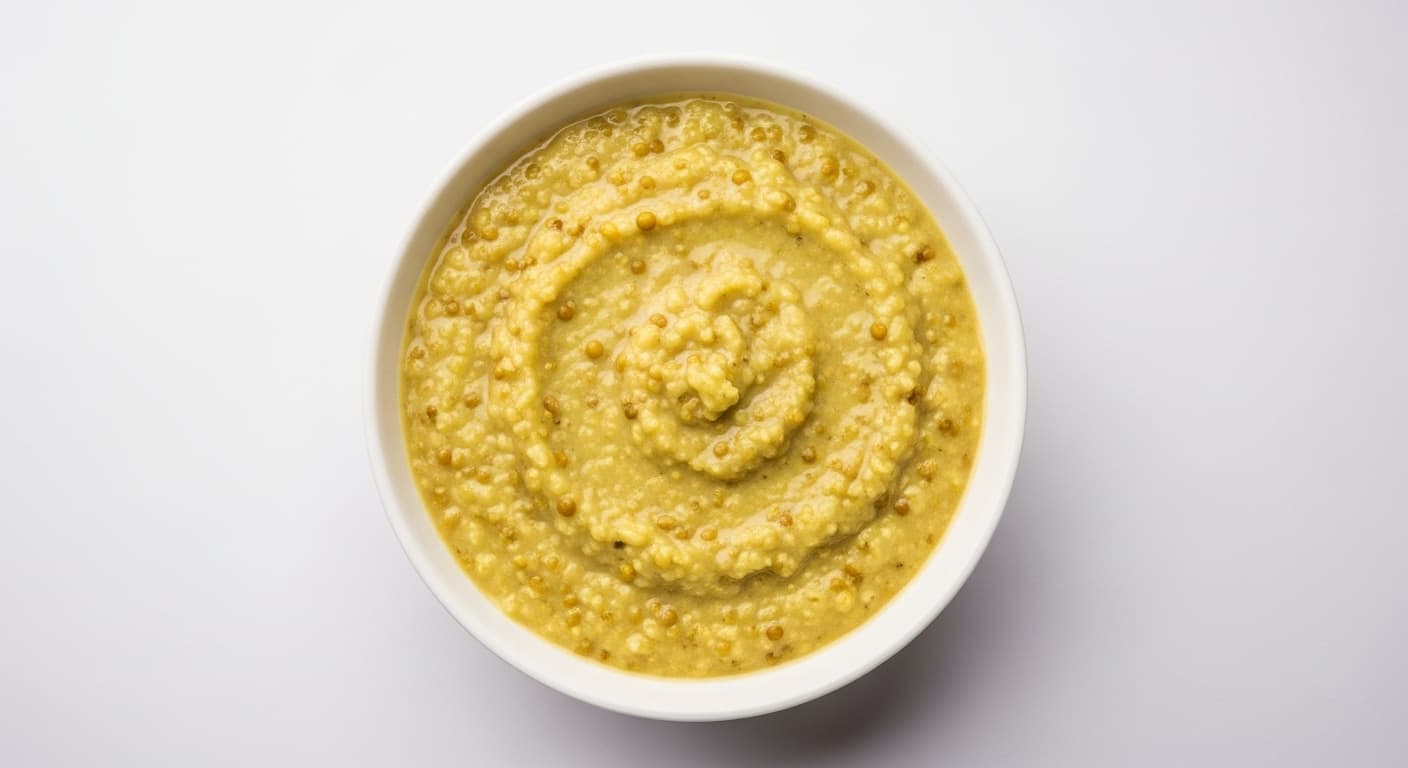
Easy Digestive Moong Dal Khichdi: India's Original Gut Healer
A wholesome Indian recipe crafted for health-conscious eating: nutritious, delicious, and easy to make at home.
Moong dal khichdi holds a special place in Indian medical tradition, and for very good reason. It's prescribed by Ayurvedic physicians after illness, surgery, childbirth, and for digestive disorders because it's the easiest-to-digest complete food in Indian cuisine. Modern gastroenterology backs this up: yellow moong dal's protein is 70-80% digestible (compared to 50-60% for whole urad or rajma), and the combination with rice creates a near-complete amino acid profile with virtually no residue left in the colon after digestion. Your gut doesn't have to work hard at all.
This version uses the classical preparation: a ghee tadka with hing, jeera, and ginger, each with a specific gut-protective role. Hing breaks down the intestinal gas-producing oligosaccharides that cause post-meal bloating. Jeera stimulates digestive enzyme secretion. Ginger is a prokinetic that speeds gastric emptying and relieves nausea. The result is a dish that is nutritionally complete, deeply satisfying, and profoundly easy on the digestive system, making it equally appropriate for an upset stomach and for a regular healthy meal when you want to give your gut a rest.
Ingredients
How to Make It
Rinse the moong dal and rice together 3 times until the water runs clear.
In a pressure cooker, heat the ghee. Add cumin seeds and let them splutter. Add hing immediately.
Add grated ginger. Saute for 1 minute until fragrant.
Add the rinsed dal-rice mixture and turmeric. Stir well to coat everything in the ghee-spice mixture.
Add 4-5 cups of water, more water makes a thinner congee-style khichdi, less makes it denser. Both are delicious. Add salt.
Pressure cook for 4-5 whistles on medium heat. Let the pressure release naturally, don't rush this.
Open the cooker. The khichdi should be completely soft and creamy. Too thick? Add a splash of hot water and stir, it comes together beautifully.
Add lemon juice, garnish with fresh coriander, and serve with a thin drizzle of ghee on top. That final drizzle is the traditional gut-healing practice, ghee lubricates the intestinal wall.
Nutrition per serving
* Approximate values per serving
Health Benefits
Moong dal khichdi's digestibility is its most important therapeutic property. The high water content during pressure cooking breaks down cell walls and neutralises antinutrients like phytic acid and trypsin inhibitors, making it extraordinarily gentle on an inflamed or compromised gut lining. Ghee contains butyric acid, the exact same short-chain fatty acid that gut bacteria produce from prebiotic fibre, and the one that directly heals intestinal wall cells (colonocytes). Clinical Ayurvedic research shows ghee reduces intestinal inflammation and increases the thickness of the gut's protective mucus lining. Hing (asafoetida) contains ferulic acid and umbelliferone, which directly inhibit the gas-producing enzymes of colonic bacteria, this is why hing works so reliably for bloating. Ginger's gingerols are potent prokinetics and anti-emetics, clinically proven to accelerate gastric emptying and reduce gut motility disorders.
Pro Tips
- →The hing is not optional here, it's the primary anti-gas ingredient. Use a generous pinch, not a tiny speck, for the full effect.
- →Cook to a fully soft, creamy consistency rather than al dente. For gut health purposes, fully cooked and easy to break down is always better.
- →A small drizzle of ghee after serving, just ¼ tsp on the bowl, is traditional and genuinely therapeutic for gut healing.
- →For post-illness recovery, make a much thinner version with 6-7 cups of water, like a congee. For everyday gut health maintenance, a thicker khichdi is more satisfying.
Variations
- 1Add 1 cup bottle gourd (lauki) chunks while pressure cooking, lauki is intensely gut-soothing and cooling, ideal for IBS-D (diarrhoea-predominant IBS).
- 2For more nutrition, stir in 1 cup spinach after opening the cooker. Cover for 2 minutes to wilt, done.
- 3Sabudana alternative for gut rest: replace rice with soaked sabudana (tapioca pearls) for a gluten-free, easily digestible version during gut flares.
Frequently Asked Questions
You Might Also Like
Get a Personalised Diet Plan
4.9★ on Google • 7,000+ clients helped

