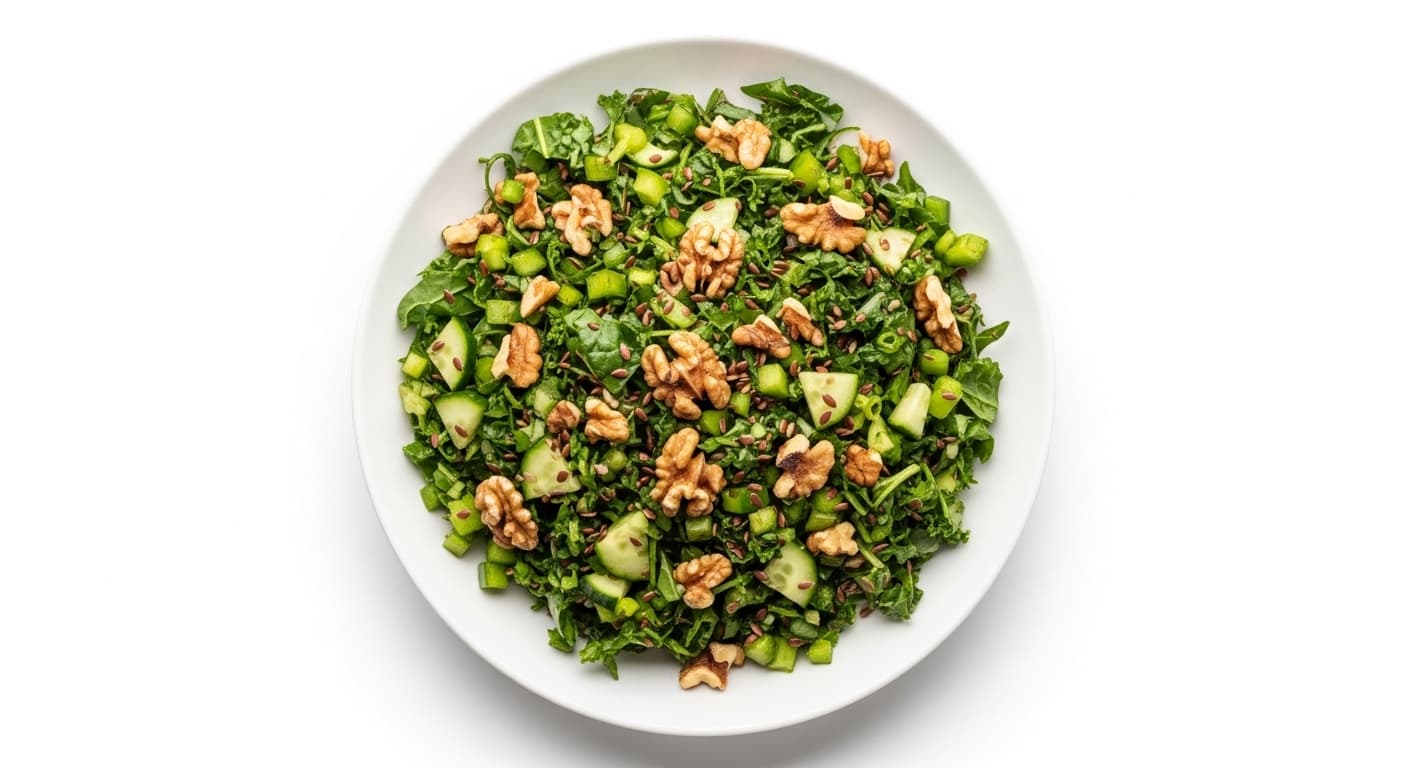
Walnut Flaxseed Green Salad for Heart Health: Maximum Omega-3 in Every Bite
A wholesome Indian recipe crafted for health-conscious eating: nutritious, delicious, and easy to make at home.
Omega-3 fatty acids are among the most extensively researched cardiovascular nutrients we know of, they reduce triglycerides (the most underappreciated cardiovascular risk factor in India), lower blood pressure, reduce arterial inflammation, and help prevent dangerous arrhythmias. For vegetarians who can't access fatty fish, walnuts and flaxseeds are the two most important plant-based omega-3 sources you have. A handful of walnuts (30g) gives you 2.5g ALA; a tablespoon of ground flaxseed gives you 1.6g ALA.
This salad delivers both in a format that you'll actually want to eat, not a supplement disguised as food. The peppery rocket or spinach base, tangy lemon dressing, and crunchy walnuts make this something you'd reach for even without knowing the health benefits. Ten minutes, zero cooking, and it can sit alongside your lunch or dinner every single day for consistent omega-3 intake.
Ingredients
How to Make It
Wash and dry the greens thoroughly. Tear larger leaves into bite-sized pieces.
Dry roast walnuts for 2 minutes in a pan for better flavour (optional: raw works fine too).
Grind flaxseeds fresh in a small mixer, don't use pre-ground powder from a packet.
Prepare all vegetables: slice cucumber, quarter tomatoes, thinly slice red onion and beetroot.
In a small bowl, whisk together lemon juice, olive oil, honey, salt, and pepper for the dressing.
Combine greens, cucumber, tomatoes, onion, and beetroot in a large salad bowl.
Drizzle the dressing and toss gently.
Top with walnuts, ground flaxseed, and pomegranate arils just before serving, don't add these earlier.
Nutrition per serving
* Approximate values per serving
Health Benefits
This salad gives you approximately 3g of ALA omega-3 per serving, meeting the daily adequate intake for cardiovascular protection from plant sources. ALA reduces triglycerides, improves endothelial function (the health of your blood vessel lining), and reduces platelet aggregation that leads to clots. The conversion of ALA to EPA and DHA is limited, yes, but research shows ALA independently reduces cardiovascular mortality risk by 10-20% in population studies. That's significant on its own. Beetroot provides dietary nitrates that convert to nitric oxide in the body, directly relaxing blood vessels and reducing blood pressure. Pomegranate adds punicalagins and anthocyanins that are among the most potent vascular antioxidants known, protecting LDL from the oxidation that starts plaque formation.
Pro Tips
- →Grind flaxseeds fresh every single time, pre-ground flaxseed that's been sitting for weeks has significantly lower omega-3 content due to oxidation. This is not a step to skip.
- →Red onion is preferable to white: it contains quercetin, a flavonoid with proven cardiovascular benefits that white onion has much less of.
- →Add walnuts last and dress the salad just before eating, soaked or pre-dressed walnuts turn soft and lose their satisfying crunch.
- →Vary the greens seasonally, use whatever fresh greens are available. Watercress, purslane (kulfa), and methi leaves all have their own heart-protective properties.
Variations
- 1Add 1 tbsp chia seeds alongside the flaxseeds for additional omega-3 and their impressive water-absorbing, gel-forming properties.
- 2Indian-spiced version: replace olive oil in the dressing with mustard oil, a traditional Indian oil that's actually very high in ALA omega-3, and add chaat masala.
- 3Add ¼ cup roasted pumpkin seeds for zinc and magnesium, both cardiovascular minerals that are commonly deficient in typical Indian diets.
Frequently Asked Questions
You Might Also Like
Get a Personalised Diet Plan
4.9★ on Google • 7,000+ clients helped

