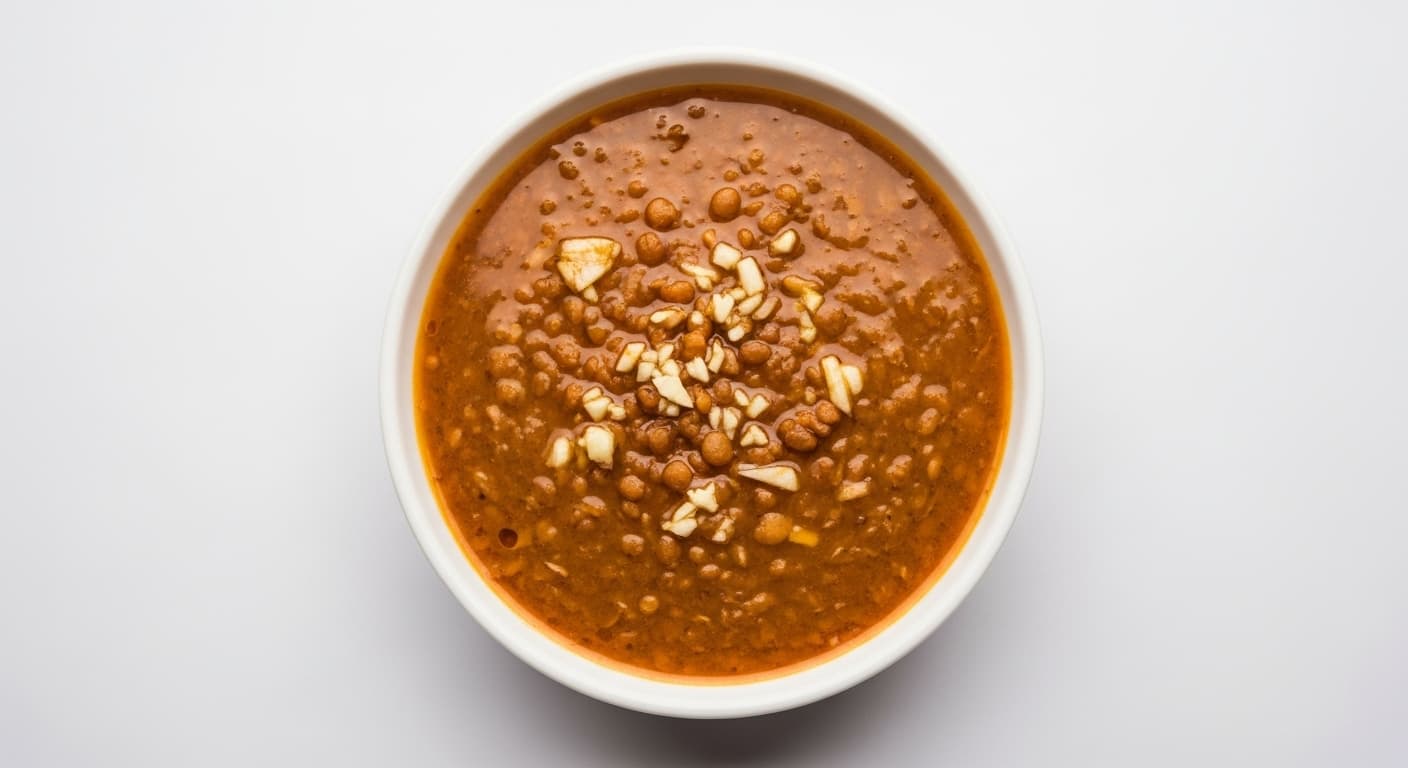
Garlic-Tempered Masoor Dal for Cholesterol: The Heart-Protective Daily Dal
A wholesome Indian recipe crafted for health-conscious eating: nutritious, delicious, and easy to make at home.
Garlic and lentils are two of the most powerful everyday heart-protective foods in Indian cooking, and when you combine them you get a dal that addresses high cholesterol and high blood pressure at the same time. Here's what actually happens: garlic's allicin, which only forms when you crush or mince garlic and let it rest for 10 minutes before cooking, inhibits HMG-CoA reductase, the same enzyme that statin medications target. Multiple meta-analyses confirm that regular garlic consumption reduces total cholesterol by an average of 17 mg/dL and systolic blood pressure by 8 mmHg. These are meaningful numbers.
Masoor dal (red lentils) has one of the lowest GIs of all lentils (21) and exceptional soluble fibre content that physically binds to bile acids, pulling LDL out of circulation. The combination creates a dal that attacks cholesterol from multiple directions simultaneously: allicin (enzyme inhibition), fibre (bile acid binding), and polyphenols (LDL oxidation prevention). If you have elevated cholesterol, this should be on your plate at least three times a week.
Ingredients
How to Make It
Critical first step: mince the garlic cloves and let the minced garlic sit on the cutting board for 10 minutes before you cook it. This resting period is when allicin forms, it only develops when the alliinase enzyme in garlic cells contacts alliin upon crushing. If you cook it immediately after crushing, you destroy the enzyme and lose most of the cardiovascular benefit.
Rinse masoor dal thoroughly 2-3 times. Pressure cook with 3 cups water and a pinch of turmeric for 2-3 whistles until completely soft.
Heat oil in a kadhai. Add cumin seeds. When they splutter, add the rested minced garlic. Cook on medium heat for 2-3 minutes until golden, watch it carefully so it doesn't burn and turn bitter.
Add ginger and onions. Cook until onions are golden, about 6-7 minutes.
Add tomatoes and all dry spices except garam masala. Cook until the tomatoes break down completely and oil begins to surface, about 8 minutes.
Add the cooked masoor dal. Stir well. Adjust water to your preferred consistency. Simmer for 5 minutes.
Add garam masala and salt. Turn off the heat. Add lemon juice immediately.
Garnish with fresh coriander. Serve with jowar roti or brown rice.
Nutrition per serving
* Approximate values per serving
Health Benefits
The synergy between garlic and masoor dal for cholesterol management is genuinely remarkable. Allicin from garlic inhibits the enzyme that produces cholesterol in the liver, while the soluble fibre in masoor dal physically removes cholesterol from the body by binding to bile acids. Together, they work on both the production and elimination of LDL simultaneously. Masoor dal's exceptionally low GI (21) also means minimal insulin spikes, this matters because high insulin levels actively promote cholesterol synthesis in the liver. The polyphenols in red lentils prevent LDL oxidation, and it's oxidised LDL, not total LDL, that actually initiates arterial plaque formation. With 8g of fibre per serving, this dal provides more fibre than almost any other Indian food at equivalent calories.
Pro Tips
- →The 10-minute garlic resting step is scientifically crucial, studies show this simple practice increases allicin content by 400% compared to cooking garlic immediately after crushing. Don't skip it.
- →Masoor dal cooks faster than other lentils, 2-3 whistles versus 4-5 for toor dal, and becomes completely smooth. It's ideal for this recipe.
- →Use more garlic if you enjoy the flavour, 10-15 cloves is not excessive for a therapeutic dose, and the flavour mellows considerably with cooking.
- →Add lemon juice after turning off the heat. The Vitamin C from lemon significantly improves non-haem iron absorption from the masoor dal.
Variations
- 1For a more potent allicin effect, finish the cooked dal with a raw garlic finish: after the regular tadka, add 2 cloves of raw minced garlic at the very end. Raw garlic preserves significantly more allicin.
- 2Stir in 1 cup chopped spinach in the last 5 minutes for combined iron and cholesterol-lowering benefits in one dish.
- 3Replace masoor with a mixed lentil combination for a more complex fibre profile, see the Diabetic Mixed Dal Soup recipe in this collection.
Frequently Asked Questions
You Might Also Like
Get a Personalised Diet Plan
4.9★ on Google • 7,000+ clients helped

