
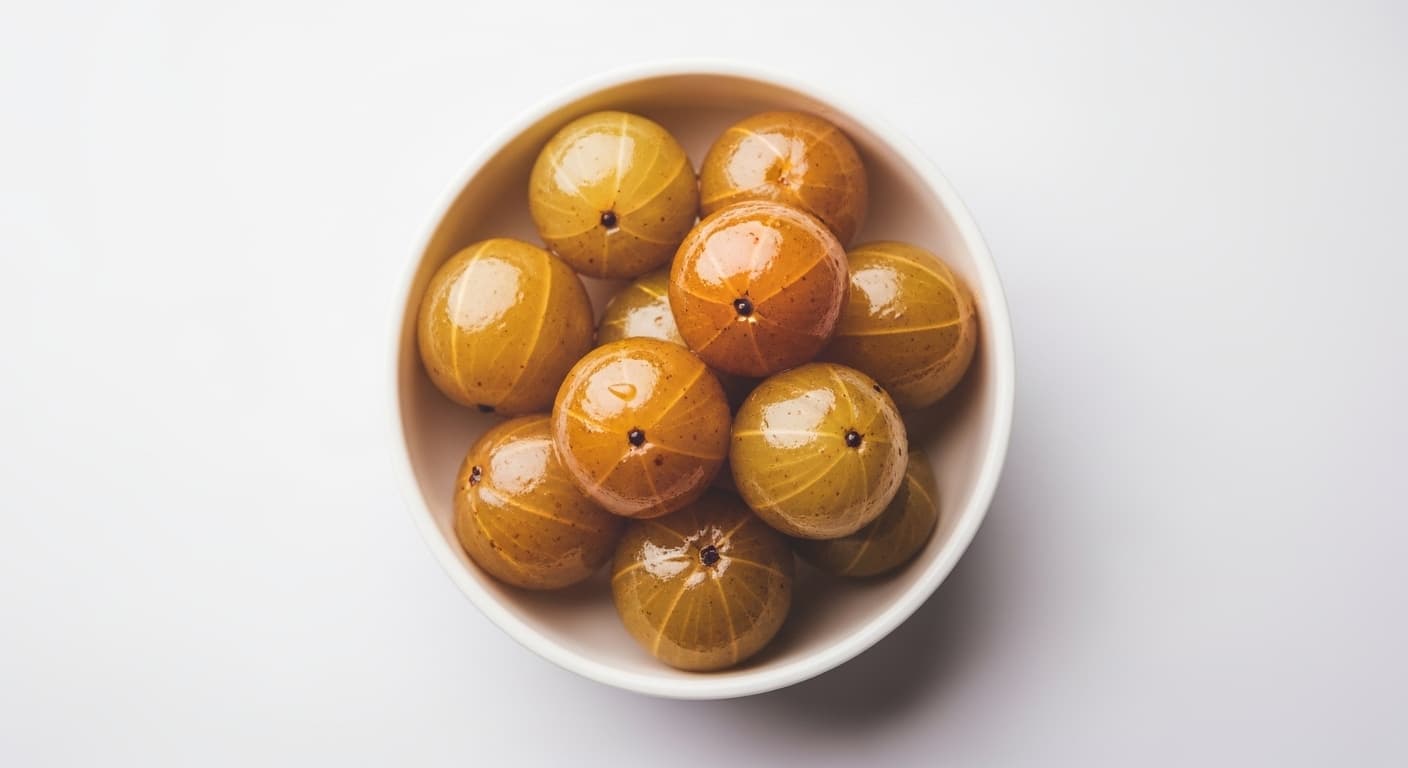
Amla Murabba for Heart Health: The Ancient Indian Cardiac Antioxidant Preserve
A wholesome Indian recipe crafted for health-conscious eating: nutritious, delicious, and easy to make at home.
Amla murabba, Indian gooseberry preserved in jaggery syrup, is one of the oldest medical foods in Ayurveda, specifically prescribed as a hridya rasayana (heart tonic). Modern cardiovascular science has caught up with this tradition: amla's emblicanins, polyphenols unique to amla, reduce LDL oxidation (the process that initiates arterial plaque formation), lower total cholesterol, reduce C-reactive protein (a key inflammation marker in heart disease), and strengthen cardiac muscle. One piece of murabba delivers 150-200mg Vitamin C along with these cardioprotective polyphenols. That's a lot from something the size of a small berry.
This homemade version uses jaggery instead of refined sugar (traditional, and nutritionally far superior), cardamom for its own cardioprotective properties, and saffron for anti-inflammatory benefit. Once you make a batch, it stores for 3-6 months without refrigeration, making it a daily heart health ritual that requires zero preparation once the jar is on your shelf.
Ingredients
How to Make It
Wash the amlas thoroughly. Pierce each one all over with a fork, 20-25 pricks per amla. This is essential for the jaggery syrup to penetrate completely.
In a large pot, bring 4 cups of water to a boil. Add the pierced amlas and boil for 5 minutes until slightly softened but still firm. Strain and let cool.
In the same pot, dissolve the grated jaggery in 1 cup of water on medium heat. Stir until completely dissolved. Skim off any foam that rises.
Add the blanched amlas, cardamom, black pepper, ginger slices, and saffron to the jaggery syrup.
Cook on low heat for 20-25 minutes, stirring occasionally. The amlas will absorb the syrup and turn translucent. The syrup should thicken to a one-string consistency, take a drop between your thumb and index finger, pull them apart slowly, and a single thread should form.
Remove from heat. Cool completely before transferring to a clean, sterilised glass jar.
Store at room temperature for up to 3 months, or refrigerate for 6 months. The jaggery acts as a natural preservative.
Eat 1-2 amla pieces daily with the syrup, on an empty stomach or with meals.
Nutrition per serving
* Approximate values per serving
Health Benefits
Amla murabba protects the heart through multiple mechanisms simultaneously. The emblicanins in amla are among the most potent natural inhibitors of LDL oxidation, they prevent oxidised LDL from forming and initiating the foam cell and plaque buildup in arterial walls. Clinical trials show amla consumption reduces total cholesterol by 9.6%, LDL by 14%, and triglycerides by 8% over just 4 weeks. The Vitamin C content (150-200mg per piece) supports collagen synthesis in arterial walls, which maintains elasticity and reduces arterial stiffness, a major independent risk factor for stroke. Cardamom's cineole reduces blood platelet aggregation, lowering clot risk. Black pepper's piperine improves bioavailability of the cardiac-protective polyphenols by a significant margin, making the other compounds work better.
Pro Tips
- →Piercing the amlas thoroughly is the most important step: without thorough piercing, the syrup doesn't penetrate and you end up with candied amla rather than a proper murabba. Take your time with this step.
- →The one-string test for syrup consistency matters, too thin and the murabba won't keep well; too thick and the amlas harden and become unpleasant to eat.
- →Always use clean, dry utensils when taking murabba from the jar, even a drop of water can introduce bacteria and cause spoilage.
- →For a more potent heart benefit, add 2-3 whole black cardamom pods alongside the green cardamom. Black cardamom has stronger cardioprotective properties.
Variations
- 1Amla-Honey murabba: replace half the jaggery with raw honey added after cooling, preserves more heat-sensitive enzymes from the honey.
- 2Dry amla murabba: after cooking, separate the amlas from the syrup and dry them in the sun for 3-4 days for a shelf-stable, portable version similar to a healthy candy.
- 3For a diabetic-friendly version: eat the amla with minimal syrup clinging to it, or use stevia (not safe for long-term storage without the jaggery's preservative properties).
Frequently Asked Questions
You Might Also Like
Get a Personalised Diet Plan
4.9★ on Google • 7,000+ clients helped

