
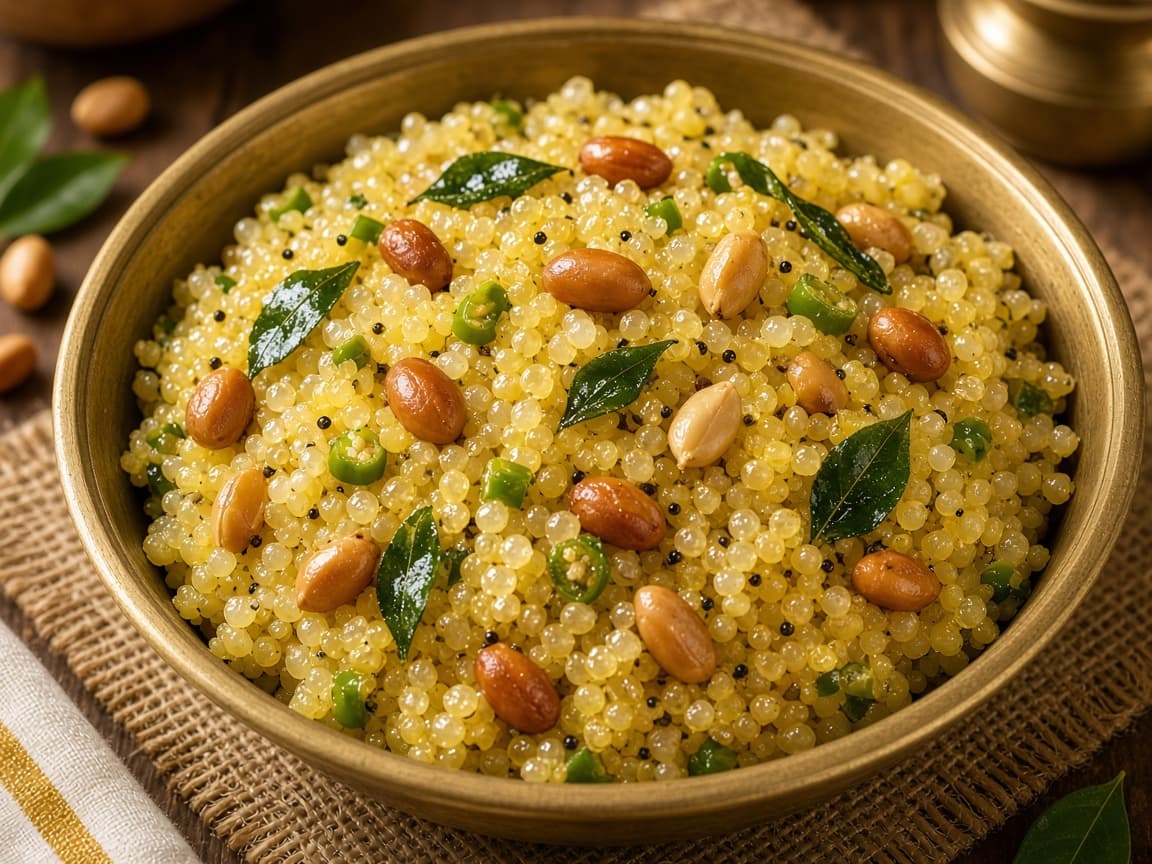
Barnyard Millet Sabudana Khichdi: A Low-GI Fasting Delight
A wholesome Indian recipe crafted for health-conscious eating: nutritious, delicious, and easy to make at home.
Sabudana khichdi is a beloved fasting dish, but traditional sabudana (tapioca pearls) is high in refined carbohydrates and can spike blood sugar. DietGhar's version swaps sabudana with fibre-rich barnyard millet (sanwa), which has a low glycemic index and keeps you full longer. This recipe retains the classic flavours of cumin, peanuts, and lemon while being diabetic-friendly and PCOS-friendly. Perfect for Navratri, Ekadashi, or any day you want a wholesome, gluten-free meal.
Ingredients
How to Make It
Rinse barnyard millet thoroughly under running water. Soak in 2 cups water for 15 minutes.
Drain the millet and transfer to a saucepan. Add 2 cups fresh water and bring to a boil. Reduce heat, cover, and simmer for 15 minutes until the millet is cooked and fluffy. Fluff with a fork and set aside to cool slightly.
While the millet cooks, dry roast peanuts in a pan over medium heat until lightly browned and aromatic. Cool, then crush coarsely using a mortar-pestle or pulse in a grinder. Set aside.
In a large pan, heat ghee or peanut oil over medium heat. Add cumin seeds and let them crackle.
Add curry leaves (if using), green chilli, and grated ginger. Sauté for 30 seconds until fragrant.
Add boiled potato cubes and sauté for 1 minute until lightly golden.
Add the cooked barnyard millet, crushed peanuts, rock salt, and sugar (if using). Mix gently but thoroughly.
Cook on low heat for 3-4 minutes, stirring occasionally, until everything is well combined and heated through. Do not overcook, as millet can become mushy.
Turn off the heat. Drizzle lemon juice and fold in chopped coriander leaves.
Serve hot, garnished with extra coriander and grated coconut if desired.
Nutrition per serving
* Approximate values per serving
Health Benefits
Barnyard millet is a low-glycemic index grain that helps regulate blood sugar levels, making this khichdi ideal for diabetics and those with PCOS. It is rich in dietary fibre, which promotes satiety and aids weight management. Peanuts add healthy fats and protein, while ginger and cumin support digestion. This dish is naturally gluten-free and suitable for fasting days.
Pro Tips
- →Soaking barnyard millet is optional but helps reduce cooking time and improves texture.
- →For a nuttier flavour, dry roast the millet for 2 minutes before cooking.
- →Adjust green chilli and lemon juice to your taste.
- →If you don't have barnyard millet, you can use foxtail millet or little millet, but cooking times may vary.
- →Skip sugar entirely for a diabetic-friendly version.
Variations
- 1Add 1/2 cup steamed peas or diced carrots for extra veggies.
- 2Replace peanuts with cashews for a richer fasting version.
- 3For a vegan option, use coconut oil instead of ghee.
- 4Add a pinch of asafoetida (hing) for a different flavour profile.
- 5Top with pomegranate seeds for a sweet-tart crunch.
Frequently Asked Questions
You Might Also Like
Get a Personalised Diet Plan
4.9★ on Google • 7,000+ clients helped

