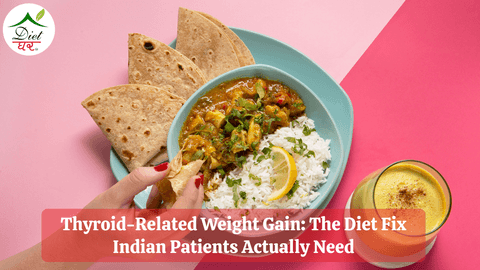
Thyroid-Related Weight Gain: The Diet Fix Indian Patients Actually Need
Every week, thousands of Indian women sit in front of their doctors with the same question: "My thyroid is underactive, my TSH is high, I am on thyroxine, so why am I still gaining weight?" The doctor adjusts the medication. The weight stays. Frustration builds. Many women are told the weight gain is "just thyroid" and that optimising TSH should fix it, then feel utterly let down when it does not.
The truth is more nuanced. Hypothyroidism does cause weight gain, but not all weight gain in hypothyroid patients is caused by thyroid function alone. And even when it is, medication alone is rarely sufficient. Diet has a profound impact on thyroid function, metabolic rate, and the body's response to thyroxine treatment. Getting the diet right is not optional. It is essential.
How Hypothyroidism Causes Weight Gain
The thyroid gland produces T4 (thyroxine) and T3 (triiodothyronine), which regulate metabolic rate in nearly every cell of the body. When thyroid hormone production falls (hypothyroidism, most commonly due to Hashimoto's thyroiditis in India), metabolic rate decreases. The body burns fewer calories at rest. Fat metabolism slows. Mitochondrial activity reduces. The result is weight gain even at the same caloric intake that previously maintained weight.
Additionally, hypothyroidism causes:
- Fluid retention, low thyroid hormone causes accumulation of mucin (a protein) in tissues that attracts water, causing a puffy, non-pitting oedema particularly in the face, hands, and legs. Some hypothyroid patients carry 3–5 kg of excess fluid that resolves when TSH normalises.
- Impaired lipolysis. The breakdown of stored fat slows
- Increased insulin resistance, worsening the metabolic environment for weight management
- Constipation and slowed gut motility, stool transit time increases, contributing modestly to scale weight
The clinical reality: well-controlled hypothyroidism (TSH in optimal range of 1–2.5 mIU/L for most patients) typically accounts for 3–5 kg of weight gain over time, not 15–20 kg. If you have significant overweight beyond this, diet and lifestyle are the primary drivers and must be addressed separately.
Why Medication Alone Does Not Always Work
Many patients are on levothyroxine (LT4, Eltroxin, Thyronorm) but still have suboptimal metabolism because:
Poor absorption: Levothyroxine must be taken on an empty stomach, 30–60 minutes before breakfast, without calcium, iron, or antacids for at least 4 hours. Many Indians take their thyroid tablet with morning chai (calcium in milk impairs absorption by 30%), or with iron supplements for anaemia, or immediately before eating. Correcting administration alone can improve thyroid hormone levels significantly.
T4 to T3 conversion problems: Levothyroxine is T4, an inactive prohormone. The body must convert T4 to active T3 (via deiodinase enzymes). Multiple nutritional deficiencies impair this conversion: selenium, zinc, iron, iodine, and vitamin D are all required for adequate T4-to-T3 conversion. Many Indian patients are deficient in several of these simultaneously.
TSH target too high: Standard laboratory "normal" range for TSH is 0.4–4.5 mIU/L. But many endocrinologists and thyroidologists now target TSH at 1–2.5 mIU/L for optimal metabolic function and symptom control. A patient with TSH at 3.8 is technically "normal" but may still have significant hypothyroid symptoms including weight gain resistance.
Coexisting insulin resistance: Hypothyroid patients have higher rates of insulin resistance, which independently causes weight gain and must be addressed with dietary carbohydrate management.
The Nutrients Your Thyroid Needs
Iodine
Iodine is the raw material for thyroid hormone synthesis, T4 contains four iodine atoms, T3 contains three. The primary source in India is iodised salt. Salt iodisation programmes have dramatically reduced iodine deficiency goitre in India, but excessive avoidance of iodised salt (as sometimes recommended in various "detox" protocols) can cause iodine insufficiency.
Use iodised salt normally in cooking. If you are concerned about hypertension, do not eliminate salt, reduce the excessive portions like pickles and namkeen, not the baseline seasoning in cooking. Other sources: dairy products (cows in India are given iodine supplements), seafood.
Important caveat: excessive iodine can actually worsen autoimmune thyroid disease (Hashimoto's) in genetically predisposed individuals. Do not take iodine supplements without testing. Food-level intake from iodised salt and dairy is safe and appropriate.
Selenium
Selenium is critical for both thyroid hormone synthesis and T4-to-T3 conversion (deiodinase enzymes are selenium-dependent). It also reduces thyroid peroxidase antibody levels (TPO antibodies) in Hashimoto's. The most common cause of hypothyroidism in India.
Brazil nuts are the richest source (one to two Brazil nuts provide the full daily selenium need), but they are expensive and not culturally familiar. Indian sources: sunflower seeds (one tablespoon daily), eggs (two eggs), whole wheat, mushrooms. Supplementation with 200 mcg/day selenium (as selenomethionine) is clinically validated for Hashimoto's and can be considered under medical guidance.
Zinc
Zinc is required for thyroid hormone synthesis, T4-to-T3 conversion, and thyroid receptor sensitivity. Zinc deficiency, very common in India, can cause or worsen hypothyroid symptoms even when TSH is normal. Best Indian sources: pumpkin seeds (kaddu ke beej), sesame seeds (til), lentils, whole wheat, cashews.
Iron
Iron deficiency impairs thyroid peroxidase enzyme function, reducing thyroid hormone synthesis. Since iron deficiency is extremely common in Indian women (see our post on iron deficiency anaemia), this may be an important contributing factor to poor thyroid function in many women even on medication.
Vitamin D
Vitamin D receptors in thyroid cells regulate thyroid function. Low vitamin D is associated with higher TPO antibody levels and worse Hashimoto's disease progression. Get tested and supplement to target levels of 40–60 ng/mL.
Foods That Support Thyroid Function
Ashwagandha: Multiple randomised trials show that ashwagandha (600mg extract daily) improves T3 and T4 levels in subclinical hypothyroidism. It also reduces cortisol, which impairs T4-to-T3 conversion at high levels. Widely available as capsules or powder at Indian Ayurvedic shops.
Guggul: Traditional Indian herb with clinical evidence for improving thyroid function. Available as standardised extract.
Eggs: Provide selenium, zinc, iodine, and complete protein, covering multiple thyroid-supportive nutrients in one food.
Fish (particularly saltwater varieties): Excellent iodine source plus selenium and omega-3s.
Coconut oil in cooking: Medium-chain triglycerides in coconut oil are metabolised differently from long-chain fats and may support thyroid function and metabolism in hypothyroid patients. The evidence is not as strong as sometimes claimed online, but it is a reasonable cooking oil choice.
The Goitrogen Controversy
Goitrogens are compounds in certain foods that interfere with thyroid hormone production by inhibiting iodine uptake into the thyroid gland. Indian foods with significant goitrogen content: raw cabbage, raw cauliflower, raw broccoli, raw radish, unfermented soy products, raw millet (bajra in raw/large quantities).
The concern about goitrogens is frequently exaggerated in online Indian health communities, with people avoiding all cruciferous vegetables entirely. The truth is that cooking destroys most goitrogenic compounds. Boiled, steamed, or stir-fried cabbage and cauliflower are not a problem for the vast majority of hypothyroid patients. The exception is people who eat very large quantities of raw cruciferous vegetables daily (unlikely in typical Indian cooking) or those with severe iodine deficiency. Do not eliminate these nutritious vegetables from your diet.
Soy is a partial exception, very large quantities of soy (four or more servings daily) may impair thyroid hormone absorption and should be consumed in moderation. One to two servings of tofu or soya chunks daily is not a problem if taken away from thyroid medication timing.
The Insulin Resistance Connection
Hypothyroidism worsens insulin resistance, and insulin resistance makes hypothyroid weight gain worse. Addressing this metabolic connection is essential. The dietary strategy is the same as for PCOS and prediabetes: reduce refined carbohydrates, include more protein and fibre with each meal, prioritise low-GI millets over white rice, and manage meal timing.
For thyroid-specific weight loss, a moderate low-carb approach (not extreme keto) tends to work better than a standard low-fat calorie restriction diet. This is partly because of the insulin sensitivity improvement and partly because higher protein intake supports the higher thermic effect of food that compensates for the reduced metabolic rate of hypothyroidism.
Practical Thyroid-Friendly Indian Day
6 AM: Thyroid tablet on completely empty stomach. Wait 45–60 minutes before eating. No chai with the tablet.
7 AM: Warm water with lemon. Optional: ashwagandha powder in warm water.
Breakfast (7:30–8 AM): Two scrambled eggs with vegetables in coconut or mustard oil, small bowl curd. OR ragi porridge with nuts and seeds. No iron supplements until 4 hours after thyroid medication.
Lunch (1 PM): One to two jowar or bajra rotis, small katori dal, palak or methi sabzi with garlic, small bowl curd. A small amount of pumpkin seeds or sunflower seeds as garnish.
Evening: Handful of mixed seeds (pumpkin, sunflower, flaxseed), all support thyroid nutrition. Small fruit.
Dinner (7 PM): Fish curry or paneer sabzi with vegetables, small portion brown rice or two small rotis.
The Bottom Line
Thyroid-related weight gain requires a two-track approach: optimising medication administration and TSH target with your endocrinologist, AND addressing the nutritional deficiencies (selenium, zinc, vitamin D, iron) that impair thyroid hormone conversion and activity. Diet changes specifically reduce insulin resistance, support T4-to-T3 conversion, and provide the building blocks for thyroid hormone synthesis. These changes work best alongside, not instead of, appropriate medical treatment. For the full picture of thyroid nutrition, see our guide on thyroid foods to eat and avoid.
Get Your Personalized Diet Plan Today!
This article provides general information about weight management. Download the DietGhar app for a customized Indian diet plan tailored to your body type, health goals, and food preferences — with daily tracking and expert support.
About the Author
Written by the DietGhar expert team — certified dietitians with 10+ years of experience helping clients achieve their health goals through personalized Indian diet plans.
Find a Dietitian Near You
Get personalized nutrition plans from certified dietitians in your city. Online consultations available across India.

