
PCOD and Fertility: The Diet Plan That Helped Indian Women Conceive
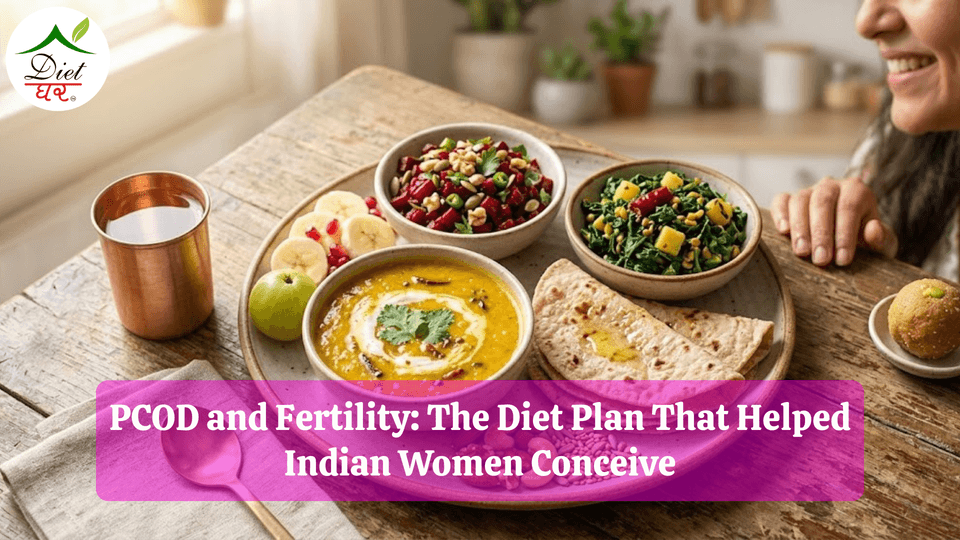
For millions of Indian women trying to conceive, a PCOD diagnosis feels like a door closing. Irregular or absent periods. Anovulatory cycles. Doctor visits, medications, fertility treatments, often prescribed before diet and lifestyle have been genuinely addressed. Yet the clinical evidence is clear and consistent: dietary intervention in PCOD is not a consolation approach that you try while waiting for real treatment. It is, in many cases, the most effective intervention available, including for women who have had previous fertility treatment failures.
PCOD (polycystic ovarian disease, used interchangeably with PCOS in Indian clinical practice for most patients) is the leading cause of anovulatory infertility in India, affecting approximately 20% of Indian women of reproductive age. The fertility impact is real, irregular ovulation or complete anovulation means far fewer opportunities for conception per year. But PCOD is also one of the most diet-responsive conditions known. Studies consistently show that dietary changes restore ovulation in 30–55% of anovulatory PCOD patients within 3–6 months without medication.
Understanding Why PCOD Disrupts Fertility
The path from PCOD to infertility runs through insulin resistance:
Insulin resistance → excess insulin in blood → insulin stimulates ovarian theca cells to overproduce androgens (testosterone, androstenedione) → excess androgens disrupt follicular development → follicles begin to develop but do not mature fully → ovulation does not occur or occurs irregularly → anovulatory cycle with no egg available for fertilisation.
Additionally, high androgens create an endometrial environment less receptive to implantation, and elevated LH levels (common in PCOD) produce further hormonal imbalance that impairs the LH surge needed to trigger ovulation.
The dietary strategy targets this cascade at its root: reduce insulin resistance. When insulin sensitivity improves, androgen production by the ovaries normalises, the hormonal milieu supports follicular development, ovulation resumes, and fertility potential is restored.
The Most Important Dietary Targets for PCOD Fertility
Target 1: Reduce Insulin Resistance Through Carbohydrate Quality
Refined carbohydrates drive the insulin spikes that fuel androgen excess in PCOD. The shift to low-glycaemic carbohydrates is the single most impactful dietary change for restoring ovulation.
A landmark study in PCOD women found that replacing high-glycaemic foods with low-glycaemic equivalents for 12 weeks significantly improved menstrual regularity, insulin sensitivity, and androgen levels without weight loss. This is important: you do not have to lose weight for carbohydrate quality to improve ovulatory function. The change in insulin dynamics is the mechanism, not body weight per se.
In practice:
- Reduce white rice portions to one small katori or less per meal
- Replace some wheat rotis with ragi, jowar, or bajra rotis (lower GI, higher magnesium)
- Eliminate cold drinks, packaged juices, biscuits, and sweet snacks
- Include dal or legumes as primary carbohydrate sources alongside grains, their fibre dramatically slows glucose absorption
Target 2: Achieve a Modest Weight Reduction If Overweight
A 5–7% reduction in body weight in overweight PCOD women restores ovulation in 30–55% of cases in clinical studies. For a 70 kg woman, that is just 3.5–5 kg. This is achievable through dietary changes without aggressive restriction.
Critically: weight loss should be gradual (0.3–0.5 kg per week) and should not involve extreme caloric restriction. Very low calorie diets increase cortisol, worsen HPA axis dysregulation, can cause further hormonal disruption, and are not sustainable. The target is a mild caloric deficit of 300–500 calories per day, enough for steady fat loss without metabolic stress.
Target 3: Optimise Specific Fertility-Supporting Nutrients
Folate: Essential for ovulation and early pregnancy (neural tube formation). Requirements are higher in PCOD women partly due to the role of folate in methylation pathways relevant to hormone metabolism. Supplement with 400–800 mcg of folic acid before attempting conception and during the first trimester. Food sources: moong dal, methi leaves, rajma, amaranth.
Omega-3 fatty acids: Improve insulin sensitivity, reduce inflammation, and importantly, a 2018 study specifically in PCOD women found that omega-3 supplementation improved ovulation rates. Sources: 2 tablespoons ground flaxseed daily, 8–10 walnuts, or fish oil capsule (1,000 mg EPA/DHA) for non-vegetarians.
Vitamin D: Consistently low in Indian women with PCOD. Vitamin D supplementation (to achieve 40–60 ng/mL) improves insulin sensitivity, reduces androgen levels, and improves menstrual regularity in multiple clinical trials. Get tested and supplement accordingly.
Inositol: Perhaps the most exciting nutritional supplement for PCOD fertility. Myo-inositol and D-chiro-inositol (both forms found in certain foods and supplements) are involved in insulin signal transduction in ovarian cells. Multiple randomised trials show myo-inositol supplementation (2–4g daily) improves insulin sensitivity, reduces androgen levels, restores menstrual regularity, and improves egg quality with fertility outcomes comparable to metformin in some studies and synergistic with Clomid (clomiphene) in others.
Natural food sources of inositol: cantaloupe, citrus fruits, beans, nuts, and whole grains. But achieving therapeutic doses through food alone is difficult, supplementation (myo-inositol 2–4g daily) is the practical approach. Available at pharmacies and online in India as powder or capsule.
Zinc: Required for follicular development and ovum maturation. Deficiency impairs ovulation quality. Sources: pumpkin seeds, sesame seeds, legumes, whole grains. If diet is low in these, a zinc supplement (15–25 mg daily) may be beneficial.
Magnesium: Improves insulin sensitivity, reduces androgens, and supports progesterone production in the luteal phase. Deficiency is common in PCOD. Sources: almonds, bajra, rajma, pumpkin seeds. Consider supplementing with 200–400 mg magnesium glycinate daily.
Target 4: Anti-Inflammatory Eating
PCOD is associated with chronic low-grade inflammation that worsens insulin resistance and directly impairs folliculogenesis. An anti-inflammatory dietary pattern supports the hormonal environment needed for ovulation.
- Turmeric with black pepper in cooking daily
- Eight to ten walnuts and two tablespoons ground flaxseed daily
- Colourful vegetables daily (spinach, tomatoes, capsicum, beets), antioxidant richness
- Green tea (one to two cups), catechins reduce inflammatory markers
- Spearmint tea (two cups daily), reduces free testosterone specifically. Clinical trial in PCOD women: spearmint tea for 30 days significantly reduced free testosterone levels. This is a simple, inexpensive, pleasurable fertility-supporting beverage.
- Minimize: refined seed oils, fried foods, commercial bakery items with trans fats
A Sample Fertility-Focused PCOD Day
Morning: One glass warm water. Two cups spearmint tea. Myo-inositol powder (2g) dissolved in water.
Breakfast (8 AM): Ragi porridge or oats with two tablespoons ground flaxseed, 8 walnuts, half teaspoon cinnamon, small amount of jaggery or banana for sweetness. OR moong dal chilla (3 pieces) with green chutney and a bowl of thick curd.
Lunch (1 PM): One katori brown rice or 2 jowar rotis. Generous rajma or chana curry (legumes are the prebiotic foundation for gut health that affects hormonal metabolism). Palak or methi sabzi. Small bowl thick curd. Salad with lemon.
Mid-afternoon (4 PM): Handful of pumpkin seeds and almonds. One guava or apple. Chaas.
Dinner (7 PM): Two rotis with flaxseed in the dough. Paneer sabzi or tofu bhurji. Light dal. Salad. Finish by 8 PM maximum.
Supplements: Folic acid 400–800 mcg, Vitamin D 2,000 IU, Myo-inositol 2–4g (split over two doses), Omega-3 (fish oil or algal oil for vegetarians). All under guidance of your gynaecologist.
Working With Your Doctor
Dietary intervention for PCOD fertility works best in conjunction with medical monitoring, not as a replacement for it. An OB/GYN or reproductive endocrinologist should track your cycle, confirm whether ovulation is occurring (via temperature charting, LH strips, or mid-cycle ultrasound), and monitor hormone levels. If ovulation restores with diet alone, many women can conceive without further intervention. If not, dietary optimisation significantly improves the effectiveness of fertility medications like clomiphene or letrozole.
For comprehensive PCOD management, also read our guide on vegetarian PCOS diet and our detailed piece on PCOS and insulin resistance. For personalised support, working with a registered dietitian experienced in PCOD management provides the accountability and customisation that general guidelines cannot.
Get Your Personalized Diet Plan Today!
This article provides general information about nutrition and diet planning. Download the DietGhar app for a customized Indian diet plan tailored to your body type, health goals, and food preferences — with daily tracking and expert support.
About the Author
Written by the DietGhar expert team — certified dietitians with 10+ years of experience helping clients achieve their health goals through personalized Indian diet plans.
Find a Dietitian Near You
Get personalized nutrition plans from certified dietitians in your city. Online consultations available across India.

