
Osteoporosis Prevention: Calcium and Bone Health in Indian Diet
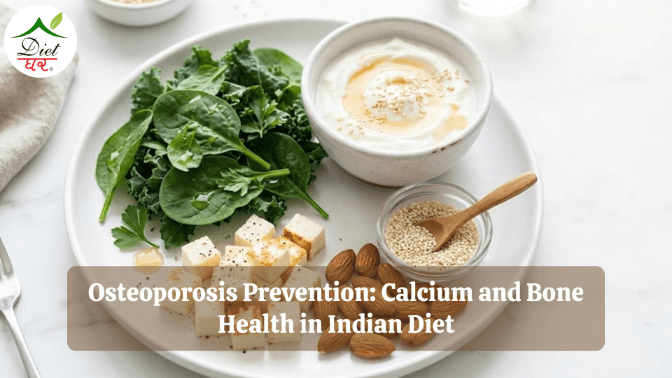
When an Indian woman over 60 falls and fractures her hip, the conversation is usually about the fall, slippery floor, poor footwear, weak legs. Rarely is the real cause acknowledged: the bone was already so fragile that it may have fractured before she hit the ground, or would have shattered on an impact that a 35-year-old's bone would have survived without issue. The fall is the trigger. Osteoporosis is the condition that makes it catastrophic.
Osteoporosis, low bone mineral density with increased fracture risk, affects an estimated 50 million Indians and is significantly underdiagnosed. The tragedy is that bone loss begins in the mid-30s, accelerates through menopause, and is almost entirely silent until a fracture occurs. By the time the fracture reveals the problem, decades of preventable bone loss have already occurred.
The good news: bone health is nutritionally highly responsive, particularly when dietary attention begins before bone loss is advanced. And Indian food culture has some genuinely exceptional bone-building foods that most people do not recognise in this context.
The Bone Remodelling Cycle
Bone is living tissue, constantly being broken down (resorption) and rebuilt (formation) through the activity of osteoclasts and osteoblasts respectively. Peak bone mass is achieved around age 25–30. After 35, the balance shifts slightly toward resorption, you begin losing more bone than you build. The rate of loss is heavily influenced by hormones, nutrition, physical activity, and genetics.
The menopause transition is when bone loss accelerates dramatically, women lose 1–3% of bone mass per year for the first 5–7 years post-menopause due to oestrogen decline (oestrogen inhibits osteoclast activity). Men also develop osteoporosis, but more slowly. The male pattern of bone loss begins later and proceeds more gradually without the sharp hormonal transition of menopause.
The dietary goal is threefold: build maximum bone mass during the building years (childhood through age 30), slow the rate of loss in the remodelling years (30–50), and protect remaining bone density after menopause through adequate calcium, vitamin D, and bone-protective nutrients.
The Indian Calcium Intake Gap
The recommended calcium intake for adults is 1,000 mg per day, increasing to 1,200 mg post-menopause and for older adults. Studies of Indian dietary patterns consistently show average calcium intake of 300–500 mg per day, 50–70% below requirements. This chronic calcium deficit over decades is a primary driver of the high osteoporosis burden.
The reasons for low calcium intake in India:
- Lower dairy consumption in many communities and regions than assumed
- Limited awareness of non-dairy calcium sources
- High phytate diets that reduce calcium absorption from plant sources
- Near-universal vitamin D deficiency that reduces calcium absorption regardless of intake
Indian Food Sources of Calcium
Dairy Sources (Best Bioavailability)
Curd (dahi): 200 mg calcium per 100g. One katori daily contributes significantly. The fermentation process in curd may slightly improve calcium bioavailability compared to fresh milk.
Milk: 120 mg per 100 ml. Two glasses (500 ml) provides 600 mg, a substantial contribution. Low-fat milk contains similar calcium to full-fat milk.
Paneer: 480 mg per 100g, a particularly concentrated dairy calcium source. A 50g serving of paneer provides 240 mg calcium. This is excellent.
Chaas: 120 mg per 100 ml. A glass of chaas provides 150–180 mg.
Non-Dairy Plant Sources (For Vegetarians Who Eat Limited Dairy and Non-Vegetarians)
Ragi (finger millet): The single best plant-based calcium source in India. 344 mg calcium per 100g, remarkably high for a grain. For comparison, milk has 120 mg per 100g, so ragi has almost three times the calcium density of milk. Making ragi rotis, ragi dosa, or ragi porridge 3–4 times per week is one of the highest-impact dietary changes for bone health in India. Ragi is also affordable, widely available, and has a low glycaemic index.
Sesame seeds (til): 975–1,000 mg calcium per 100g, one of the highest plant calcium concentrations of any food. A tablespoon (15g) provides approximately 150 mg calcium. Til chutney, til laddoo, sesame garnish on salads and dishes, these daily Indian practices have significant bone-health value. White sesame (hulled) has lower calcium than black sesame (unhulled til).
Drumstick leaves (moringa/sahjan ke patte): 440 mg calcium per 100g fresh. A significant serving in a dal or sabzi provides meaningful calcium. Dried moringa powder has even higher concentration per gram, useful as a supplement added to chaas or cooking.
Amaranth leaves (chaulai): 340 mg per 100g. A common seasonal Indian green that is significantly higher in calcium than spinach.
Rajma (kidney beans): 83 mg per 100g cooked, less than dairy but with consistent daily consumption adds up significantly.
Almonds: 264 mg per 100g (approximately 12 mg per almond). Ten to fifteen almonds per day contributes 100–150 mg calcium. Also high in magnesium and potassium, both important for bone health.
Vitamin D: The Calcium Absorption Gate
Vitamin D is not just a supplement you take with calcium. It is the essential regulator of calcium absorption in the intestine. Without adequate vitamin D (target: 40–60 ng/mL), only 10–15% of dietary calcium is absorbed, regardless of how much you eat. With optimal vitamin D, absorption rises to 30–40%.
Most Indian adults have vitamin D levels of 5–20 ng/mL, severely deficient. This means that even if an Indian woman eats 1,200 mg of calcium daily, she may absorb less than 200 mg due to vitamin D deficiency. Getting calcium right without addressing vitamin D is building on a broken foundation.
Supplement to 40–60 ng/mL with vitamin D3 (cholecalciferol). Most adults need 2,000–4,000 IU daily to achieve this range. Test annually (25-OH vitamin D test).
The Other Bone Nutrients
Vitamin K2
Vitamin K2 (menaquinone) directs calcium toward bones and teeth rather than arterial walls and kidneys. Without adequate K2, calcium supplementation may actually increase arterial calcification. K2 also activates osteocalcin. The protein that anchors calcium in bone matrix.
Best Indian sources: ghee (particularly from grass-fed cows contains K2), fermented foods (the bacterial fermentation in curd, kanji, and fermented pickles produces menaquinones), aged hard cheeses. These are modest sources, Japanese natto (fermented soybean) is the richest source but not commonly eaten in India. If supplementing calcium, consider adding K2 (100–200 mcg of MK-7 form) as this reduces cardiovascular calcification risk.
Magnesium
Approximately 60% of the body's magnesium is stored in bone, where it forms the crystalline structure of hydroxyapatite alongside calcium and phosphate. Magnesium also regulates both osteoclast and osteoblast activity. Low magnesium intake is associated with lower bone density. Best Indian sources: almonds, pumpkin seeds, bajra, rajma.
Protein
Bone is approximately 30% protein (collagen matrix) plus 70% mineral. Adequate protein is essential for bone formation. Historically, high protein intake was thought to increase calcium urinary loss (acid load hypothesis). More current evidence suggests adequate protein (not excessive) supports rather than impairs bone density. Do not restrict protein to try to protect bones.
Vitamin C
Required for collagen synthesis. The protein scaffold that calcium mineralises onto in bone. Deficiency impairs collagen formation and bone strength even when calcium intake is adequate. Amla, guava, and citrus fruits daily covers vitamin C needs easily.
What Damages Bones
- Excessive salt: High sodium increases urinary calcium excretion. Each gram of excess sodium causes 26 mg of calcium to be lost in urine. India's high-sodium diet contributes to calcium depletion.
- Excessive caffeine: More than 3 cups of tea or coffee per day increases urinary calcium excretion. Moderate consumption is not a problem; heavy chai drinking throughout the day is.
- Alcohol: Impairs osteoblast function (bone building cells) and reduces calcium absorption.
- Smoking: Reduces oestrogen levels in women and directly impairs bone formation.
- Sedentary lifestyle: Bone formation is stimulated by mechanical loading, walking, running, and resistance exercise. Prolonged sitting provides no bone stimulus. Daily walking and resistance exercise are non-negotiable for bone health.
- Long-term corticosteroids: One of the most potent causes of iatrogenic osteoporosis, patients on long-term steroids for inflammatory conditions need aggressive bone protection with calcium, vitamin D, and often bisphosphonate medications.
When to Test Bone Density
DEXA scan (dual-energy X-ray absorptiometry) is the gold standard for bone density measurement. Recommendations for Indian women: test at menopause, or earlier if high-risk factors (family history of osteoporosis, long-term steroid use, low body weight, early menopause, malabsorption conditions). T-score interpretation: above -1 is normal; -1 to -2.5 is osteopenia (low bone density); below -2.5 is osteoporosis.
Osteoporosis is not inevitable. It is a condition largely driven by decades of accumulated nutritional deficits (calcium, vitamin D), lifestyle patterns, and hormonal changes that dietary attention can meaningfully address at any age, though earlier is always more effective. Start with ragi rotis, sesame seeds, drumstick leaves, curd, and vitamin D supplementation today.
Sources
- Dietary Guidelines for Indians 2024, ICMR National Institute of Nutrition (NIN), Hyderabad
- Indian Food Composition Tables (IFCT) 2017, ICMR National Institute of Nutrition (NIN), Hyderabad
- Healthy diet (fact sheet), World Health Organization
Get Your Personalized Diet Plan Today!
This article provides general information about nutrition and diet planning. Download the DietGhar app for a customized Indian diet plan tailored to your body type, health goals, and food preferences: with daily tracking and expert support.
About the Author
Written by The DietGhar Team nutritionists, helping clients since 2016 with personalised Indian diet plans. How our nutritionists work
Popular guides
Diet plans
Articles
- PCOD diet chart, 7-day Indian meal plan
- Insulin resistance diet for Indians
- PCOS acne and skin: diet changes
- Indian keto diet for beginners
- Stress eating and cortisol
- Gluten-free Indian food for celiac disease
- Nutrition for Indians over 60
- South Indian diet for weight loss
- North Indian diet makeover
- Breastfeeding diet chart
- Winter diet and immunity foods
- Best Indian foods for hair growth
- Why crash diets fail
Find a Dietitian Near You
Get personalized nutrition plans from qualified nutritionists in your city. Online consultations available across India.

