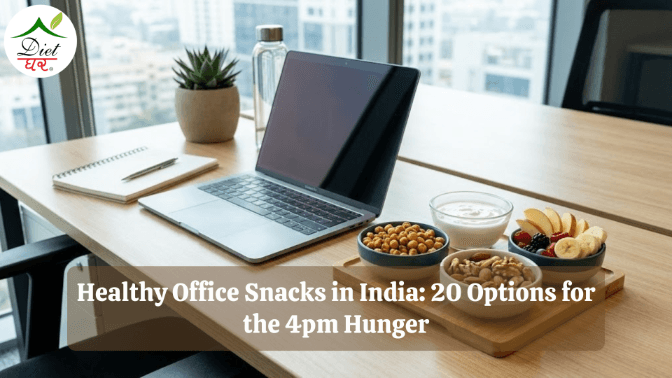
Healthy Office Snacks in India: 20 Options for the 4pm Hunger
The 4pm Problem
You know the feeling. It is 4:15pm, you have two more hours of work and your brain is running on fumes. Lunch has worn off, dinner is far away, and the biscuit tin or vending machine is right there.
The 4pm snack matters less for what it is than for what it prevents: arriving at dinner ravenous and overeating, losing focus in the last two hours of work, and the energy crash that makes an evening workout feel impossible.
A good 4pm snack is 150 to 250 calories, has protein or fibre, and takes under 5 minutes to prepare or find. Here are 20 that work in an Indian office.
The 20 Best Healthy Indian Office Snacks
1. Roasted Chana (Chickpeas), 150 calories per 40g handful
Roasted chana is an underrated snack. It has about 9g of protein per 40g, plenty of fibre and little fat, and it keeps without a fridge. Every corner shop sells it. The protein and fibre combination means a small handful keeps hunger away for a couple of hours. Keep a small jar at your desk.
2. A Handful of Mixed Nuts, 160-200 calories per 30g serving
Almonds, walnuts, cashews or pistachios, on their own or mixed. Nuts are calorie-dense but filling, and they give you protein, healthy fats, magnesium, zinc and vitamin E. Studies link regular nut eating with better heart health and weight management. Stick to a cupped palmful, because the calories add up quickly.
3. Greek Yogurt or Hung Curd, 100-120 calories per 100g serving
Greek yogurt has a lot of protein, about 15 to 17g per 100g. Buy it plain, not the flavoured kind with added sugar, and add a little honey or a few berries. Hung curd (chakka) is similar and easy to make at home. It needs a fridge, but most office pantries and nearby shops have one.
4. Hard-Boiled Eggs, 70 calories per egg
Two hard-boiled eggs give you 12 grams of complete protein, B vitamins and healthy fat for 140 calories, and they keep you full. Boil a batch on Sunday night and keep them in the office fridge. A sprinkle of chaat masala or black salt makes them taste far better.
5. Makhana (Fox Nuts), 55 calories per 30g serving
Makhana roasted in a little ghee with sendha namak is a much-loved Indian snack. Fox nuts are low in calories, have some protein, have magnesium and phosphorus, and are very crunchy. Many brands sell them roasted and packaged. A small bowl in the afternoon works well.
6. Banana, 90 calories per medium banana
A medium banana gives quick energy from natural sugars, plus potassium, vitamin B6 and some fibre. It travels well, needs no preparation and every street vendor sells it. Pair it with 10 almonds if you want something that lasts longer.
7. Guava, 60 calories per medium guava
Guava (amrood) is high in vitamin C and fibre for very few calories. A medium guava with black salt and lime is a classic snack. Its fibre makes it more filling than most fruit, and it is cheap across India.
8. Moong Dal Chilla (Homemade, Brought in Tiffin), 120-150 calories per chilla
One or two moong dal chilla made in the morning and packed in a tiffin keep well through the day. Each piece has 8 to 10g of protein and is filling enough to take you from 4pm to an 8pm dinner.
9. Dark Chocolate, 170 calories per 30g
Dark chocolate with 70% or more cocoa is a treat that fits in moderation. It has flavanols and some magnesium, and two or three small squares are enough to settle a sweet craving. Skip milk chocolate and chocolate biscuits, which have far less cocoa and far more sugar. Several Indian brands now make 70%+ dark chocolate.
10. Roasted Peanuts, 170 calories per 30g serving
Peanuts are the most affordable protein-rich snack in India, with 7 grams of protein per 30g. Choose dry-roasted with no added oil, or lightly salted. Avoid heavily flavoured masala peanuts, which are often high in sodium and additives.
11. Cucumber and Carrot Sticks, 40-60 calories per serving
Cucumber and carrot sticks in a small container in the office fridge are the easiest healthy snack. They are very low in calories, full of water and crunchy. Add a little hummus or a curd-based dip for protein and fat so they fill you up for longer.
12. Pumpkin Seeds (Kaddu Ke Beej), 150 calories per 30g serving
A handful of pumpkin seeds has about 9g of protein, plenty of magnesium, zinc and some omega-3 fat. Health food stores and many supermarkets sell them, raw or lightly roasted with salt. Some people with PCOS like them for the zinc, but they are a snack, not a treatment.
13. Chia Pudding (Pre-Made the Night Before), 150 calories per half cup
Chia seeds soaked overnight in plant milk or regular milk swell into a thick pudding that you can top with fruit and honey. Chia has omega-3, fibre, calcium and a little protein. Make it the night before and keep it in the office fridge.
14. Fruit Chaat, 100-120 calories per cup
A mixed fruit chaat of papaya, banana, apple, pomegranate and guava with chaat masala, rock salt and lime is low in calories and high in fibre and vitamins, and the seasoning makes it a treat. If a street vendor or juice shop near your office makes it fresh, it is one of the better street food options.
15. Coconut Bites, 80-100 calories per serving
Fresh coconut pieces with lime and salt, sold near many offices in South India and increasingly elsewhere, make a slightly sweet snack. The fat and fibre in fresh coconut make it more filling than it looks.
16. Sprouts Chaat, 80-100 calories per cup
Mixed sprouts (moong, chana, matki) with tomato, onion, green chilli, coriander, lemon and chaat masala is a very nutritious snack. Sprouts have protein and fibre. Sprout your moong at home and bring it in a container. Mixing it takes 2 minutes.
17. Sattu Sharbat, 100 calories per serving
Sattu (roasted chickpea flour) stirred into water with a pinch of salt, jeera powder and lemon is filling and cooling. One tablespoon has 4 to 5g of protein plus slow-release carbohydrate. Keep a small container at your desk and mix it in your water bottle when you need it.
18. A Small Bowl of Curd with Jaggery, 120 calories
Curd (dahi) with a small piece of jaggery is a classic Indian end-of-meal or snack preparation. Curd gives you protein and live bacteria, and the jaggery adds sweetness and some minerals. It works after lunch or at 4pm and settles a sweet craving without refined sugar.
19. Corn on the Cob (Bhutta), 120 calories per ear
Roasted bhutta from a street corner is a better snack than it gets credit for. Plain grilled corn with lime and salt has fibre, slow carbohydrates and some protein. The versions loaded with butter, cheese or masala powder add a lot of calories for little nutrition. Choose plain lime and salt from a vendor you trust.
20. Energy Balls (Homemade, Dates + Nuts + Seeds), 120-140 calories per ball
Homemade energy balls made from dates (sweetness and fibre), almond flour or peanuts (protein and fat) and seeds (chia or sesame) are easy to batch on a weekend and keep in the office fridge for the week. Two balls come to about 250 calories with protein, fibre and natural sugar.
Office Snacking: The Mindset That Works
The biggest mistake in office snacking is often not the food but eating while distracted. If you eat at your desk staring at a screen, you may not notice when you are full and end up eating more than you meant to. Even with the healthiest snack on this list, take 5 minutes away from your screen to eat it.
Sources: calorie and protein values are approximate and based on the Indian Food Composition Tables 2017 (ICMR-NIN) and typical packaged food labels.
FAQ
What is a healthy snack to eat at the office in India?
Roasted chana, a handful of nuts, plain curd, hard-boiled eggs, makhana, a banana, guava, sprouts chaat or a moong dal chilla from home all work. Aim for 150 to 250 calories with some protein or fibre.
How many calories should an office snack have?
About 150 to 250 calories for a 4pm snack is a good target, with protein or fibre so you stay full until dinner. Your own needs depend on your size, activity and goals.
What can I keep at my desk without a fridge?
Roasted chana, makhana, roasted peanuts, mixed nuts, pumpkin seeds, sattu and whole fruit such as bananas and guavas all keep well without refrigeration.
How do I stop craving biscuits and sweets in the evening?
Eat a protein-rich lunch, have a planned snack with protein or fibre at around 4pm, and take a few minutes away from your screen to eat it. A small piece of dark chocolate or curd with a little jaggery can handle a sweet craving.
Sources
- Dietary Guidelines for Indians 2024, ICMR National Institute of Nutrition (NIN), Hyderabad
- Indian Food Composition Tables (IFCT) 2017, ICMR National Institute of Nutrition (NIN), Hyderabad
- Healthy diet (fact sheet), World Health Organization
Get Your Personalized Diet Plan Today!
This article provides general information about nutrition and diet planning. Download the DietGhar app for a customized Indian diet plan tailored to your body type, health goals, and food preferences: with daily tracking and expert support.
About the Author
Written by The DietGhar Team nutritionists, helping clients since 2016 with personalised Indian diet plans. How our nutritionists work
Popular guides
Diet plans
Articles
- PCOS and PCOD diet plan, 7-day Indian meal plan
- Insulin resistance diet for Indians
- PCOS acne and skin: diet changes
- Indian keto diet for beginners
- Stress eating and cortisol
- Gluten-free Indian food for celiac disease
- Nutrition for Indians over 60
- South Indian diet for weight loss
- North Indian diet makeover
- Breastfeeding diet chart
- Winter diet and immunity foods
- Best Indian foods for hair growth
- Why crash diets fail
Find a Dietitian Near You
Get personalized nutrition plans from qualified nutritionists in your city. Online consultations available across India.

