
Indian Meal Prep for Beginners: Cook Once, Eat Healthy All Week
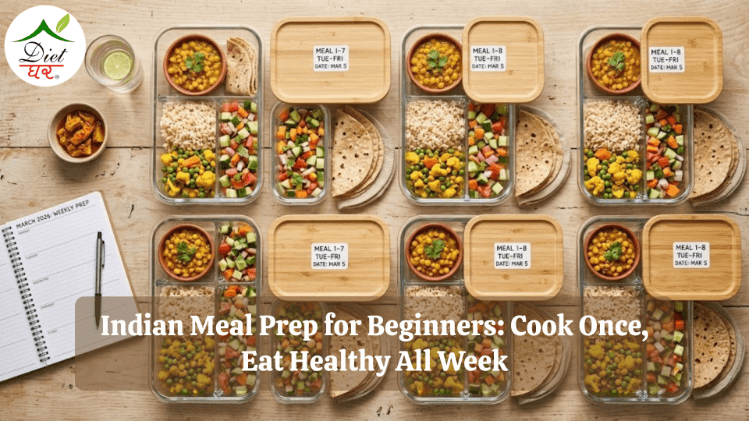
Why Indian Meal Prep Is Different
The meal prep concept that dominates Western social media, rows of identical plastic containers with chicken breast and broccoli, does not translate well to Indian eating culture. Indian food is diverse, aromatic, freshly spiced, and culturally tied to the experience of eating with family. The idea of eating the same container of food five days in a row feels deeply antithetical to Indian food culture.
But the core principle of meal prep, reducing the daily decision and effort burden of healthy cooking while maintaining nutritional quality, is just as valuable for Indian kitchens as for any other. The difference is in the approach: Indian meal prep focuses on preparing components and bases that can be combined in different ways across the week, not on making identical complete meals in advance.
This guide is designed for the working Indian who wants to eat well on weekdays without spending an hour in the kitchen every evening.
The Indian Meal Prep Philosophy
Indian meal prep works through what you might call the "base and variable" method:
- Prepare bases on the weekend: Dal (can be used multiple ways), cooked grains (rice, millets), roasted proteins (chicken or paneer), boiled eggs, soaked legumes
- Prepare fresh components daily (takes 10 minutes): Roti (most Indians prefer this fresh), fresh vegetables, tempering and finishing
- Vary the combination: Monday's dal-rice becomes Tuesday's dal-paratha with different vegetables becomes Wednesday's dal soup for dinner
This approach preserves the variety and freshness central to Indian food culture while dramatically reducing daily cooking time.
The Weekend Prep Session (2–3 Hours)
Step 1: Cook a Large Pot of Dal (30 minutes active)
Choose one of: masoor dal, moong dal, or toor dal. Cook a large batch (500g dry yields approximately 8–10 servings). Do NOT add the full tempering yet, just pressure cook or boil the dal until soft with minimal seasoning (salt, turmeric).
This plain dal base can be transformed throughout the week:
- With a jeera-garlic tadka → simple dal tadka
- With tomato onion masala fried and added → full dal curry
- Thinned with water and added with tamarind → rasam
- Mashed and mixed into paratha dough → dal paratha
Step 2: Prepare Grains (15 minutes active)
Cook 2–3 cups of brown rice or a combination of white rice and millet (sama rice or jowar). Store in the refrigerator in an airtight container. Cooked rice lasts 3–4 days safely. Reheat in the microwave with a sprinkle of water, or repurpose as fried rice, curd rice, or lemon rice with simple fresh tempering.
Step 3: Boil Eggs (10 minutes)
Boil 8–10 eggs for the entire week. Store in the refrigerator (unpeeled lasts 7 days, peeled lasts 5 days). Hard-boiled eggs are the most versatile meal prep protein for an Indian diet: eaten plain with rock salt, sliced into salads, made into egg curry, or added to fried rice.
Step 4: Soak and Partially Cook Legumes (5 minutes active, overnight passive)
Soak a cup of rajma, chole, or kala chana overnight. On Sunday, pressure cook until 80% done. Store in the refrigerator. On weekday evenings, finishing the curry takes 15 minutes rather than 45 minutes of soaking and long cooking.
Step 5: Prepare Vegetable Bases (20 minutes)
Chop and partially cook 2–3 vegetable preparations:
- A batch of sautéed onion-tomato-ginger-garlic masala (the "base gravy") that can be finished with different vegetables and spices for different sabzis each day
- Pre-chopped vegetables stored in containers: carrots, capsicum, beans, raw, ready to use
- One partially cooked vegetable preparation: for example, blanched spinach or sautéed bhindi that can be quickly finished with spices
Step 6: Prepare Healthy Snacks (15 minutes)
- Roast a batch of makhana or chana for the week
- Make a batch of energy balls (dates + peanut butter + sesame seeds), store in refrigerator for 2 weeks
- Portion nuts into small containers for each day's snack
The Weekday Routine (15–20 Minutes Per Evening)
With the weekend prep complete, weekday cooking becomes assembly and finishing:
Monday
Dinner: Add jeera-garlic tadka to dal from the fridge + reheat rice + quick bhindi sabzi (10 min) using pre-cooked base. Total active time: 15 minutes.
Tuesday
Dinner: Use the partially cooked rajma + ready masala base, finish curry. Make fresh roti (20 min total including roti time). Serve with pre-made curd.
Wednesday
Dinner: Dal paratha (mash leftover dal into atta dough) + curd + any quick sabzi from pre-cut vegetables. 20 minutes.
Thursday
Dinner: Fried rice using week's rice (add eggs, peas, capsicum from pre-chopped supply, soy sauce, salt). 15 minutes.
Friday
Dinner: Something fresh, a new vegetable or protein preparation feels rewarding after a week of prep-based cooking. Or use remaining components in a different configuration.
Meal Prep for Breakfast
Overnight Options
- Overnight oats: 5 minutes before bed, rolled oats with milk or curd + fruit + nuts. Ready in the morning with no cooking.
- Soaked dry fruits and nuts: A small container of almonds soaked overnight is the fastest nutritious morning start.
Weekly Batch Preparation
- Ragi porridge mix: Pre-mix ragi flour with milk powder, elaichi, and jaggery powder. Store in a jar. Morning preparation: 3 minutes of stirring in warm milk.
- Moong dal chilla batter: Soaked moong dal blended into batter lasts in the refrigerator for 3–4 days. Morning cooking: 5 minutes on a tawa.
Meal Prep for Working Indian Women: Special Considerations
In most Indian households, the woman carries the primary burden of meal preparation. Meal prep is not just a productivity hack. It is a genuine quality-of-life improvement for women managing work, household, and cooking simultaneously.
The key adjustments that make Indian meal prep sustainable for working women:
- Share the Sunday prep with other family members, making dal and washing and chopping vegetables are tasks that can be distributed
- Use the pressure cooker aggressively. It reduces active cooking time by 60–70%
- A good quality airtight container set is worth the investment. It determines how well prep stays fresh
- Lower the perfection bar, a reheated dal with fresh roti is a completely nutritious dinner. Not every meal needs to be restaurant quality.
Meal prep is not about eating worse food. It is about trading occasional elaborate cooking for consistent good eating, a swap that dramatically improves health outcomes over time.
Get Your Personalized Diet Plan Today!
This article provides general information about nutrition and diet planning. Download the DietGhar app for a customized Indian diet plan tailored to your body type, health goals, and food preferences — with daily tracking and expert support.
About the Author
Written by the DietGhar expert team — certified dietitians with 10+ years of experience helping clients achieve their health goals through personalized Indian diet plans.
Find a Dietitian Near You
Get personalized nutrition plans from certified dietitians in your city. Online consultations available across India.

