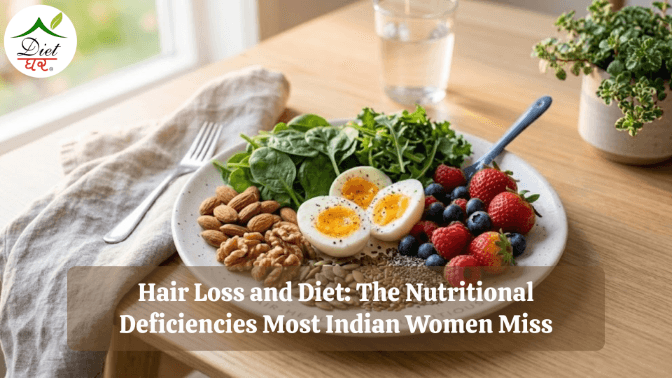
Hair Loss and Diet: The Nutritional Deficiencies Most Indian Women Miss
Clumps of hair in the shower drain. More on the pillow. More when you run your fingers through it. Significant hair shedding, exceeding the normal 50–100 hairs per day, is one of the most distressing symptoms Indian women face, and it is extraordinarily common. Conservative estimates suggest that 30–40% of Indian women between 25–55 experience significant hair loss at some point.
The response is almost invariably cosmetic: expensive hair oils, keratin treatments, biotin supplements purchased at the pharmacy without testing. These address the symptom rather than the cause. In a substantial proportion of cases, probably the majority, significant hair loss in Indian women has a nutritional or hormonal root that is not being tested or treated.
How Hair Growth Works and Why It Stops
Each hair follicle cycles through three phases: anagen (active growth, lasting 2–7 years), catagen (transition, 2–3 weeks), and telogen (resting, 3 months, then shedding). At any given time, 80–90% of follicles are in anagen. When a physiological stress, nutritional deficiency, hormonal disruption, illness, major surgery, crash dieting, occurs, follicles prematurely shift from anagen to telogen. Two to four months later, those hairs shed in a wave. This is called telogen effluvium (TE).
The key insight: the hair loss you see today is the result of what happened to your body 2–4 months ago. A crash diet in October produces significant shedding in December–January. Iron deficiency that developed over the past year becomes visible as hair loss now. This delay confuses many women, they cannot identify a "cause" because they are looking at current circumstances rather than what occurred months prior.
The Most Important Nutritional Causes of Hair Loss in Indian Women
Iron Deficiency (The Most Common Cause)
Ferritin (stored iron) below 30 ng/mL is associated with significant hair shedding even when haemoglobin is still "normal." The hair follicle is highly metabolically active and sensitive to iron status. At ferritin levels below 70 ng/mL, many trichologists recommend treatment to avoid hair loss, even though the conventional anaemia threshold is below 12 ng/mL.
India has one of the highest rates of iron deficiency in the world, particularly in women. Multiple studies show that a significant proportion of Indian women seeking evaluation for hair loss have ferritin levels below 30 ng/mL. This is the single most impactful test to get if you have unexplained hair shedding.
The test to get: Serum ferritin (not just haemoglobin). Available at any pathology lab. Normal range labelling may say "12–150 ng/mL" but for hair health, target ferritin above 70 ng/mL.
Treatment: Iron-rich foods (see our detailed guide on iron deficiency in Indian women) and supplementation under medical guidance if ferritin is below 30. Recovery takes 3–6 months with treatment before hair shedding reduces.
Vitamin D Deficiency
Vitamin D receptors are present in hair follicle keratinocytes and play a role in hair cycling. Low vitamin D is strongly associated with alopecia areata (patchy hair loss) and is also associated with telogen effluvium. In India, near-universal vitamin D deficiency makes this one of the most common correctable contributors to hair loss that goes unaddressed.
The test: 25-OH Vitamin D. Target above 40 ng/mL. Most Indian women with hair loss are found at 5–20 ng/mL, severely deficient.
Treatment: Vitamin D3 supplementation to restore normal levels (typically 2,000–4,000 IU daily with weekly 60,000 IU sachet initially). Hair improvement typically seen 4–6 months after normalisation.
Protein Deficiency
Hair is made of keratin, a protein. Adequate dietary protein is essential for hair growth. The hair follicle is one of the first tissues to be deprived when protein is insufficient, as the body prioritises protein for essential organ function.
Protein deficiency as a cause of hair loss is more common in India than in Western countries, particularly in women following very restrictive diets, vegetarians who do not monitor protein intake, and women who have undergone rapid weight loss. The target is 1–1.2g protein per kg body weight daily. Many Indian women eat 40–60g total, well below requirements.
Signs of protein-related hair loss: hair loss accompanied by nail brittleness, delayed wound healing, frequent infections, and slow healing from illness.
Zinc Deficiency
Zinc is required for hair follicle DNA synthesis, protein synthesis, and keratinocyte proliferation. Deficiency causes both hair loss and impaired hair quality (thinning, brittleness). Zinc deficiency is common in Indian vegetarians because plant zinc is less bioavailable than animal zinc (due to phytate binding), and zinc-rich animal foods (meat, oysters) are not commonly consumed.
The test: Serum zinc. Results below 80 mcg/dL suggest deficiency.
Best Indian sources: Pumpkin seeds (the highest plant zinc source), sesame seeds, whole wheat, rajma, almonds. For significant deficiency, zinc supplementation (15–25 mg daily of zinc picolinate or citrate for better absorption) is required.
Biotin (Vitamin B7)
Biotin is the most commonly self-prescribed supplement for hair loss in India, and usually the wrong answer unless biotin deficiency is actually present (which is rare with normal eating). Biotin deficiency requires very specific conditions: consuming large amounts of raw egg whites (which contains avidin that blocks biotin absorption), long-term antibiotic use, certain genetic disorders, or severe malnutrition.
For most women buying biotin supplements from pharmacies without testing, it is the nutritional equivalent of treating the wrong disease. Biotin will not reverse iron-deficiency or vitamin D-related hair loss. If you are taking biotin supplements without knowing whether you have biotin deficiency, the money would be better spent on a ferritin and vitamin D test.
Best Indian dietary sources of biotin (for the small number with actual deficiency): eggs (particularly the yolk, which is rich in biotin), almonds, walnuts, sweet potato, cauliflower.
Thyroid Dysfunction
Both hypothyroidism and hyperthyroidism cause significant hair shedding. TSH is one of the most important tests to include in hair loss evaluation. Undiagnosed or undertreated thyroid disease is one of the most common correctable causes of hair loss in Indian women, and it is entirely missed if the evaluation stops at iron and vitamins.
The test: TSH and free T4. If TSH is above 3 mIU/L in a symptomatic woman with hair loss, a discussion with a doctor about thyroid treatment is warranted even if TSH is technically "within normal range."
PCOS-Related Androgenic Hair Loss
Excess androgens in PCOS cause androgenic alopecia, hair miniaturisation and thinning in the central scalp region (different pattern from iron-deficiency hair loss which causes diffuse shedding). This requires hormonal management alongside nutritional support. See our detailed guide on PCOS diet management.
The Complete Hair Loss Blood Test Panel
Before spending money on hair serums and treatments, get these tests:
- Serum ferritin (not just haemoglobin)
- 25-OH Vitamin D
- TSH and free T4
- Serum zinc
- Complete blood count (CBC)
- If PCOS suspected: testosterone, DHEA-S, LH/FSH ratio, fasting insulin
This panel costs approximately Rs 2,000–4,000 at a good diagnostic lab and provides an actual diagnosis rather than guesswork.
Indian Foods That Support Hair Health
Amla (Indian gooseberry): Vitamin C in amla supports collagen synthesis (the connective tissue matrix of hair follicles) and improves iron absorption. The high antioxidant content protects follicles from oxidative damage. Amla oil applied topically and amla consumed internally are both traditional Indian hair practices with genuine nutritional backing.
Methi seeds (fenugreek): Contains nicotinic acid and protein compounds that stimulate hair growth. Soaking fenugreek seeds overnight and applying the paste topically is a long-standing Indian hair practice. The iron content of methi also contributes to dietary iron intake.
Eggs: Complete protein, biotin, zinc, iron, B12. The most nutritionally complete single food for hair health. Incorporating two to three eggs daily addresses multiple hair-relevant deficiencies simultaneously.
Drumstick leaves (moringa): Iron (28 mg per 100g dried), zinc, protein, vitamin C, and biotin, moringa may be the single Indian food with the most comprehensive hair nutrition profile.
Pumpkin seeds: Zinc and magnesium, specifically important for follicle function and hormone balance. Two tablespoons daily.
Sunflower seeds: Vitamin E and zinc. Vitamin E is an antioxidant that protects scalp from oxidative damage from sun exposure and pollution.
Hair loss with a nutritional or hormonal cause responds to treatment, typically showing reduced shedding within 3–4 months and visible regrowth at 6–12 months. The timeline is long but the outcome is real when the correct underlying cause is identified and treated. Get the tests first; treat what is actually deficient.
Sources
- Dietary Guidelines for Indians 2024, ICMR National Institute of Nutrition (NIN), Hyderabad
- Indian Food Composition Tables (IFCT) 2017, ICMR National Institute of Nutrition (NIN), Hyderabad
- Healthy diet (fact sheet), World Health Organization
Get Your Personalized Diet Plan Today!
This article provides general information about nutrition and diet planning. Download the DietGhar app for a customized Indian diet plan tailored to your body type, health goals, and food preferences: with daily tracking and expert support.
About the Author
Written by The DietGhar Team nutritionists, helping clients since 2016 with personalised Indian diet plans. How our nutritionists work
Popular guides
Diet plans
Articles
- PCOD diet chart, 7-day Indian meal plan
- Insulin resistance diet for Indians
- PCOS acne and skin: diet changes
- Indian keto diet for beginners
- Stress eating and cortisol
- Gluten-free Indian food for celiac disease
- Nutrition for Indians over 60
- South Indian diet for weight loss
- North Indian diet makeover
- Breastfeeding diet chart
- Winter diet and immunity foods
- Best Indian foods for hair growth
- Why crash diets fail
Find a Dietitian Near You
Get personalized nutrition plans from qualified nutritionists in your city. Online consultations available across India.

