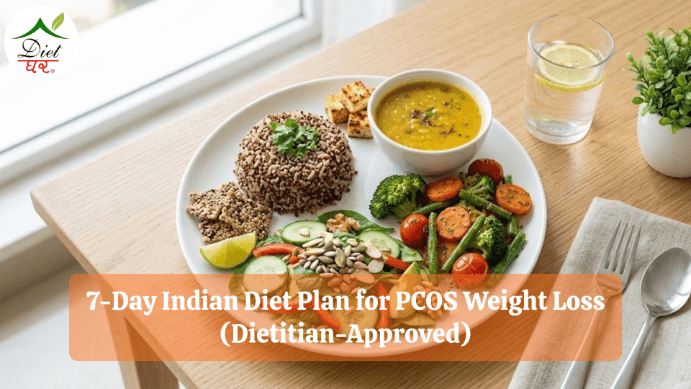
7-Day Indian Diet Plan for PCOS Weight Loss (Dietitian-Approved)
If you have been told to "just eat less and exercise more" for your PCOS, you already know how frustrating that advice is. You cut carbs, you skip dinner, you try every fad — and the scale barely moves. That is not your fault. PCOS (Polycystic Ovary Syndrome) changes how your body handles food at a hormonal level, and a generic diet simply does not work.
This plan was built around real Indian kitchen staples — the foods already in your dal-chawal routine — adjusted to work with your hormones instead of against them. No quinoa bowls, no expensive supplements, no skipping Sunday lunch with the family.
Why PCOS Makes Weight Loss Harder
Before diving into the meal plan, it helps to understand what is actually going on inside your body. Most women with PCOS deal with two interconnected problems: insulin resistance and hormonal imbalance.
When your cells resist insulin, your pancreas keeps pumping out more of it. High insulin signals your ovaries to produce excess androgens (male hormones like testosterone). This hormonal shift causes irregular periods, stubborn belly fat, acne, and that characteristic difficulty losing weight — even on a calorie deficit.
High insulin also promotes fat storage, especially around the abdomen. So the usual calorie-cutting approach backfires because it can spike cortisol (stress hormone), which in turn worsens insulin resistance. It is a cycle.
The right PCOS diet targets insulin sensitivity first. Lower the insulin spikes, and the androgens start to come down. Periods regulate, energy improves, and weight loss becomes possible again.
The Indian Foods That Actually Help PCOS
Good news: the traditional Indian diet, in its unprocessed form, is genuinely well-suited to PCOS management. Here is what to lean into:
- Low-glycaemic grains: Dalia (broken wheat), oats, ragi (finger millet), jowar, bajra. These release glucose slowly, preventing the sharp insulin spikes that polished white rice and maida cause.
- Legumes and dals: Moong dal, masoor dal, chana, rajma, and sprouts. High in protein and fibre — both critical for PCOS because protein blunts blood sugar rise and fibre feeds the gut bacteria that regulate oestrogen metabolism.
- Anti-inflammatory spices: Haldi (turmeric), methi (fenugreek), dalchini (cinnamon), and jeera. Methi seeds in particular have been shown in Indian research to improve insulin sensitivity. Soaking one teaspoon of methi seeds overnight and drinking that water in the morning is a genuinely useful habit.
- Healthy fats: A small amount of ghee, cold-pressed coconut oil, and a handful of mixed nuts (almonds, walnuts). Healthy fats slow gastric emptying and help absorb fat-soluble vitamins needed for hormone production.
- Cruciferous and leafy vegetables: Palak, methi leaves, drumstick (moringa), cauliflower, and cabbage. These support liver detoxification pathways that clear excess oestrogen from the body.
- Omega-3 rich foods: Flaxseeds (alsi), walnuts, and fatty fish like rohu or bangda for non-vegetarians. Omega-3s reduce androgen levels and support ovulatory function.
7-Day PCOS Meal Plan (Dietitian-Approved)
This plan targets approximately 1,600–1,800 calories per day, with a macronutrient distribution of roughly 40% complex carbs, 30% protein, and 30% healthy fats. Adjust portions based on your height, activity level, and medical advice. If you are in Mumbai, connecting with a specialist for a customised version is easy — check out PCOS diet in Mumbai for local dietitian options.
Monday
- Early morning: 1 glass lukewarm water with methi seeds (soaked overnight) + 4 soaked almonds
- Breakfast: 2 moong dal chillas with green chutney + 1 small bowl of curd (no sugar)
- Mid-morning: 1 guava or 1 small bowl of papaya
- Lunch: 1 cup brown rice + 1 katori rajma curry + kakdi-tomato salad with lemon + 1 small katori curd
- Evening snack: 1 handful roasted chana + 1 cup green tea (no sugar)
- Dinner: 2 bajra rotis + 1 katori palak dal + 1 katori sabzi (lauki or tinda)
Tuesday
- Early morning: Methi water + 4 walnuts
- Breakfast: 1 bowl vegetable dalia (broken wheat upma with onion, peas, carrot) + 1 boiled egg or 100g paneer bhurji for vegetarians
- Mid-morning: 1 small pear or a few strawberries
- Lunch: 2 jowar rotis + 1 katori chana dal + mixed vegetable sabzi + salad
- Evening snack: 1 small bowl sprouted moong chaat (lemon, jeera, tomato) + buttermilk (chaas, no sugar)
- Dinner: 1 bowl vegetable khichdi (moong dal + brown rice, light on ghee) + curd
Wednesday
- Early morning: Methi water + 1 tsp flaxseed powder in warm water
- Breakfast: 2 ragi rotis with peanut butter (no added sugar) or coconut chutney + 1 glass warm milk with a pinch of haldi
- Mid-morning: 1 small apple (with skin)
- Lunch: 1 cup quinoa or brown rice + 1 katori masoor dal + bhindi sabzi + salad
- Evening snack: 1 handful mixed nuts (5 almonds, 2 walnuts, 1 tsp pumpkin seeds)
- Dinner: 2 multigrain rotis + 1 katori methi dal + baingan sabzi
Thursday
- Early morning: Methi water + soaked almonds
- Breakfast: Oats porridge (made with water or low-fat milk, topped with 1 tsp alsi seeds and a few blueberries or pomegranate arils — no honey, no sugar)
- Mid-morning: 1 guava
- Lunch: 2 bajra rotis + dal makhani (light version, no cream) + palak sabzi + salad
- Evening snack: Roasted makhana (fox nuts) — 1 small bowl + green tea
- Dinner: 2 moong dal chillas (dinner version with vegetables inside) + mint chutney + curd
Friday
- Early morning: Methi water + walnuts
- Breakfast: Besan cheela (2 pieces) with green chutney + 1 glass chaas
- Mid-morning: 1 small bowl mixed fruit (avoid mango, banana, chikoo — high glycaemic)
- Lunch: 1 cup brown rice + sambar (homemade, light on tamarind) + vegetable sabzi + salad
- Evening snack: 1 boiled egg or a small bowl of sprouts bhel (no sev, no chutney with sugar)
- Dinner: 2 ragi rotis + 1 katori dal + ridge gourd (turai) sabzi
Saturday
- Early morning: Methi water + flaxseed water
- Breakfast: Idli (2–3 pieces, steamed) with sambar and coconut chutney — yes, idli is fine for PCOS when made from fermented batter, as fermentation lowers the glycaemic load
- Mid-morning: 1 small pear or a handful of jamun (when in season)
- Lunch: Rajma chawal (brown rice, small portion) + salad + curd
- Evening snack: 1 cup green tea + 1 small piece of 70%+ dark chocolate (not a bar, just a piece — the magnesium helps with insulin sensitivity)
- Dinner: 2 jowar rotis + palak paneer (light, minimal cream) + salad
Sunday
- Early morning: Methi water + almonds
- Breakfast: Vegetable poha (use thin poha, add peas, peanuts, lemon — avoid the version drowning in oil) + 1 glass chaas
- Mid-morning: 1 small bowl papaya
- Lunch: Sunday family meal — this is where most plans fall apart. Have what the family is eating, but: choose roti over naan, opt for dal over the cream-based curry, take a smaller portion of rice, and add a salad. You do not have to eat separately from your family. Just make smarter choices within what is on the table.
- Evening snack: Roasted chana + jeera water
- Dinner: Light — 1 bowl vegetable soup (no cornflour thickening) + 1 ragi roti + sabzi
If you are based in Delhi and want a plan tailored to north Indian eating patterns — the heavier rotis, the mustard-oil sabzis, the winter sarson da saag — see PCOS diet in Delhi for dietitians who understand that context.
Foods to Strictly Avoid with PCOS
This list matters more than you think. These are not just "unhealthy" foods in a general sense — they specifically worsen insulin resistance and hormonal imbalance:
- Maida and refined flour products: White bread, naan, pav, biscuits, bhatura, samosa. Maida spikes blood sugar faster than table sugar in some cases.
- Packaged juices and cold drinks: Real Fruit, Tropicana, Frooti, Maaza, aerated drinks — all liquid sugar with no fibre. Even "no added sugar" versions are problematic. Eat the fruit, do not drink it.
- White sugar and sweetened foods: Mithai, gulab jamun, halwa, kheer, barfi. Festivals are hard — see the lifestyle tips below for how to navigate this.
- Processed snacks: Lays, Kurkure, Maggi (regular), instant noodles, packaged namkeen. High in refined carbs, trans fats, and sodium — all worsen inflammation and insulin resistance.
- Dairy in excess: Full-fat milk in large quantities and processed cheese can raise androgen levels in some women with PCOS. Curd and chaas in moderate amounts are fine — the fermentation changes the dairy's effect on hormones.
- High-glycaemic fruits: Mango, banana, chikoo (sapota), and grapes in large quantities. Not banned forever, but not daily staples during a weight-loss phase.
- Alcohol: Interferes with liver detoxification, which means excess oestrogen stays in circulation longer.
3 Lifestyle Tips Beyond the Diet
Diet is about 70% of the work with PCOS. The remaining 30% is not optional.
1. Resistance Training, Not Just Cardio
Walking is good. Running is good. But if you only do cardio, you are missing the most powerful tool for improving insulin sensitivity: muscle. More muscle mass means more glucose uptake without insulin. Start with basic bodyweight exercises — squats, push-ups, lunges — three times a week. You do not need a gym. A 20-minute home workout done consistently beats a gym membership that gets skipped.
2. Sleep Is a Hormone Regulator
Poor sleep raises cortisol, which raises insulin, which worsens PCOS. Seven to eight hours is not a luxury. If you are scrolling your phone until 1 AM, that is directly worsening your PCOS. A consistent sleep schedule — same time every night — helps regulate the hormonal rhythms that your condition has disrupted.
3. Navigating Festivals and Family Pressure
Diwali, Eid, Navratri, weddings — Indian social life is built around food, and refusing everything makes you miserable and socially isolated. A better approach: eat a protein-rich snack before the event so you arrive not starving, choose 1–2 specific mithai you actually love instead of grazing through everything, and do not white-knuckle it. One festival meal will not derail your PCOS management. A month of guilt-driven restriction followed by bingeing will.
For women in Pune managing PCOS alongside busy work-from-home schedules and constant snacking temptation, working with a dietitian in Pune who can create flexible meal plans around real life is worth considering.
Frequently Asked Questions
Can I eat rice if I have PCOS?
Yes, in moderation and the right form. Brown rice, hand-pounded rice (khand), or even regular white rice in a smaller portion (half a katori) alongside protein and vegetables will not destroy your progress. The problem is not rice itself — it is large portions of white rice eaten alone, without fibre or protein to buffer the glycaemic impact. Dal-chawal is actually a reasonable PCOS meal when the portions are sensible.
How long before I see results on this diet?
Insulin sensitivity begins improving within 2–4 weeks of consistent dietary changes. Weight loss with PCOS is typically slower — expect 0.5 to 1 kg per week at best. Hormonal changes (more regular periods, reduced acne) usually take 2–3 months. Do not measure success only by the scale — track energy levels, period regularity, and skin improvements as well.
Is intermittent fasting good for PCOS?
The evidence is mixed, and it depends heavily on the individual. Some women with PCOS respond well to a 14:10 eating window (eating between 8 AM and 10 PM, for example). Others find that skipping breakfast raises cortisol, which worsens their PCOS. Do not start intermittent fasting without guidance from a dietitian who can assess your specific hormonal profile.
Find a DietGhar expert near you at dietician in Hyderabad or dietician in Chennai for a personalised PCOS plan.
Get Your Personalized Diet Plan Today!
This article provides general information about weight management. Download the DietGhar app for a customized Indian diet plan tailored to your body type, health goals, and food preferences — with daily tracking and expert support.
About the Author
Written by the DietGhar expert team — certified dietitians with 10+ years of experience helping clients achieve their health goals through personalized Indian diet plans.
Find a Dietitian Near You
Get personalized nutrition plans from certified dietitians in your city. Online consultations available across India.

