Walnut Jaggery Chikki for Thyroid: A Selenium & Omega-3 Rich Indian Snack
A wholesome Indian recipe crafted for health-conscious eating: nutritious, delicious, and easy to make at home.
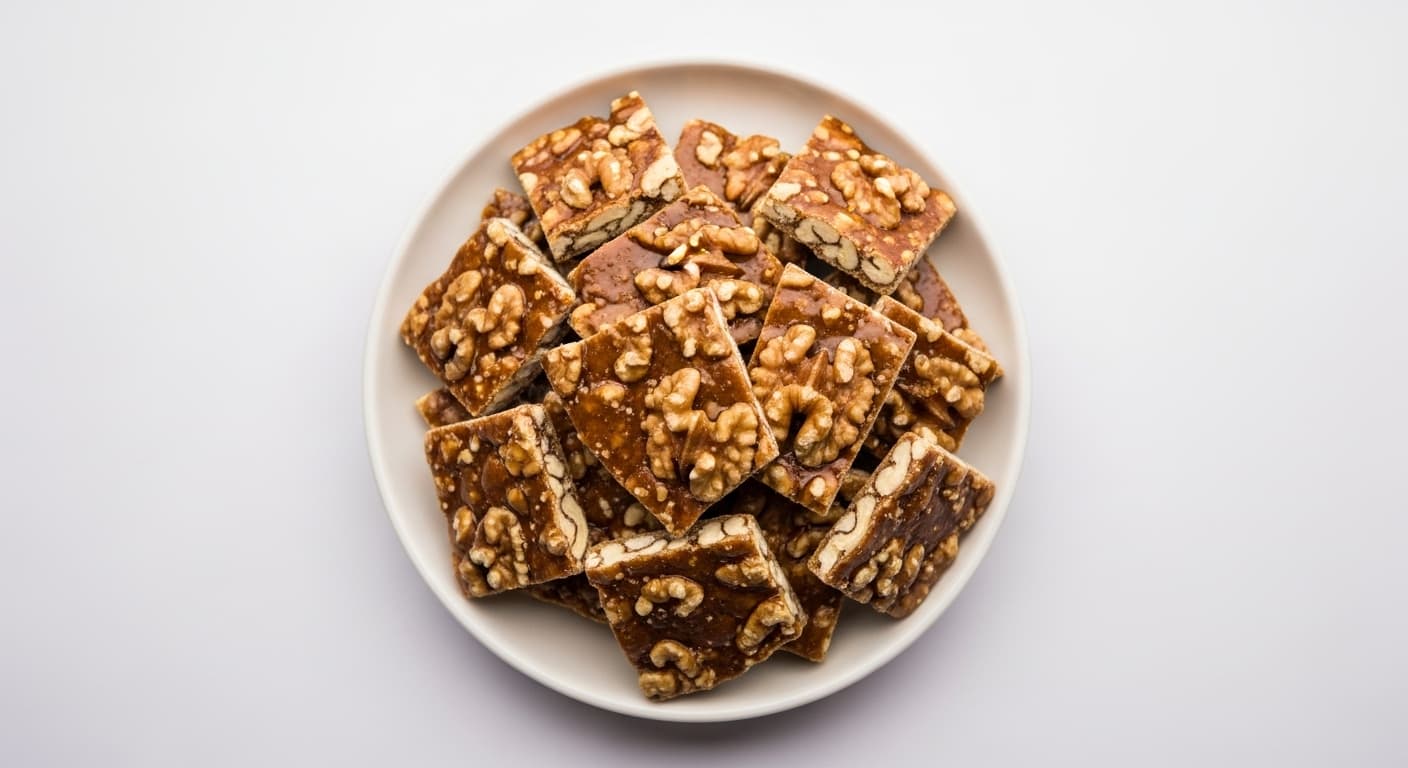
Chikki is India's original energy bar, jaggery and nuts cooked together into a crisp, caramel-like snack that keeps for weeks. This thyroid-focused version centres on walnuts, which are valuable for thyroid health because of their ALA (alpha-linolenic acid) omega-3 content. ALA reduces the systemic inflammation that drives autoimmune thyroid diseases like Hashimoto's. Walnuts are also a meaningful source of selenium and zinc.
Jaggery replaces refined sugar here, both are sugars and should be eaten in moderation, but jaggery contains trace minerals including iron that white sugar completely lacks. The nut-to-jaggery ratio in this recipe is deliberately high, keeping the sugar content per piece low. One or two pieces makes an ideal mid-afternoon snack that prevents the energy slump common in hypothyroid patients at 3-4pm without spiking blood sugar.
Ingredients
How to Make It
Line a baking tray or flat plate with parchment paper, or grease it generously with ghee. Have this ready before you start cooking the jaggery.
Dry roast the walnuts in a pan for 3-4 minutes until fragrant. Add sesame seeds in the last minute. Set aside to cool.
In a heavy-bottomed pan, add jaggery with 2 tsp water. Cook on medium heat, stirring occasionally.
The jaggery will melt, then foam up, then the foam will subside and the syrup will clear. Keep cooking until it reaches the hard ball stage: to test, drop a small amount into a bowl of cold water. If it forms a firm ball you can pick up, it's ready. This takes about 8-10 minutes and is the key technique step: too soft and the chikki will be sticky, too cooked and it turns bitter and hard.
Move quickly now: Add the roasted walnuts, sesame seeds, pumpkin seeds, and cardamom to the jaggery all at once. Stir rapidly to coat everything.
Immediately pour onto the prepared tray. Using the back of a greased spoon, press and spread it to about ½ inch thickness. Work fast: it sets in a couple of minutes.
Before it fully hardens (about 2-3 minutes in), score into pieces with a sharp greased knife. Once fully set (5-10 minutes), break along the score lines.
Store in an airtight container at room temperature for up to 3 weeks.
Nutrition per serving
* Approximate values per serving
Health Benefits
Walnuts provide ALA omega-3 fatty acids that reduce the inflammatory cytokines (TNF-alpha and IL-6) driving autoimmune thyroid destruction in Hashimoto's. Each serving of this chikki provides approximately 1.3g ALA, a meaningful dose for anti-inflammatory effect. Sesame adds sesamol and sesamin (lignans that protect thyroid cells from oxidative damage) alongside selenium. Together, walnuts, sesame, and pumpkin seeds cover selenium (T4-T3 conversion), zinc (thyroid receptor function), and omega-3 (autoimmune inflammation): three distinct thyroid-protective pathways in one piece of chikki.
Pro Tips
- →The hard ball stage test is the single most important technique step. Too little cooking and the chikki stays sticky; too much and it becomes unbearably hard. Practice the cold water test once or twice and you'll have it.
- →Have everything prepped before you start cooking the jaggery: nuts toasted and ready, tray greased, spoon greased. Once the jaggery reaches temperature, you have maybe 60-90 seconds to work.
- →Grease your hands and spoon with ghee before shaping, hot jaggery sticks and burns.
- →For thyroid specifically, use the full quantities of walnuts and pumpkin seeds in this recipe. Don't reduce them.
Variations
- 1Add 2 tbsp flaxseeds (alsi) for additional ALA and lignans, excellent for women with both thyroid issues and PCOS.
- 2Brazil nut chikki: Replace half the walnuts with broken Brazil nuts for an even more selenium-concentrated snack. Limit to 1 piece per day due to the high Brazil nut selenium content.
- 3Groundnut (peanut) chikki: Replace walnuts with roasted peanuts for a more affordable everyday version, less selenium but still high in zinc and affordable protein.
Frequently Asked Questions
You Might Also Like
Get a Personalised Diet Plan
4.9★ on Google • 7,000+ clients helped

