
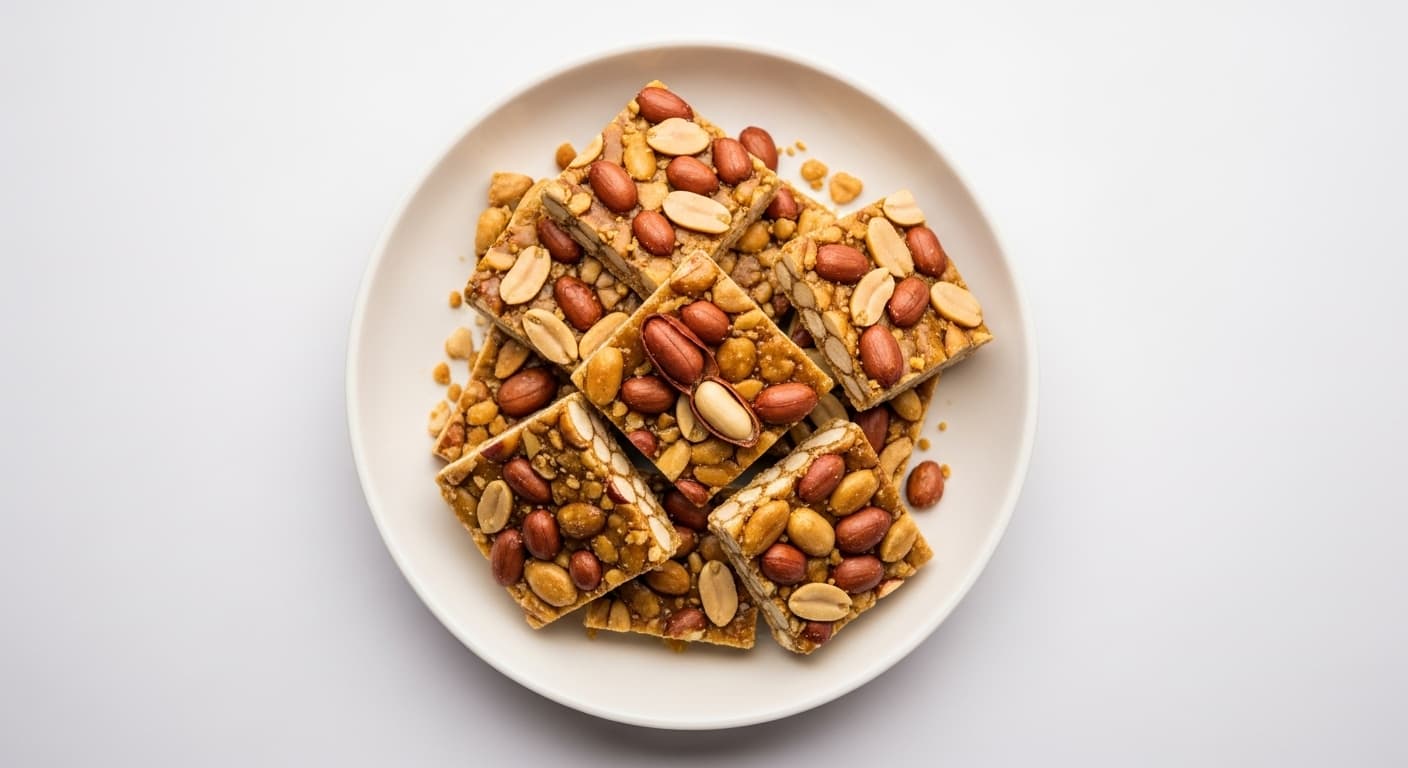
Peanut Jaggery Chikki Energy Bar: India's Original Sports Nutrition Snack
A wholesome Indian recipe crafted for health-conscious eating: nutritious, delicious, and easy to make at home.
Commercial energy bars cost ₹60-120 each and are packed with glucose syrup, palm oil, and artificial flavours. Peanut jaggery chikki delivers comparable fast-energy carbohydrates and protein at approximately ₹8-10 per piece. Jaggery's natural sugars (sucrose, glucose, and fructose) digest at varying rates, providing both immediate and sustained energy. Peanuts contribute 5g protein per piece that prevents muscle breakdown during exercise, plus arginine that improves muscle blood flow.
Chikki has been the pre-game snack of Indian wrestlers, cricket players, and Maharashtra marathon runners for centuries. Modern sports science endorses this completely, a snack with 25-30g fast carbohydrates plus 4-5g protein consumed 30-45 minutes before exercise is the optimal pre-workout formula. One or two pieces of this chikki fits that profile exactly, at a fraction of commercial supplement cost. This is traditional Indian sports nutrition that actually works.
Ingredients
How to Make It
Grease a flat plate or baking tray with ghee. Set it aside within arm's reach.
If peanuts aren't already roasted, dry roast them now. Let them cool slightly. Remove skins by rubbing if you prefer, or leave them on for additional fibre and polyphenols.
In a heavy-bottomed kadhai, melt jaggery with 2 tsp water on medium heat. Stir continuously as it melts.
Cook the jaggery syrup, stirring constantly, until it reaches the hard crack stage, test by dropping a small amount into cold water. If it forms a hard, brittle thread, you're there. This takes 8-10 minutes and is the most critical step.
Working very quickly: add peanuts, sesame seeds, and cardamom. Stir rapidly to coat everything in the jaggery.
Immediately transfer to the greased plate. Using a greased spatula, flatten quickly to about ½ inch thickness.
Before it fully sets, within 2-3 minutes, score into rectangular bar shapes using a greased knife.
Once fully cooled and hardened (10-15 minutes), break along the score lines. Store in an airtight container for up to 3 weeks.
Nutrition per serving
* Approximate values per serving
Health Benefits
Jaggery's complex sugar composition provides fast energy with slightly more sustained release than pure glucose, thanks to its mix of sucrose, glucose, fructose, and trace complex carbohydrates. Its iron content (11mg per 100g) supports the blood's oxygen-carrying capacity: critical for endurance athletes. Peanuts provide arginine, an amino acid precursor to nitric oxide that improves muscle blood flow during exercise. Their magnesium content (168mg per 100g) supports ATP production, the actual energy currency of every muscle contraction you make. Sesame seeds add calcium and zinc, both important for bone density in high-impact sports. This combination creates a snack that addresses performance, endurance, and recovery simultaneously, which no commercial energy bar does with such simple, whole ingredients.
Pro Tips
- →The hard crack stage is non-negotiable, too early and the chikki stays sticky; too late and it burns. Use the cold water test every time without skipping it.
- →Have everything greased and measured before the jaggery is ready: once it hits the hard crack stage, you have roughly 90 seconds before it sets. No time to search for tools.
- →Liquid jaggery is dangerously sticky and very hot. Use greased hands if you're spreading by hand, and be careful.
- →For a softer nougat-style texture, stop at the soft ball stage (jaggery forms a soft ball in cold water). For a proper energy bar texture, go all the way to hard crack.
Variations
- 1Replace half the peanuts with cashews for a premium, higher-zinc version, cashews add a buttery flavour and better zinc for immune support in athletes.
- 2Add 1 tbsp flaxseeds along with the sesame for omega-3 anti-inflammatory benefit, excellent for athletes with joint issues.
- 3Coconut peanut chikki: add 2 tbsp desiccated coconut with the peanuts for tropical flavour and MCTs that provide quick energy.
Frequently Asked Questions
You Might Also Like
Get a Personalised Diet Plan
4.9★ on Google • 7,000+ clients helped

