
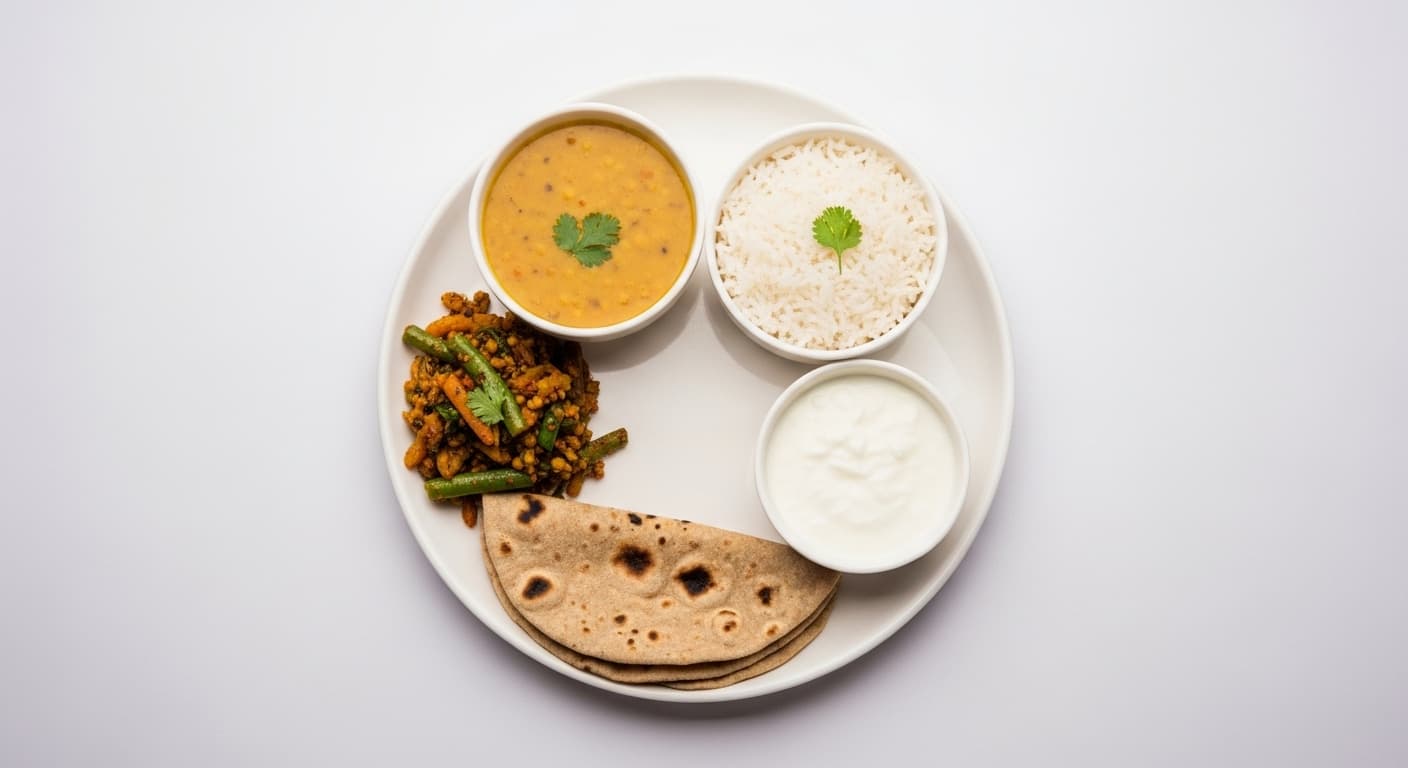
Complete Sattvic Thali: How to Build the Most Balanced Indian Meal
A wholesome Indian recipe crafted for health-conscious eating: nutritious, delicious, and easy to make at home.
The traditional Indian thali, when properly composed, is one of the most nutritionally complete meal formats in world cuisine. It naturally includes protein (dal), complex carbohydrates (roti or rice), fibre (sabzi), probiotics (curd), and minerals (pickle in small amounts). "Sattvic" in Ayurvedic tradition refers to foods that are pure, light, and nourishing: specifically excluding garlic, onion, and processed foods. A sattvic thali in proper proportion: 1 to 2 rotis, a small katori of rice, dal, two sabzis, curd, salad, and something small and sweet.
This recipe doesn't invent a new dish. It gives you the blueprint for assembling a complete, balanced meal from the Indian kitchen, with every component selected for nutritional completeness, digestive harmony, and genuine deliciousness. This is everyday Indian food at its nutritional best, not a restrictive diet food. Your grandparents probably ate exactly this.
Ingredients
How to Make It
Start with rice and dal: Cook rice. Pressure cook toor dal with turmeric, then make a simple onion-tomato tadka. A basic dal takes about 25 minutes start to finish.
While the dal cooks, make the sabzis: Choose one wet sabzi (palak paneer, dal palak, or a lentil curry) and one dry sabzi (bhindi, carrot-beans, or aloo gobhi with minimal oil).
Make fresh rotis: Whole wheat atta kneaded to a soft dough, divided into balls, rolled and cooked on a tawa. Two rotis per person.
Prepare the raw salad: Slice cucumber, tomato, and carrot. Dress with lemon juice and a pinch of chaat masala, no oil needed.
Set the plate in the traditional thali format: rice to the right, rotis above, dal at the top, sabzis to the left, curd at bottom right, salad at bottom left, pickle in a small bowl.
Eat in the traditional sequence: Start with sabzi and roti, move to dal and rice, finish with curd and rice.
The eating sequence genuinely matters, starting with fibre-rich sabzi and roti before the higher-carb rice significantly reduces the glycaemic response of the entire meal.
Nutrition per serving
* Approximate values per serving
Health Benefits
The sattvic thali achieves complete nutrition through complementarity: wheat roti combined with toor dal creates a complete protein with all essential amino acids. Two sabzis provide Vitamin A from orange and red vegetables, iron and Vitamin C from green vegetables, fibre, and phytonutrients across the full spectrum. Fresh curd brings probiotics, calcium, and additional protein. Raw salad provides enzymes and Vitamin C that enhance iron absorption from the dal and roti. This is the nutritional completeness that individual "superfood" recipes cannot achieve: the synergy of multiple food groups eaten together, a practice refined over 5,000 years of Indian culinary and medical tradition.
Pro Tips
- →Cook dal and rice simultaneously, both take 20 to 25 minutes. Sabzis take 15 to 20 minutes. Make rotis last, fresh, and eat them hot.
- →Two different vegetables is the key principle: one green vegetable and one orange or yellow vegetable in each thali for the most complete phytonutrient coverage.
- →Fresh curd, not flavoured yogurt, the probiotic and calcium benefit comes from fresh, unflavoured curd. Commercially sweetened yogurt is not a substitute.
- →Pickle is not decoration, a tiny bit of traditional pickle (½ tsp) provides digestive enzymes, beneficial bacteria, and appetite stimulation. Keep it minimal due to the salt content.
Variations
- 1Replace white rice with jowar or bajra roti for a millet-based thali with lower GI and higher mineral content.
- 2Diabetic thali: Replace white rice with a small katori of brown rice or barley, and increase dal to 2 katoris for higher protein and fibre.
- 3Summer thali: Include kadhi (curd curry) instead of dal, cold curd rice instead of plain curd, and raw mango chutney.
Frequently Asked Questions
You Might Also Like
Get a Personalised Diet Plan
4.9★ on Google • 7,000+ clients helped

