Natural Alternatives to Ozempic: What Actually Works for Indians
Natural alternatives to Ozempic: what actually works for Indians
Ozempic is a prescription drug, not a diet plan, and no food replaces it. This guide covers what GLP-1 medication actually does and which Indian foods and habits genuinely support appetite control and blood sugar.
There is no food or supplement that does what Ozempic does. Ozempic (semaglutide) is a prescription GLP-1 medication that changes appetite and blood sugar through direct hormonal action. Natural strategies can support the same two systems, appetite and blood sugar, using fiber, protein, movement, and sleep. It is slower than a drug and it is not a substitute. It is a gentler approach to a related problem.
We are writing this because searches for "natural Ozempic alternative" have gone up sharply, and most of what shows up is either selling a supplement or pretending one food can do a drug's job. The DietGhar team works with clients managing weight, PCOS, thyroid, and diabetes every day, and this question comes up constantly. Here is the honest version, without the hype.
What does Ozempic actually do in the body?
Ozempic belongs to a class of drugs called GLP-1 receptor agonists. GLP-1 is a hormone your gut already makes after you eat, and the drug mimics it at much higher, sustained levels. It does three things: slows how fast food leaves your stomach, signals to your brain that you are full sooner, and helps your pancreas release insulin more appropriately.
This is why people on it eat less without constant hunger. It is a real, measurable effect, not something a bowl of oats can replicate. It also comes with real side effects for a meaningful number of users, including nausea, digestive upset, and muscle loss alongside fat loss. It requires ongoing use, and weight tends to return once the medication stops unless eating habits have changed too. None of this is a criticism of the drug. It is a medical treatment with real effects and real trade-offs, and any decision about starting, continuing, or stopping it belongs with your doctor.
Why are so many Indians searching for natural alternatives?
Three reasons come up again and again with our clients. Cost is the biggest one. A month of Ozempic or Wegovy in India can run into thousands of rupees and is not always covered by insurance, which is simply not sustainable for the years it may take to see it through.
Access is the second. These drugs need a prescription and regular monitoring, harder to arrange outside major cities. The third is side effects: nausea, vomiting, and digestive discomfort are common enough that a real share of people stop within a few months. Add to this a reasonable instinct many Indians have, to try food and lifestyle first before a long-term prescription drug. That instinct is not wrong. It just needs accurate information behind it, which is what the rest of this article is about.
Is there a real natural substitute for Ozempic?
No. Anyone telling you a single Indian spice or superfood replaces a GLP-1 drug is selling you something. What does exist is a set of food and lifestyle levers that influence the same two things Ozempic targets, just through slower, milder, more indirect pathways.
Fiber-rich meals slow gastric emptying in a way that overlaps a little with what GLP-1 drugs do, at a fraction of the intensity. High protein intake triggers your own natural satiety hormones. Better sleep changes hunger hormones like ghrelin and cortisol. None of this happens overnight, and none of it works if you do it once. It works as a sustained pattern, the same way the drug only works while you keep taking it.
Which Indian foods support appetite control through fiber?
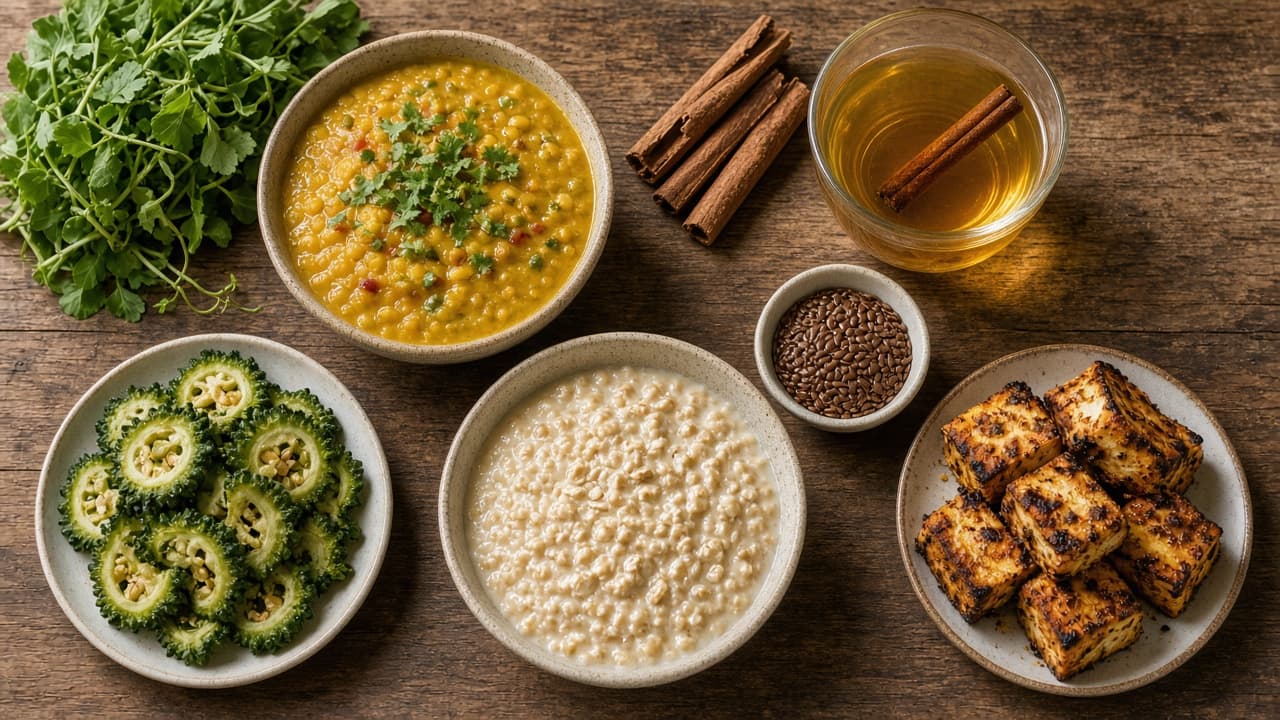
Fiber is the single most underused lever in Indian diets right now, mostly because polished rice, maida, and refined snacks have pushed it out of daily meals. Whole dal with the skin on, like whole moong or chana dal, digests slower and keeps you full longer than a peeled, split version. A katori of rajma, chana, or lobia adds fiber and protein in one dish.
A generous serving of bhindi, methi, palak, or any seasonal sabzi with your roti adds bulk and fiber without many calories, and bulk in the stomach is one of the simplest ways to feel satisfied on less food. Isabgol (psyllium husk) with warm water at night is a genuinely useful, inexpensive fiber source Indian households have used for decades, and its gel in the gut can help even out post-meal blood sugar spikes. Whole grains like jowar, bajra, and brown rice behave differently in the body than white rice or maida because of that same fiber. Whole fruit with the skin on, like guava, apple, or papaya, gives you fiber and natural sugar together, a very different experience for your blood sugar than fruit juice.
If you are not sure how much of this you need each day, DietGhar's free calorie calculator is a good place to find your baseline before you start adjusting.
Can protein reduce hunger the way GLP-1 drugs do?
Protein is the other major lever, and most Indian diets fall short here, especially at breakfast. It triggers your own natural satiety hormones and digests slower than carbohydrates, which is a big part of why a protein-rich breakfast keeps you fuller until lunch than a carb-heavy one like poha or toast alone.
Paneer, curd, eggs, chana, rajma, soya chunks, and moong dal are accessible, affordable protein sources in an Indian kitchen. A bowl of curd with breakfast, a boiled egg mid-morning, and dal at both main meals can meaningfully change how hungry you feel through the day. This is not about bodybuilder-level protein targets. It is about making sure protein shows up at every meal instead of being an afterthought in the evening dal.
Do eating slowly and walking after meals really help?
Yes, and both are backed by fairly solid evidence, even though they sound too simple to matter. It takes roughly 15 to 20 minutes for fullness signals to reach your brain after you start eating. Eating quickly means you can finish a meal well before your brain has registered how much you have actually had. Slowing down and putting your spoon down between bites genuinely changes how much food it takes to feel satisfied.
A short walk of 10 to 15 minutes after a meal helps your muscles pull glucose out of the bloodstream, which blunts the post-meal blood sugar spike that follows a typical rice or roti-heavy meal. It is one of the cheapest, most accessible interventions available, and it costs nothing but a little time.
Does sleep actually affect appetite and blood sugar?
More than most people realize. Poor sleep raises ghrelin, the hormone that drives hunger, and lowers leptin, the hormone that signals fullness. It also reduces insulin sensitivity, so the same meal produces a higher blood sugar response after a bad night than after a good one. Late nights and irregular sleep are common in Indian cities, and this is one of the quieter reasons weight and blood sugar management stall even when the diet looks reasonable on paper.
A consistent 7 to 8 hours, with reasonably regular sleep and wake times even on weekends, is not a minor add-on. It is directly connected to the two systems this whole article is about.
Is berberine really "nature's Ozempic"?
Berberine has picked up that nickname because some research shows it can improve insulin sensitivity and support healthier blood sugar levels. It comes from plants like Berberis and has a long history in Ayurvedic and Chinese medicine.
Here is the part left out of most posts about it. Berberine is a supplement, not a food, and it interacts with several common medications, including those for diabetes, blood pressure, and blood thinning. It can cause its own digestive side effects, and the research behind it is nowhere near the scale of the clinical trials behind semaglutide. Calling it "nature's Ozempic" is a marketing shortcut, not a medical equivalence. If you want to try it, talk to your doctor first, especially if you take other medication, are pregnant, or manage thyroid disease or diabetes. This is not a supplement to self-prescribe based on a reel.
So what should you actually do?
Build a plate around fiber and protein at every meal, walk after you eat, eat slower than you currently do, protect your sleep, and stay consistent for months rather than days. None of these alone will give you Ozempic-level results, and we would be lying if we said otherwise. Together, sustained over time, they genuinely help with appetite, cravings, and blood sugar for a lot of people, without a prescription or a monthly bill running into thousands of rupees.
What actually makes this work is whether the plan fits your body, schedule, and health conditions, rather than a generic list off the internet. That is what a dietitian does that a blog post cannot. If you manage insulin resistance or prediabetes alongside your weight, our diabetes diet guide for India goes deeper into the blood sugar side. And if you want a plan built around your own numbers, DietGhar plans from ₹499 for 15 days, ₹999 for 30 days, and ₹1,999 for 75 days is built by qualified dietitians who see this exact case every week.
Get a plan built around your body, not a hashtag
There is no shame in wanting Ozempic-like results without the cost or the side effects. The honest path there is fiber, protein, movement, sleep, and consistency, tailored to your body rather than copied off a reel. DietGhar's dietitians build plans at ₹499 for 15 days, ₹999 for 30 days, and ₹1,999 for 75 days that account for your health history, your food preferences, and your actual daily life. Over 7,000 clients since 2016, 4.9 stars, real nutritionists behind every plan. See the plans and pricing here.
Frequently Asked Questions
Is there a natural food that works like Ozempic?
No single food produces the same effect as Ozempic. Ozempic is a prescription GLP-1 medication that acts on specific hormone receptors at levels far beyond what any food can trigger. High-fiber and high-protein foods, like dal, vegetables, curd, and paneer, can support appetite control and blood sugar through their own natural pathways, but this is a supportive effect, not a drug-equivalent one.
Can Indian foods help control appetite naturally?
Yes. Whole dal, seasonal vegetables, isabgol, whole fruit, curd, paneer, and eggs all support fullness and steadier blood sugar through fiber and protein content. Eating these consistently at every meal, alongside slower eating and a short walk after meals, has a real, evidence-backed effect on appetite over time, though it works more gradually than medication.
Is berberine safe to take instead of Ozempic?
Berberine is a supplement that may support blood sugar management, but it is not a proven substitute for Ozempic and it is not risk-free. It can interact with diabetes, blood pressure, and blood-thinning medications, and it can cause digestive side effects. Anyone considering berberine should speak with a doctor first, particularly if they take other medication or manage a condition like diabetes or thyroid disease.
Why are so many people looking for alternatives to Ozempic in India?
Cost, access, and side effects are the three main reasons. GLP-1 medications are expensive on an ongoing basis, require regular doctor monitoring that is harder to arrange outside major cities, and cause nausea or digestive discomfort for a real share of users. This has led many people to look for food and lifestyle-based approaches to support similar goals, especially as a first step.
How long does it take for natural methods to show results compared to Ozempic?
Natural approaches through fiber, protein, sleep, and walking after meals tend to show visible change over weeks to months, not days, and results depend on consistency. Ozempic works faster because it acts directly on hormone receptors at a fixed, sustained dose. A dietitian-built plan tailored to your body, activity level, and health conditions gets you the most realistic, sustainable timeline for the food-based route.
Sources
- Dietary Guidelines for Indians 2024, ICMR National Institute of Nutrition (NIN), Hyderabad
- Indian Food Composition Tables (IFCT) 2017, ICMR National Institute of Nutrition (NIN), Hyderabad
- Healthy diet (fact sheet), World Health Organization
Get Your Personalized Diet Plan Today!
This article provides general information about weight management. Download the DietGhar app for a customized Indian diet plan tailored to your body type, health goals, and food preferences: with daily tracking and expert support.
About the Author
Written by The DietGhar Team nutritionists, helping clients since 2016 with personalised Indian diet plans. How our nutritionists work
Popular guides
Diet plans
Articles
- PCOS and PCOD diet plan, 7-day Indian meal plan
- Insulin resistance diet for Indians
- PCOS acne and skin: diet changes
- Indian keto diet for beginners
- Stress eating and cortisol
- Gluten-free Indian food for celiac disease
- Nutrition for Indians over 60
- South Indian diet for weight loss
- North Indian diet makeover
- Breastfeeding diet chart
- Winter diet and immunity foods
- Best Indian foods for hair growth
- Why crash diets fail
Find a Dietitian Near You
Get personalized nutrition plans from qualified nutritionists in your city. Online consultations available across India.

