Fibermaxxing: The High-Fibre Indian Diet Trend for Weight Loss and Gut Health
Fibermaxxing: The High-Fibre Indian Diet Trend for Weight Loss and Gut Health
Fibermaxxing is 2026's biggest nutrition trend, and Indian kitchens are already built for it. Here is how to eat 25-30g of fibre a day using dal, millets, vegetables and everyday foods, plus a sample meal plan.
Fibermaxxing is exactly what it sounds like: eating fibre on purpose, at every meal, until you reach somewhere between 25 and 30 grams a day. It is the top nutrition trend of 2026, and unlike most trends, this one is not a gimmick. Fibre keeps you full for longer, steadies your blood sugar, feeds the good bacteria in your gut, and supports healthy digestion and cholesterol.
The DietGhar team gets asked about fibermaxxing almost daily now, mostly by clients wondering if it is another wellness fad with a catchy name. The honest answer: most Indians eat somewhere between 10 and 15 grams of fibre a day, less than half of what supports weight loss and gut health. You do not need imported chia pudding or expensive supplements to fix this. Your own kitchen, the one with dal, sabzi and atta in it, has almost everything you need.
Why does eating more fibre actually help with weight loss?
Fibre works on weight in three ways, and knowing all three explains why this is useful biology, not magic.
First, fibre adds bulk and takes longer to digest, so it sits in your stomach and keeps hunger away. A bowl of rajma with rice fills you up in a way plain white rice never will, even at similar calories. Second, soluble fibre slows how fast sugar enters your bloodstream, meaning fewer sharp spikes and fewer sudden cravings an hour later. Third, fibre that reaches your large intestine undigested becomes food for your gut bacteria, and a healthier gut microbiome is linked to better metabolism and more stable weight.
Fibre also helps with cholesterol in a smaller way, since soluble fibre binds to some of it in the gut and helps carry it out. The blood sugar benefit matters most if you are managing diabetes or prediabetes, which is why fibre features heavily in DietGhar's diabetes diet guide. None of this means fibre alone melts weight off. It means fibre makes it easier to stick to a calorie-appropriate diet without feeling deprived, and that consistency is what drives results.
What foods should you eat for a high-fibre Indian diet?
This is where fibermaxxing gets simple if you already eat Indian food. You need more of what is on your thali, plus a few small habits.
Dals and legumes
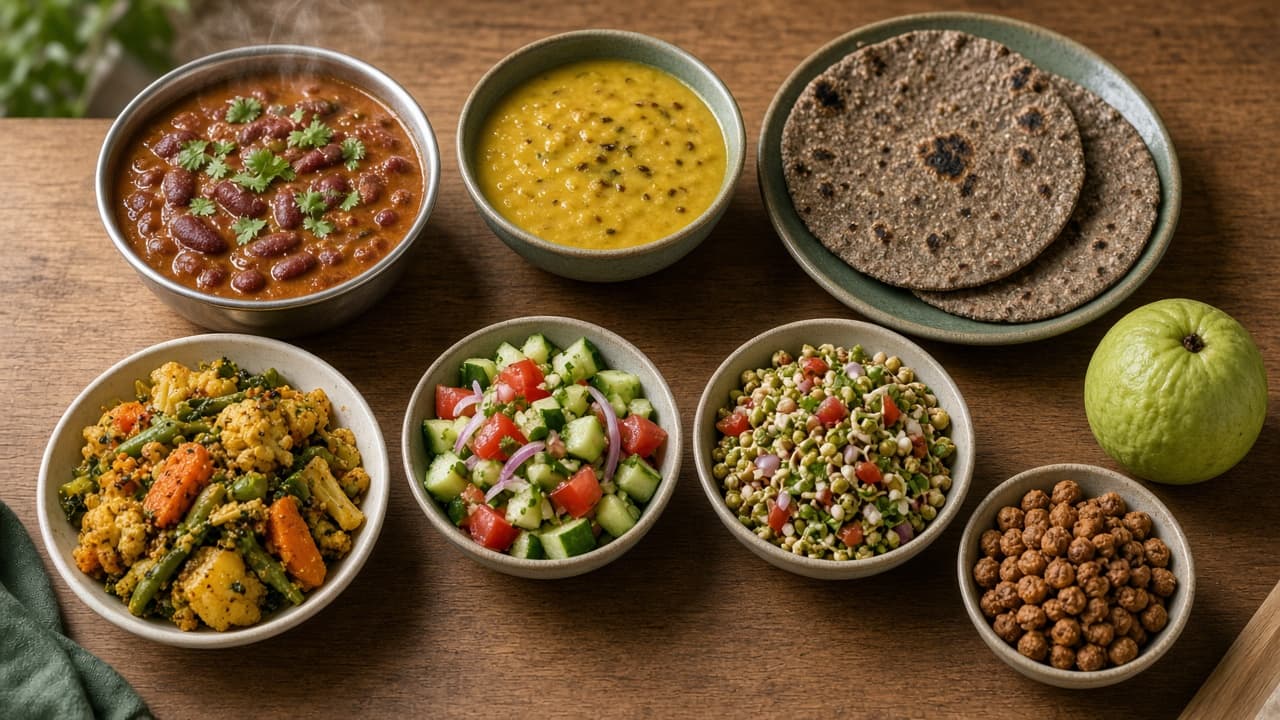
Rajma, chana and moong are some of the highest-fibre foods anywhere. A cooked cup of rajma gives around 12-13 grams, chana around 11-12 grams, and moong dal roughly 7-8 grams, plus a good hit of plant protein. Eating dal twice a day, once as a main dal and once as chana chaat or sprouted moong, moves the needle further.
Whole grains and millets
Bajra, jowar and ragi all beat regular wheat on fibre, and all three are traditional staples, not new health foods. A bajra or jowar roti carries close to double the fibre of a plain maida roti. Whole wheat atta with the bran intact and oats work well too. Swap two or three white rice or maida meals a week for millet-based ones and it adds up.
Vegetables, salad and fruit with the skin on
Most Indian meals already include a sabzi, and a side salad of cucumber, tomato and onion adds a few more grams almost for free, provided the portion is a proper bowl and not just a garnish. Fruit matters too, but only if you keep the skin on. Apples, guavas and pears carry much of their fibre there, and a medium guava alone gives around 5 grams.
Nuts, seeds and isabgol
Flax and chia give roughly 4-5 grams of fibre per tablespoon, and ground flax stirred into curd or roti dough is an easy way to add it without changing what you eat. Isabgol, long used in Indian homes for constipation, is even more concentrated: one tablespoon in warm water or milk gives around 4-5 grams and doubles as a gentle prebiotic, useful at bedtime if you are still short of your target.
What does a simple high-fibre Indian day look like?
This is a sample day built to land around 28-30 grams of fibre using ordinary foods, no powders or imported products required.
- Early morning: Warm water with lemon. Optional 4-5 soaked almonds.
- Breakfast: Two ragi or jowar dosas with sambhar and a small serving of vegetable chutney. Around 7-8 grams of fibre.
- Mid-morning: One guava or apple, eaten with the skin. Around 5 grams of fibre.
- Lunch: One bowl of rajma or chana, two bajra or jowar rotis, a side vegetable sabzi, and a bowl of cucumber-tomato salad. Around 13-14 grams of fibre.
- Evening: A small bowl of roasted chana or sprouted moong chaat with a teaspoon of flax seed powder mixed in. Around 4-5 grams of fibre.
- Dinner: One bowl of moong dal, a leafy green sabzi such as palak or methi, and one jowar roti or a small portion of brown rice. Around 8-9 grams of fibre.
- If short of target: One teaspoon of isabgol in warm water before bed, adding another 4-5 grams.
Total: approximately 28-30 grams of fibre. This is a general framework, not a fixed plan for everyone, since your ideal calorie and fibre target depends on your body and activity level. Check your daily calorie needs with DietGhar's free calorie calculator, and for the actual meals worked out for your body, DietGhar plans start at ₹499 for 15 days, ₹999 for 30 days, and ₹1,999 for 75 days does exactly that.
Can too much fibre cause problems?
Yes, and this is the part most social media posts about fibermaxxing skip. Jump from 12 grams a day to 30 overnight and your gut will not thank you for it. Sudden high fibre intake commonly causes bloating, gas and discomfort, because gut bacteria need time to adjust. Increase fibre gradually over two to three weeks and drink enough water alongside it (at least 8-10 glasses a day), since fibre without enough water can worsen constipation instead of relieving it.
There is also a lesser-known effect worth knowing. Very high fibre, especially from wheat bran and certain whole grains, can mildly reduce absorption of minerals such as iron, calcium and zinc, since fibre binds to them in the gut. This is not a reason to avoid fibre, just a reason to stay in the 25-30 gram range and eat a varied diet rather than leaning on one or two sources.
If you have IBS, colitis, or any other diagnosed gut condition, increase fibre with extra care. Some high-fibre foods that suit most people can worsen symptoms in these conditions, and the right sources vary from person to person. It is worth doing this with a dietitian who can guide the pace and pick the right foods, rather than a generic target from the internet.
Does fibermaxxing actually help with weight loss?
It helps, but it is not a shortcut. Fibre supports weight loss indirectly, by keeping you full on fewer calories and reducing the blood sugar swings that trigger snacking. What it does not do is override a calorie surplus. Eating 30 grams of fibre a day while still eating more calories than your body needs will not produce weight loss on its own.
The DietGhar team sees this play out with clients often. The ones who lose weight and keep it off are not chasing a single trend, whether that is fibermaxxing, intermittent fasting or protein loading. They build a few solid habits, fibre being a genuinely useful one, and stay consistent with portions and calories over months rather than days.
Get a High-Fibre Indian Diet Plan Built for Your Body
Knowing which foods have fibre is one thing. Knowing how much of each to eat for your specific calorie target, body type and health condition is another. DietGhar's dietitians build plans at ₹499 for 15 days, ₹999 for 30 days, and ₹1,999 for 75 days that include the right fibre, protein and calories for your body, using real Indian food rather than imported superfoods. Over 7,000 clients since 2016, 4.9 stars, built by qualified humans. See the plans and pricing here.
Frequently Asked Questions
What exactly is fibermaxxing and is it just a fancy word for eating more fibre?
Fibermaxxing is the deliberate practice of eating fibre-rich foods at every meal to reach around 25-30 grams a day, instead of treating fibre as an afterthought. For Indian eaters, that mostly means more dal, millets, vegetables and whole fruit, tracked with intent.
How much fibre should I eat each day for weight loss?
Most adults benefit from around 25-30 grams a day, well above the 10-15 grams most Indians currently eat. Reaching it through dal, millets, vegetables, fruit and a little isabgol or seeds supports satiety and steadier blood sugar, which makes weight loss easier to sustain.
Which Indian foods have the highest fibre content?
Rajma and chana are among the highest, at roughly 11-13 grams per cooked cup. Moong dal, bajra, jowar and ragi follow closely, along with isabgol at around 4-5 grams per tablespoon. Vegetables, whole fruit with the skin on, and seeds like flax and chia round out the list.
Can too much fibre cause bloating or gas?
Yes, especially if you increase fibre suddenly. Gut bacteria need time to adjust, and a sudden jump can cause bloating, gas and discomfort. Raise your intake gradually over two to three weeks and drink plenty of water alongside it, since water is what helps fibre move rather than sit and ferment.
Is fibermaxxing safe if I have IBS or another gut condition?
It can be, but it needs more care than the general advice here. Some high-fibre foods that suit most people can worsen symptoms in IBS or another diagnosed gut condition, and the right sources vary from person to person. It is best to increase fibre slowly and ideally with a dietitian who can tailor the plan to your specific triggers.
Sources
- Dietary Guidelines for Indians 2024, ICMR National Institute of Nutrition (NIN), Hyderabad
- Indian Food Composition Tables (IFCT) 2017, ICMR National Institute of Nutrition (NIN), Hyderabad
- Healthy diet (fact sheet), World Health Organization
Get Your Personalized Diet Plan Today!
This article provides general information about weight management. Download the DietGhar app for a customized Indian diet plan tailored to your body type, health goals, and food preferences: with daily tracking and expert support.
About the Author
Written by The DietGhar Team nutritionists, helping clients since 2016 with personalised Indian diet plans. How our nutritionists work
Popular guides
Diet plans
Articles
- PCOD diet chart, 7-day Indian meal plan
- Insulin resistance diet for Indians
- PCOS acne and skin: diet changes
- Indian keto diet for beginners
- Stress eating and cortisol
- Gluten-free Indian food for celiac disease
- Nutrition for Indians over 60
- South Indian diet for weight loss
- North Indian diet makeover
- Breastfeeding diet chart
- Winter diet and immunity foods
- Best Indian foods for hair growth
- Why crash diets fail
Find a Dietitian Near You
Get personalized nutrition plans from qualified nutritionists in your city. Online consultations available across India.

