
Emotional Eating: Why Indian Women Eat Their Feelings and How to Stop
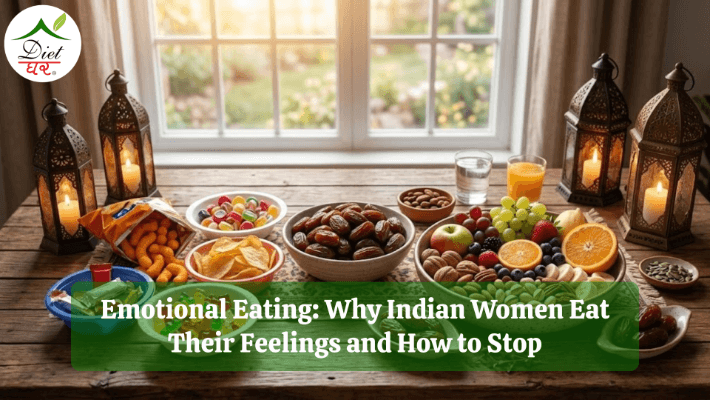
She finishes a difficult phone call with her mother-in-law and walks directly to the kitchen. She is not hungry, she ate 90 minutes ago. But she opens the refrigerator and begins eating the leftover dal with a spoon, standing at the counter, not really tasting it. She eats until something in her chest unclenches slightly. Then she feels worse, not just because she ate when not hungry, but because she did not have any control over it. It just happened.
This is emotional eating. It is not rare. It is not a sign of weakness or an absence of self-control. Research suggests that 40–60% of women use food as a primary coping mechanism for negative emotions at least occasionally, and approximately 20–25% do so in ways that significantly impact their health and relationship with food. Among Indian women specifically, the prevalence may be even higher, and the cultural context shapes it in specific ways that generic advice about "recognising hunger cues" fails to address.
Why Food? The Neurochemical Answer
Emotional eating is not irrational. It works, at least in the short term, and this is precisely why it persists.
Eating palatable food (sweet, salty, fatty, or a combination) activates the brain's dopamine reward circuitry, providing temporary relief from negative emotional states. Sweet foods specifically trigger opioid release (beta-endorphins) which have direct pain-reducing and mood-lifting effects. Carbohydrate consumption increases tryptophan transport to the brain, raising serotonin. The "calm" neurotransmitter.
The body learns: negative emotion → eat → feel slightly better → negative emotion → eat. Over time, this pairing strengthens into an automatic conditioned response. The gap between the emotional trigger and the eating behaviour narrows until it feels instantaneous and involuntary. And because the foods involved are typically highly palatable (mithai, chips, biscuits, namkeen, chai with sugar), the neurochemical reinforcement is strong.
Why Indian Women Are Specifically Vulnerable
Emotional eating exists across cultures and genders. But specific features of Indian women's social and cultural context create particular vulnerability:
Suppression of emotional expression: Many Indian women have been socialised against expressing anger, disappointment, frustration, or grief openly. "Don't create a scene." "Be patient." "Think of the family." Emotions that cannot be expressed tend to find other outlets, and food is always available, socially acceptable, and carries no cost in terms of family harmony.
Food as the primary language of care: In Indian family culture, care is expressed through food. Mothers express love by feeding. Celebrations are food events. Grief is managed with food (cooking for the bereaved is how communities support each other). The conflation of emotional states with food is deeply woven into cultural experience from childhood. When emotional regulation is needed, food is the culturally familiar tool.
Self-neglect as virtue: Indian cultural narratives frequently celebrate women who eat last, eat least, and sacrifice their own needs for family. Many Indian women have a poorly developed sense of personal entitlement to pleasure and comfort. Eating, particularly eating "indulgent" food, may be the only permissible form of self-care or self-soothing available within the cultural script.
Chronic stress without adequate outlets: Many Indian women manage extraordinary stress loads, professional work, household management, childcare, elder care, social obligations with limited access to physical exercise, social time, therapy, or personal space. When all the adaptive stress outlets are blocked or unavailable, food absorbs the emotional surplus.
High food availability and proximity: Indian kitchens and homes typically have food available at all times. The cultural hospitality norm means food is constantly present in work and social environments. Access barriers to emotional eating are therefore minimal.
Recognising Your Emotional Eating Pattern
The first step is honest recognition. Emotional eating has specific features that distinguish it from physical hunger:
- It arrives suddenly and urgently, rather than gradually
- It craves specific foods (usually comfort foods) rather than "anything edible"
- It occurs in response to a specific emotional state, stress, boredom, loneliness, anger, anxiety
- It does not respond to fullness, you continue eating past physical satisfaction
- It is followed by guilt, shame, or self-criticism rather than satisfaction
- It often happens while distracted (watching TV, scrolling phone) rather than consciously
Keep a one-week food and emotion journal. Note what you eat, when, and your emotional state at the time. Patterns emerge quickly, you may discover that your most uncontrolled eating consistently follows specific triggers: the daily afternoon energy crash, the end of a difficult work call, the return from your in-laws' house, or the 10 PM quiet when the day is finally done and the accumulated emotions of the day surface.
What Actually Helps (Beyond "Recognise Your Triggers")
Most advice on emotional eating stops at the identification phase: "notice your emotions before you eat." This is necessary but insufficient. Identifying the trigger does not resolve the underlying emotional need or provide an alternative way of meeting it. You notice the urge to eat when angry, then what? What do you do with the anger instead?
Address the Emotional Need Directly
The most fundamental shift is recognising that the emotion is the real problem, not the food. The food is a (temporarily effective) solution to the emotion. The sustainable solution addresses the emotion itself.
For each of your identified emotional eating triggers, identify an alternative response that genuinely addresses the underlying need:
- Boredom eating: The real need is stimulation or engagement. Alternatives: call a friend, begin a creative activity, go for a walk, read. Boredom is resolved by engagement, not calories.
- Stress eating: The real need is relief from cortisol and the physical tension of stress. Alternatives: five minutes of deep breathing (genuinely reduces cortisol biochemically), a 10-minute walk, progressive muscle relaxation, calling someone who makes you feel better. See our guide on cortisol and stress eating.
- Loneliness eating: The real need is human connection. Alternatives: call someone rather than eat alone. Recognise the actual need and address it rather than substituting food.
- Reward eating ("I deserve this"): The real need is acknowledgment and self-care. Alternatives: identify genuinely rewarding non-food self-care activities, a bath, reading, time outdoors, a few minutes of absolute quiet.
Build a Pause
The automatic quality of emotional eating. The near-instantaneous response from trigger to eating, can be interrupted by creating a consistent pause practice. When the urge to eat arises outside a meal time, practice a 10-minute pause before acting:
- Drink a glass of water or make a cup of herbal tea
- Sit down (not in the kitchen) for 10 minutes
- Name the emotion: "I am feeling ___"
- Rate the hunger on a scale of 1–10
- Ask: "What do I actually need right now?"
Many emotional eating episodes do not survive this 10-minute pause. Others persist, and that is information about a genuine emotional need that deserves attention rather than eating.
Improve the Food Environment
Reduce the path of least resistance. If biscuits are in the kitchen cupboard, they will be eaten during emotionally vulnerable moments. If they are not in the house, eating them requires a trip to the shop, which breaks the automatic pattern and allows the pause to occur naturally. Stock the kitchen with foods that you are comfortable eating even in emotional moments: roasted chana, nuts, fresh fruit, curd. Keep the most calorie-dense and emotionally rewarding foods less accessible.
Eat Regular Meals
Hunger significantly amplifies emotional eating. When blood glucose is low and physical hunger is present, emotional eating episodes are more intense and more difficult to interrupt. Eating regular meals on a schedule reduces the physical vulnerability that combines with emotional vulnerability to produce the most severe emotional eating episodes.
When Therapy Is the Right Answer
For women whose emotional eating is severe (affecting health, weight, relationships, or self-image significantly), individual therapy, particularly Cognitive Behavioural Therapy (CBT) or Dialectical Behaviour Therapy (DBT), is more effective than any dietary intervention. A therapist can help you understand the deeper emotional patterns that drive eating, develop genuine emotional regulation skills, and address the underlying beliefs about self-worth, emotional expression, and food that sustain the pattern.
Seeking therapy for emotional eating is not a sign of failure. It is recognising that the real problem is emotional, not nutritional, and getting help with the actual problem. In India, therapy remains stigmatised and underutilised. This is beginning to change. Online therapy platforms (available in Hindi and other Indian languages) have reduced the access barrier significantly for women who prefer privacy or who live in areas without local practitioners.
No diet plan resolves emotional eating. What diet planning can do is create a food environment and eating pattern that reduces vulnerability during difficult moments, ensures adequate nutrition to support mood and energy, and provides genuinely satisfying alternatives to emotionally-triggered eating. The emotional work must happen alongside the nutritional work, not as a substitute for it.
Sources
- Dietary Guidelines for Indians 2024, ICMR National Institute of Nutrition (NIN), Hyderabad
- Indian Food Composition Tables (IFCT) 2017, ICMR National Institute of Nutrition (NIN), Hyderabad
- Healthy diet (fact sheet), World Health Organization
Get Your Personalized Diet Plan Today!
This article provides general information about nutrition and diet planning. Download the DietGhar app for a customized Indian diet plan tailored to your body type, health goals, and food preferences: with daily tracking and expert support.
About the Author
Written by The DietGhar Team nutritionists, helping clients since 2016 with personalised Indian diet plans. How our nutritionists work
Popular guides
Diet plans
Articles
- PCOD diet chart, 7-day Indian meal plan
- Insulin resistance diet for Indians
- PCOS acne and skin: diet changes
- Indian keto diet for beginners
- Stress eating and cortisol
- Gluten-free Indian food for celiac disease
- Nutrition for Indians over 60
- South Indian diet for weight loss
- North Indian diet makeover
- Breastfeeding diet chart
- Winter diet and immunity foods
- Best Indian foods for hair growth
- Why crash diets fail
Find a Dietitian Near You
Get personalized nutrition plans from qualified nutritionists in your city. Online consultations available across India.

