
Can Diabetics Eat Rice? The Answer Every Indian Needs to Hear
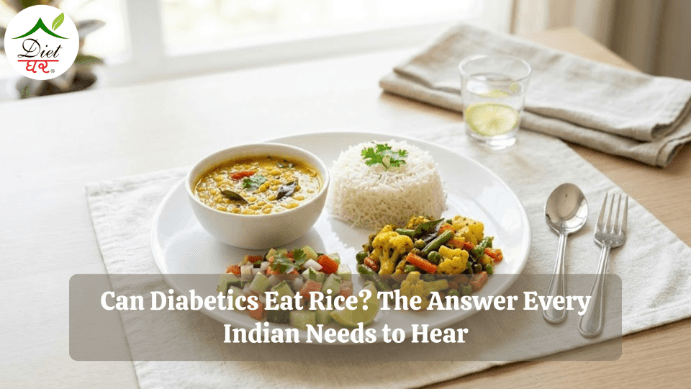
Every week, in every diabetes clinic across India, the same question comes up. A patient sits down, clutches their glucose meter report, and asks — "Doctor, can I eat rice?" In Tamil Nadu, it comes with a nervous laugh. In Bengal, it comes with genuine anxiety. And the standard answer they receive — "no rice, switch to roti" — sends them home confused, guilty, and, frankly, not any healthier.
This post is the honest, clinical answer to that question. Not the oversimplified one. The one that actually accounts for how Indians eat, what Indians cook, and what the research actually says.
1. Why This Is the #1 Question Indian Diabetics Ask
Rice is not just food in India. It is ritual. It is comfort. It is the first thing a mother feeds a child during annaprashana. For the 530 million people living in eastern and southern India, rice is eaten at least twice a day — often three times. Telling someone with Type 2 diabetes to simply eliminate rice is, medically speaking, unrealistic. And nutritionally? It may not even be necessary.
The reason this question dominates diabetes consultations is that patients have been told two completely opposite things. Some doctors say cut it out entirely. Some family members say eat it with ghee and it is fine. Some wellness Instagram accounts say switch to brown rice immediately. The confusion is real, and it has real consequences — patients either abandon their diabetes management plan because it feels culturally impossible, or they follow a plan that has nothing to do with how they actually live.
Diabetes management in India requires culturally grounded advice. That is precisely why dietitians working with patients on a diabetes diet in Chennai take a fundamentally different approach from a generic Western diet protocol — because the food landscape is entirely different.
2. The Truth About Rice and Blood Sugar
Let us start with glycemic index — but let us do it properly, not the way it gets oversimplified in most health articles.
Glycemic index (GI) is a scale from 0 to 100 that measures how fast a carbohydrate-containing food raises glucose in the blood, compared to pure glucose. Foods above 70 are considered high GI. White rice sits around 64–72 depending on the variety and cooking method. That is technically high GI — but that number alone does not tell you what happens inside your body after a real Indian meal.
Here is what that number ignores: the GI of a food is measured in isolation, eaten after an overnight fast, with no other food alongside it. Nobody in India eats plain rice on an empty stomach at 8 AM for their glucose test. The way rice actually gets eaten — with dal, sabzi, curd, or rasam — changes everything.
More practically relevant is glycemic load (GL), which accounts for how much carbohydrate you actually eat in a serving. A small portion of white rice has a moderate glycemic load even if its GI is high. This distinction matters enormously for realistic meal planning.
3. It Is Not Just the Rice — It Is the Combination
This is the most clinically important point, and it is the one most commonly missed in diabetes advice.
When you eat rice alongside protein and fat and fibre, the overall glycemic response of that meal drops significantly. The stomach empties more slowly. Glucose absorption slows down. The post-meal glucose rise is blunted.
Consider a standard South Indian meal: one cup of cooked rice, sambar (lentils, vegetables, tamarind), a vegetable dry sabzi, and a serving of curd. That meal — even though it contains rice — has a very different glycemic impact than a bowl of rice eaten alone. The lentils provide protein and fibre. The curd adds protein and fat. The tamarind in sambar has its own impact on digestion rate. The vegetables add bulk and slow gastric emptying.
Research published in the American Journal of Clinical Nutrition has consistently shown that the protein and fat content of a mixed meal can reduce the GI of that meal by 30–40% compared to the carbohydrate eaten alone. This is not theoretical — it is measurable with a continuous glucose monitor.
Practical takeaway: if you are a diabetic who eats rice, the sequence and combination of what you eat matters as much as the rice itself. Starting your meal with a small portion of vegetables or salad, then eating your protein (dal, curry, curd), and having the rice portion last — this simple sequence can reduce post-meal glucose significantly.
Dietitians working with patients on a diabetes diet in Kolkata regularly use this meal sequencing approach for patients who eat rice-heavy Bengali meals, and it works without requiring people to abandon their food culture entirely.
4. Which Type of Rice Is Actually Safer for Diabetics?
Not all rice is equal. Here is a straightforward comparison of the rice types available in Indian kitchens:
White Rice (Polished)
GI: 64–72. The bran and germ have been removed, taking fibre and some micronutrients with them. Digests quickly. Highest glycemic impact among common rice varieties. Still manageable in small portions within a mixed meal.
Brown Rice
GI: 50–55. The bran layer is intact, which adds fibre and slows digestion. Genuinely lower glycemic impact than white rice. The challenge: most Indians do not enjoy the texture, it requires longer cooking time, and it has a shorter shelf life. These are real barriers, not excuses.
Red Rice
GI: 55–60. Traditional in Kerala and parts of Tamil Nadu. The reddish-brown bran is rich in antioxidants (anthocyanins) and fibre. Nutritionally excellent. If you have grown up eating red rice, this is genuinely one of the better options for diabetes management.
Parboiled Rice (Ukda Chawal / Sela Rice)
GI: 38–50. This is the clinically underrated option. During parboiling, the rice is partially boiled while still in the husk, which drives nutrients from the bran into the grain. The starch structure changes in a way that makes it digest more slowly. Parboiled rice is common in Eastern India and widely available. For diabetics who are unwilling to switch to brown or red rice, parboiled white rice is a realistic and evidence-supported middle ground.
Basmati Rice
GI: 50–58. Lower GI than regular polished white rice due to its longer grain structure and starch composition. Aged basmati has an even lower GI. A reasonable choice for North Indian households where basmati is the cultural norm.
Practical hierarchy for diabetics: Parboiled rice ≥ Red rice ≈ Brown rice ≈ Aged basmati > Standard white rice. The best rice is ultimately the one you will actually eat consistently in appropriate portions.
5. Portion Is Everything: How Much Rice Can a Diabetic Eat?
This is where most diabetes diet advice becomes vague. "Eat less rice" is not clinical guidance. Here are actual numbers.
For a person with Type 2 diabetes managing their condition through diet and oral medication, a reasonable rice portion at a meal is typically 1/2 to 3/4 cup of cooked rice (approximately 75–100 grams cooked weight). This corresponds to roughly 25–35 grams of digestible carbohydrate from rice alone.
This is less than what most Indians serve themselves by default. A standard home serving of rice in a South Indian household is 1.5 to 2 cups cooked. In Bengal, it can be more. The adjustment required is not elimination — it is reduction paired with compensation from other parts of the meal.
If you reduce your rice from 2 cups to 3/4 cup, you need to increase your dal, vegetable sabzi, or protein portion to maintain satiety. Otherwise, you will be hungry, dissatisfied, and more likely to snack on something worse for your glucose than the rice you avoided.
Important individual variation: a person on insulin therapy has different carbohydrate targets than someone on metformin alone. A person with both diabetes and kidney disease has additional constraints. Someone who is physically active can handle a larger carbohydrate load than a sedentary office worker. These numbers must be individualised — which is why the complete diabetes diet guide is a starting framework, not a final prescription.
6. The Cooling Method: Does Cooled Rice Really Lower GI?
This claim has been circulating on Indian health forums for years. It is worth addressing directly, because the underlying science is real — but the practical impact is more modest than the internet suggests.
When cooked rice cools down to room temperature (or refrigerator temperature), some of the starch undergoes a process called retrogradation. Amylose starch chains re-crystallise into a more ordered structure, forming what is called resistant starch. Resistant starch behaves more like dietary fibre — it is not digested in the small intestine and does not raise blood glucose directly.
Studies, including work published in the journal Food Chemistry, have confirmed that cooling cooked rice increases its resistant starch content. Reheating the cooled rice does not fully reverse this — some resistant starch survives reheating.
The measured effect: cooling and reheating rice can reduce its GI by approximately 10–15 points. This means white rice at GI 70 might behave more like GI 58–60 after cooling and reheating. Meaningful, but not transformative. It is one tool among several, not a standalone solution.
The practical implication: if you cook rice in the morning and eat it for lunch or dinner after it has been refrigerated and reheated, you are getting a modest glycemic benefit at no additional cost or effort. This is genuinely useful information for Indian families where rice is cooked in large batches.
7. Rice Alternatives That Actually Work for Indians
Let us skip cauliflower rice. Most Indians who have tried it describe the experience as eating sadness with turmeric. The alternatives worth discussing are ones that work within the actual flavor preferences of Indian cooking.
Millet-Based Alternatives
Foxtail millet (kangni/thinai), little millet (kutki/samai), and barnyard millet (jhangora/kuthiraivali) can be cooked in exactly the same way as rice — pressure-cooked, served with dal and sabzi — and are difficult to distinguish texture-wise once you are used to them. GI ranges from 50–67 depending on the millet and preparation. These are traditional Indian grains that were common before the Green Revolution shifted agriculture toward paddy. They are increasingly available in urban grocery stores and online.
Broken Wheat (Daliya / Lapsi)
GI approximately 41–45. Can be cooked as a savoury dish with vegetables, used in khichdi, or as a base for curries in North India. The texture is very different from rice, which makes it a poor substitute for rice-specific dishes but a good independent preparation.
Oats Khichdi
Steel-cut or rolled oats cooked with moong dal, vegetables, and spices in the khichdi style. GI is lower than rice khichdi, and the beta-glucan fibre in oats specifically helps moderate post-meal glucose. This works especially well for people who find plain oats difficult to eat but enjoy savoury preparations.
Quinoa
GI approximately 53. Complete protein source, meaning it contains all essential amino acids — unusual for a grain. The disadvantage is cost and cultural unfamiliarity. Quinoa khichdi or quinoa pulao are genuinely palatable options for urban diabetics comfortable with some experimentation.
The Mixed Approach
One of the most practical strategies used in clinical practice is the rice-millet mix: cook rice with 30–50% millet substituted in. The glycemic impact drops, the texture remains largely familiar, and the cultural resistance is far lower than full substitution. Many patients who resisted switching to millets entirely accept this mixed approach with little pushback.
The Bottom Line for Indian Diabetics
Rice is not poison. Eliminating rice entirely is neither necessary nor, for most Indians, sustainable. What is necessary is understanding portion size, preparation method, meal composition, and the rice variety you are choosing — and making adjustments that fit your actual life and food culture.
A South Indian eating red rice with sambar, rasam, and curd in appropriate portions is making a nutritionally sound choice. A North Indian eating 3/4 cup of aged basmati with dal makhani and sabzi has a manageable meal. A Bengali eating parboiled rice — the traditional seda chawal — with machher jhol is not nutritionally worse off than someone eating brown rice they dislike.
What makes diabetes management fail is not rice. It is the combination of overconsumption, inadequate protein, poor meal timing, no physical activity, and — critically — advice that feels so disconnected from real Indian life that patients quietly stop following it.
Get a diabetes diet plan that works around your food habits, not against them, from a qualified clinical dietitian. Whether you are in the south or the east, personalised guidance makes the difference. Reach out to a specialist at dietician in Surat or dietician in Visakhapatnam to get a plan built around your actual meals, your glucose patterns, and your life.
Get Your Personalized Diet Plan Today!
This article provides general information about health and nutrition. Download the DietGhar app for a customized Indian diet plan tailored to your body type, health goals, and food preferences — with daily tracking and expert support.
About the Author
Written by the DietGhar expert team — certified dietitians with 10+ years of experience helping clients achieve their health goals through personalized Indian diet plans.
Find a Dietitian Near You
Get personalized nutrition plans from certified dietitians in your city. Online consultations available across India.

