
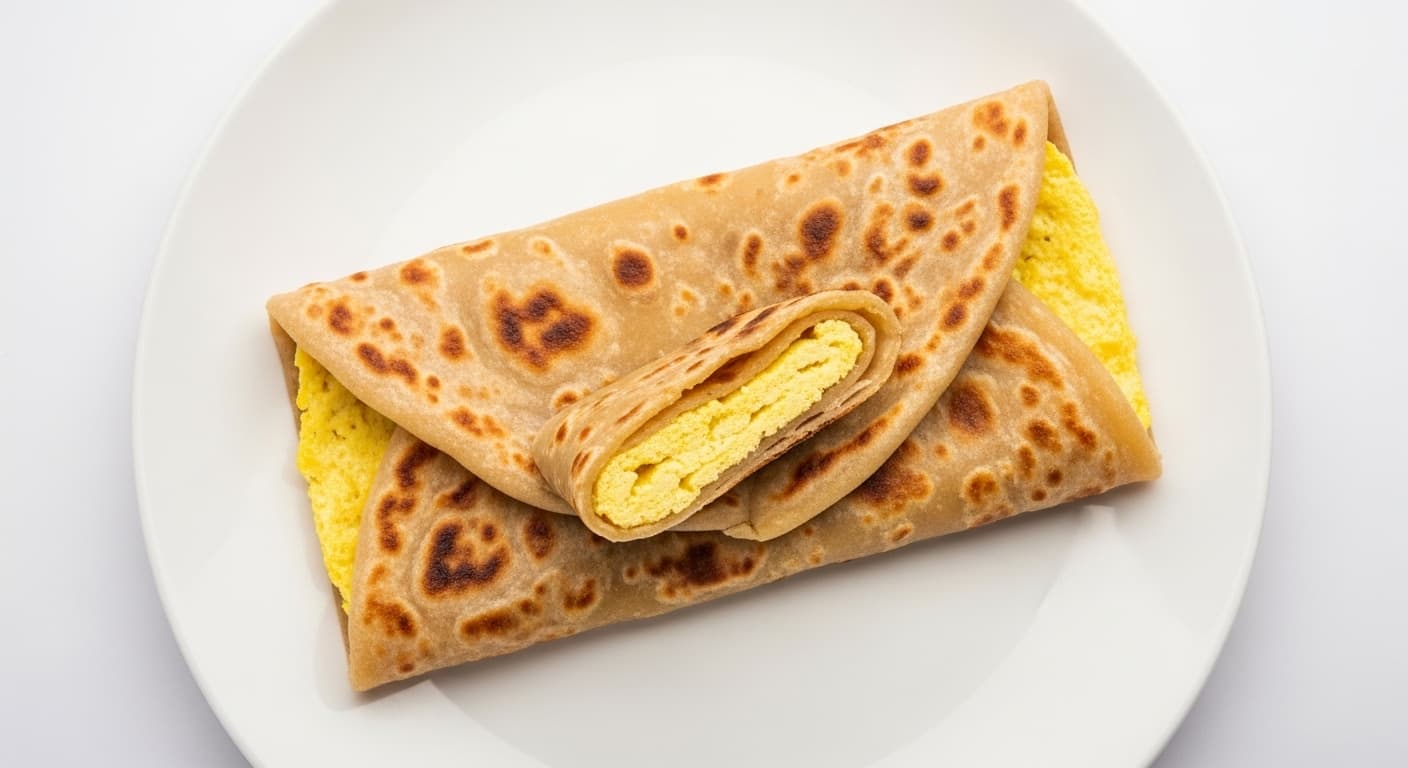
High-Protein Egg Paratha Post-Workout: 22g Protein for Muscle Recovery
A wholesome Indian recipe crafted for health-conscious eating: nutritious, delicious, and easy to make at home.
The perfect post-workout meal for Indian athletes doesn't need imported ingredients or complicated preparation. Egg paratha, a whole wheat flatbread with a spiced egg filling, provides 22g protein, complex carbohydrates for glycogen restoration, and a complete amino acid profile from whole eggs, making it one of the best post-workout meals available from everyday Indian cooking. Professional Indian cricketers, Haryana wrestlers, and competitive athletes from Punjab have used egg paratha as a training meal staple for generations (and for good reason.
This version uses whole wheat atta for additional fibre and B vitamins, keeps oil use minimal on the tawa, and spices the egg filling with coriander, jeera, and ginger) all of which have mild anti-inflammatory properties that support workout recovery. Eaten within 45 minutes of training alongside a glass of buttermilk or curd, this is a complete post-workout meal that rivals any commercial sports nutrition product.
Ingredients
How to Make It
Knead atta with water and ¼ tsp salt into a smooth, soft dough. Cover and rest for 15 minutes.
Prepare the egg filling: beat all 4 eggs with turmeric, salt, pepper, and cumin seeds. Add chopped onion, green chilli, coriander, and ginger. Mix well.
Divide the dough into 4 balls. Roll each into a 6-7 inch circle.
Heat a tawa on medium heat. Place a rolled dough circle on it. Cook 30 seconds until slightly bubbled on top.
Flip it. Immediately pour one quarter of the beaten egg mixture over the cooked side while it sits on the hot tawa.
Quickly spread the egg evenly over the surface. Let it set for 1 minute, it will partially cook on contact with the hot paratha.
Fold the paratha in half (or thirds) over the egg. Press down with a spatula.
Apply ¼ tsp ghee or oil, flip, and cook both sides until golden. The egg inside cooks through from the trapped heat. About 4-5 minutes per paratha total.
Nutrition per serving
* Approximate values per serving
Health Benefits
Two egg parathas provide 22g of complete protein with all essential amino acids, including 3.2g of leucine, the primary amino acid that triggers muscle protein synthesis through the mTOR pathway. Post-workout leucine intake above 2.5-3g is the threshold for maximum protein synthesis stimulation, and this meal crosses it. The whole wheat carbohydrates provide a mixed rapid-and-slow glucose release that replenishes muscle glycogen without causing excessive insulin spikes. Eggs are the highest biological value protein food (BV 100), meaning your body uses more of the protein per gram consumed than from almost any other source. The choline in egg yolks supports neuromuscular function, important for continued athletic performance across training sessions. The ghee adds a small amount of butyrate that reduces the intestinal inflammation common in high-volume training athletes.
Pro Tips
- →Pouring raw egg directly onto the partly-cooked paratha is the technique that makes this work, the egg cooks into the paratha rather than sitting on top as a separate layer.
- →Don't make the egg mixture too wet, excessive onion liquid makes the paratha soggy. Pat the onions dry or add them after squeezing out excess moisture.
- →Two parathas is the post-workout serving for 22g protein. For heavy strength days, add a third or have a glass of sattu milk alongside.
- →Serve with low-fat curd or chaas to add probiotic benefit and another few grams of protein to the post-workout meal.
Variations
- 1Paneer-egg paratha: mix 50g crumbled paneer into the egg filling for a 30g protein paratha, excellent for heavy resistance training days.
- 2Add 2 tbsp chopped spinach to the egg filling for iron and additional protein. The egg hides the spinach taste completely, great for kids too.
- 3For a low-carb option without atta: make a thin egg omelette in the pan, fold in half, serve with raw vegetables, 22g protein in 250 calories.
Frequently Asked Questions
You Might Also Like
Get a Personalised Diet Plan
4.9★ on Google • 7,000+ clients helped

