
Night Shift Worker Diet: How to Stay Healthy With Reversed Sleep Cycles
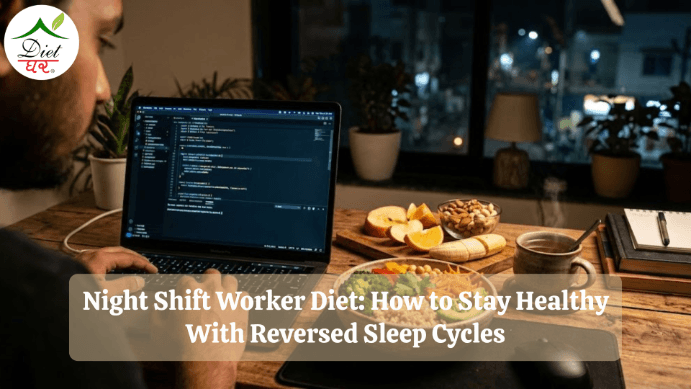
Millions of Indians work night shifts, nurses and doctors in hospitals, IT professionals in global service companies, factory workers on night production lines, security personnel, truck drivers, airline crew. The economic contribution is enormous. The health cost is rarely discussed.
Shift work disorder and the metabolic consequences of chronic circadian misalignment are serious medical issues. Night shift workers have significantly higher rates of obesity, type 2 diabetes, cardiovascular disease, gastrointestinal disorders, depression, and certain cancers compared to day workers, even when diet and lifestyle choices appear similar. The mechanism is not mysterious: the human body is profoundly governed by circadian clocks in every organ, and forcing your metabolic processes to run backwards night after night creates physiological strain that diet can partly mitigate but not eliminate.
This guide is for the Indian night shift worker who wants to eat in a way that minimises this damage, not with perfect solutions (there are none when the fundamental problem is working against your biology) but with the most evidence-based approaches available.
What Night Shift Does to Your Metabolism
Insulin resistance: The pancreas has a circadian rhythm, insulin secretion and cellular insulin sensitivity are both higher in the morning and lower at night. Eating large meals at night (when you are awake and hungry) means the same food produces higher and more prolonged blood glucose spikes than if eaten during daytime. Over years, this chronic nocturnal hyperglycaemia drives insulin resistance and type 2 diabetes. Studies show that even short-term sleep restriction and circadian disruption produces significant insulin resistance in healthy volunteers.
Fat storage: Adipose tissue (fat cells) has its own circadian clock. Fat breakdown (lipolysis) is primarily a daytime function; fat storage tends to predominate at night. Eating high-calorie food during the nighttime active period of a night shift worker creates a mismatch. The metabolic environment is more lipogenic than it would be if the same food were eaten during the day.
Gut motility changes: Gastrointestinal motility is lower at night in biological terms. Night shift workers experience higher rates of peptic ulcers, acid reflux, irritable bowel syndrome, and constipation. This is partly hormonal (ghrelin and motilin rhythms are disrupted) and partly mechanical (lying horizontal during daytime sleep increases reflux risk).
Cortisol dysregulation: Cortisol normally peaks in the morning, promoting wakefulness and mobilising glucose. Night shift workers have blunted or inverted cortisol rhythms, which impairs immune function, promotes fat storage, and affects mood and cognitive function.
Melatonin suppression: Light at night, especially the blue-spectrum lighting of hospital corridors, computer screens, and factory floors, suppresses melatonin. The sleep hormone but also a potent antioxidant and immune modulator.
The Core Dietary Strategy for Night Shift Workers
Principle 1: Minimise Eating During the Night Shift
The strongest evidence-based recommendation for night shift workers is to reduce total caloric intake during the night shift itself. Eating large meals between midnight and 6 AM maximises the metabolic damage of circadian misalignment. The goal is to sustain energy and alertness during the shift with minimal food, not because caloric restriction is generally healthy at night but because the metabolic cost of nocturnal eating is genuinely higher.
Practically: eat your primary meals before and after the shift. During the shift itself, focus on small snacks that maintain alertness without creating significant metabolic burden.
Principle 2: Align the Largest Meal With Daytime
When you are on night shift, your sleep occurs during the day. The meal timing advice for night shift workers is to have the largest, most calorie-dense meal in the afternoon, before going to sleep, when the body's metabolic machinery is still in "daytime mode." This is counterintuitive if you think of lunch as a "daytime" meal, but for a night shift worker whose shift starts at 10 PM, "lunch" at 3 PM before a sleep period is the most metabolically appropriate time for a substantial meal.
Principle 3: Light Meals During the Shift
Whatever you eat during the night shift should be:
- Low in total calories (400–600 kcal maximum for the entire shift)
- High in protein (protein is relatively better handled by nocturnal metabolism than carbohydrates or fat)
- Low in refined carbohydrates (avoid the glucose spikes that are particularly damaging at night)
- Easy to digest (the gut is working suboptimally at night)
Best Indian Foods for Night Shift Workers
Pre-Shift Meal (Before the Night Shift Starts, e.g. 8–9 PM)
This is your last substantial meal before the shift. Make it count nutritionally. It should be moderate in calories, balanced, and easy to digest without causing excessive heaviness during work.
- Moong dal khichdi with minimal ghee, easy on the gut, provides carbohydrate for sustained energy at shift start
- Two rotis with a light sabzi and dal
- Curd rice with a small salad
- Oats upma with vegetables
Avoid heavy, fatty, or very spicy food before a night shift. It increases acid reflux risk during work hours and causes digestive discomfort.
During-Shift Snacks (Midnight–5 AM)
These should be small, protein-forward, and low in refined sugar and carbohydrates.
- A small bowl of plain curd (high protein, probiotics for gut health)
- Handful of mixed nuts (almonds, walnuts, cashews), protein and healthy fat, no glucose spike
- Two or three hard-boiled eggs. The most convenient protein snack
- Moong sprout chaat (mild, no strong onion or spice that aggravates reflux)
- Roasted chana (small portion), protein, some carbohydrate, crunchy to maintain alertness
- A small portion of paneer cubes
Avoid during shift:
- Full meals (large rice or roti portions), blood sugar crash at 3–4 AM will leave you exhausted
- Sugar-heavy chai and coffee in large quantities, short-term alertness followed by energy crash; also disrupts sleep quality when the shift ends
- Fried snacks and namkeen, very heavy on the digestive system at night
- Sweet biscuits and packaged foods, glucose spikes at night are metabolically more damaging than daytime
Post-Shift Meal (After Night Shift, 7–8 AM)
This is often confused as "breakfast" but is metabolically more like a post-work recovery meal before sleep. Keep it moderate:
- A bowl of oats with nuts and banana, this will be metabolised partly during the approaching sleep period
- Two idlis with sambar (light, easy to digest)
- Plain curd with fruit
- A small portion of poha
Avoid: heavy, calorie-dense food immediately before trying to sleep during the day. It worsens sleep quality and sits heavily in the stomach.
Main Meal (Afternoon, 2–3 PM, Before Next Shift Begins)
This is the best time for your most nutritionally complete meal:
- Full dal, roti, sabzi, salad combination
- Brown rice or millets with a generous protein portion (paneer, eggs, chicken for non-vegetarians, or generous dal)
- Fresh fruit
Caffeine: Managing It Strategically
Caffeine is an expected and necessary tool for night shift workers. The challenge is using it in a way that supports alertness during the shift without destroying daytime sleep quality.
Strategic caffeine timing for night shift:
- Use caffeine in the first half of the shift (10 PM–2 AM) when alertness dips are most damaging
- Avoid caffeine after 3–4 AM. It will still be in your system when you need to sleep at 7–8 AM
- The half-life of caffeine is 5–6 hours, a cup of chai at 4 AM means significant caffeine in your blood at 9–10 AM when you are trying to sleep
- Maximum 200–300 mg caffeine per shift (2–3 cups of tea or 2 cups of coffee)
Sleep Quality: The Dietary Connection
Night shift workers need to sleep during the day, when light, noise, and the body's circadian "wake" signal all work against sleep. Diet can support sleep quality:
- Tryptophan-rich foods before sleep: Warm milk, curd, turkey (if available), eggs, tryptophan converts to serotonin and melatonin and supports sleep onset
- Magnesium: Deficiency (common in India) impairs sleep quality. Ensure adequate intake from nuts, seeds, and whole grains
- Avoid heavy meals before daytime sleep: They activate digestion when the body needs rest
- Avoid alcohol, though it induces initial drowsiness, alcohol disrupts sleep architecture and dramatically worsens sleep quality
Supplements Worth Considering
Vitamin D: Night shift workers sleep during daytime and are therefore rarely exposed to the midday sun required for vitamin D synthesis. Supplementation at 2,000 IU daily is nearly universal in this population.
Melatonin: 0.5–1 mg melatonin taken 30 minutes before desired sleep onset can help the circadian system adapt. This is a low-risk supplement and widely available over the counter in India at pharmacies.
Omega-3 fatty acids: Reduce the cardiovascular and inflammatory consequences of shift work. Two tablespoons of flaxseed powder, eight to ten walnuts, or one fish oil capsule (if not vegetarian) daily.
The health costs of long-term shift work cannot be fully offset by any dietary strategy. The circadian disruption itself is the problem. If you have the choice of reducing night shift frequency over time, your long-term health outcomes improve meaningfully. For those without this choice, the strategies above represent the best dietary mitigation available.
Sources
- Dietary Guidelines for Indians 2024, ICMR National Institute of Nutrition (NIN), Hyderabad
- Indian Food Composition Tables (IFCT) 2017, ICMR National Institute of Nutrition (NIN), Hyderabad
- Healthy diet (fact sheet), World Health Organization
Get Your Personalized Diet Plan Today!
This article provides general information about nutrition and diet planning. Download the DietGhar app for a customized Indian diet plan tailored to your body type, health goals, and food preferences: with daily tracking and expert support.
About the Author
Written by The DietGhar Team nutritionists, helping clients since 2016 with personalised Indian diet plans. How our nutritionists work
Popular guides
Diet plans
Articles
- PCOD diet chart, 7-day Indian meal plan
- Insulin resistance diet for Indians
- PCOS acne and skin: diet changes
- Indian keto diet for beginners
- Stress eating and cortisol
- Gluten-free Indian food for celiac disease
- Nutrition for Indians over 60
- South Indian diet for weight loss
- North Indian diet makeover
- Breastfeeding diet chart
- Winter diet and immunity foods
- Best Indian foods for hair growth
- Why crash diets fail
Find a Dietitian Near You
Get personalized nutrition plans from qualified nutritionists in your city. Online consultations available across India.

